







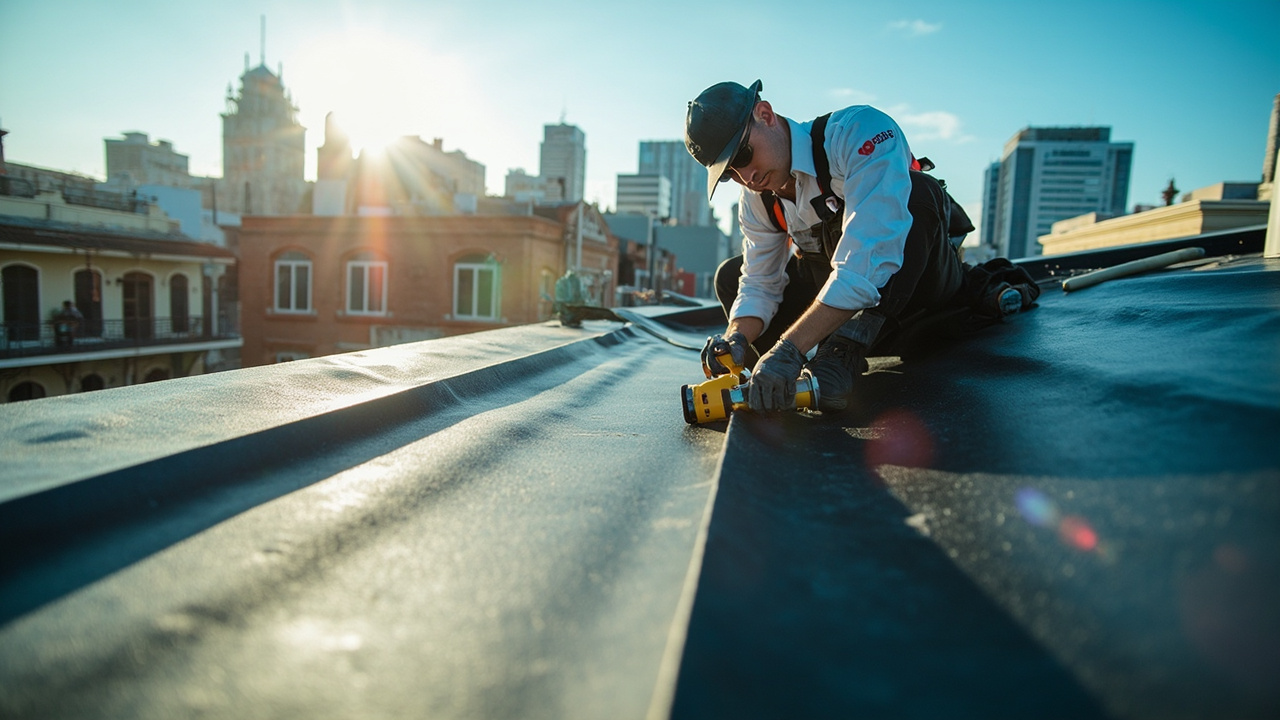
New Orleans sits in one of the nation's highest wind zones, with design wind speeds exceeding 150 mph for essential facilities. Hurricane Katrina demonstrated what happens when roofing systems fail under extreme wind loads. Commercial buildings lost entire roof sections, exposing inventory to catastrophic water damage. Modern commercial EPDM roof systems installed in New Orleans require engineered attachment that accounts for both uplift forces and the duration of hurricane-force winds. The single-ply rubber membrane must be secured with fastener densities calculated for your specific building height, roof area, and distance from Lake Pontchartrain or the Mississippi River. Generic installation patterns used in low-wind areas will not perform when the next major hurricane makes landfall.
Building officials in New Orleans enforce strict roofing standards because they have seen the economic impact of roof failures. Permits require sealed engineering drawings for commercial reroofing projects. Inspectors verify fastener patterns, edge details, and flashing installations. Contractors unfamiliar with local requirements face delays and costly corrections. Our team maintains working relationships with plan reviewers at the Department of Safety and Permits. We know which details trigger scrutiny and how to document compliance. This local knowledge keeps your project moving through approvals and inspections without unexpected delays that extend the time your building sits partially exposed to weather.


