





menu

Built-Up Roofing in New Orleans | Industrial-Grade Protection That Minimizes Business Downtime

Multi-ply asphalt built-up roofing systems engineered for commercial facilities across New Orleans, delivering proven waterproofing performance and decades of service life with minimal operational disruption.

Slider Image 1
Slider Image 2
Slider Image 3
Slider Image 4
Slider Image 5
Slider Image 7
Slider Image 8
Slider Image 9
Slider Image 10
Slider Image 11

Why New Orleans Commercial Buildings Need Built-Up Roofing Systems

New Orleans commercial facilities face aggressive environmental conditions that demand robust roofing solutions. The combination of extreme humidity, annual rainfall exceeding 60 inches, and hurricane-force wind exposure creates a testing ground for commercial roof assemblies.

Built-up roofing systems provide the redundancy and waterproofing integrity required for warehouses, manufacturing plants, and multi-tenant commercial buildings throughout the metro area. The multi-ply construction of BUR roofing systems creates overlapping layers of protection that commercial operations depend on.

Tar and gravel roofing assemblies have protected New Orleans commercial properties for over a century because the design works. The asphalt built-up roofing method creates a monolithic membrane through alternating layers of bitumen and reinforcing felts. Each ply bonds to the previous layer, creating a waterproofing barrier that withstands the Gulf Coast climate.

Commercial built-up roofs deliver measurable advantages for facility managers. The thermal mass of aggregate surfacing reduces cooling loads. The puncture resistance matters when HVAC contractors access rooftop equipment. The proven service life aligns with capital planning cycles.

The below-sea-level geography of New Orleans means water management is critical. BUR roofing systems create positive drainage through tapered insulation and strategic slope design. Standing water becomes a liability issue during summer thunderstorms. Multi-ply roofing systems eliminate ponding through proper substrate preparation and membrane installation sequencing.

Commercial facilities in the Central Business District and along the Industrial Canal require roofing solutions that perform under stress. Built-up roofing delivers that performance through material redundancy and field-proven application methods.

Why New Orleans Commercial Buildings Need Built-Up Roofing Systems
The Built-Up Roofing Installation Process for Commercial Applications

The Built-Up Roofing Installation Process for Commercial Applications

Heritage Roofing New Orleans approaches commercial built-up roofing through systematic execution that protects building operations. We coordinate installation sequences to minimize disruption to tenant spaces and production schedules.

Our process begins with substrate evaluation. The existing roof deck must provide adequate structural capacity and proper ventilation. We identify deficient decking sections, moisture intrusion points, and areas requiring reinforcement before material procurement begins.

Vapor retarder installation comes next. New Orleans humidity drives moisture into roof assemblies from below. We install vapor barriers over the structural deck to prevent interstitial condensation within the insulation layers. This step prevents premature system failure from trapped moisture.

Rigid insulation follows in multiple layers with staggered joints. We mechanically fasten or adhere insulation boards to achieve the specified R-value while creating positive drainage to roof drains and scuppers. Tapered insulation systems eliminate the ponding water issues common on flat commercial roofs.

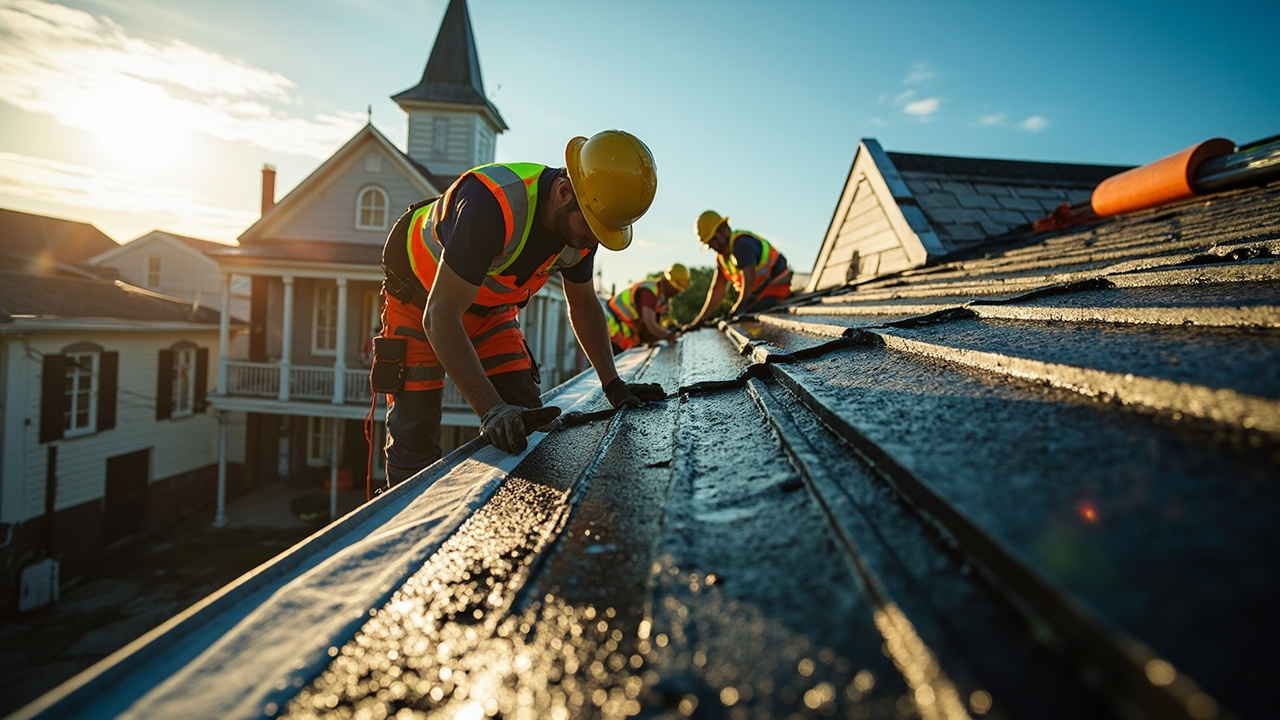
The base sheet establishes the foundation for the membrane assembly. We torch-apply or hot-mop the base ply directly to the insulation, creating the first waterproofing layer. Subsequent plies follow in overlapping courses with staggered seams.

Interply mopping is where craftsmanship matters. We maintain proper asphalt temperature and application rate to achieve full adhesion between membrane plies. Each ply must bond completely to prevent delamination and water migration.

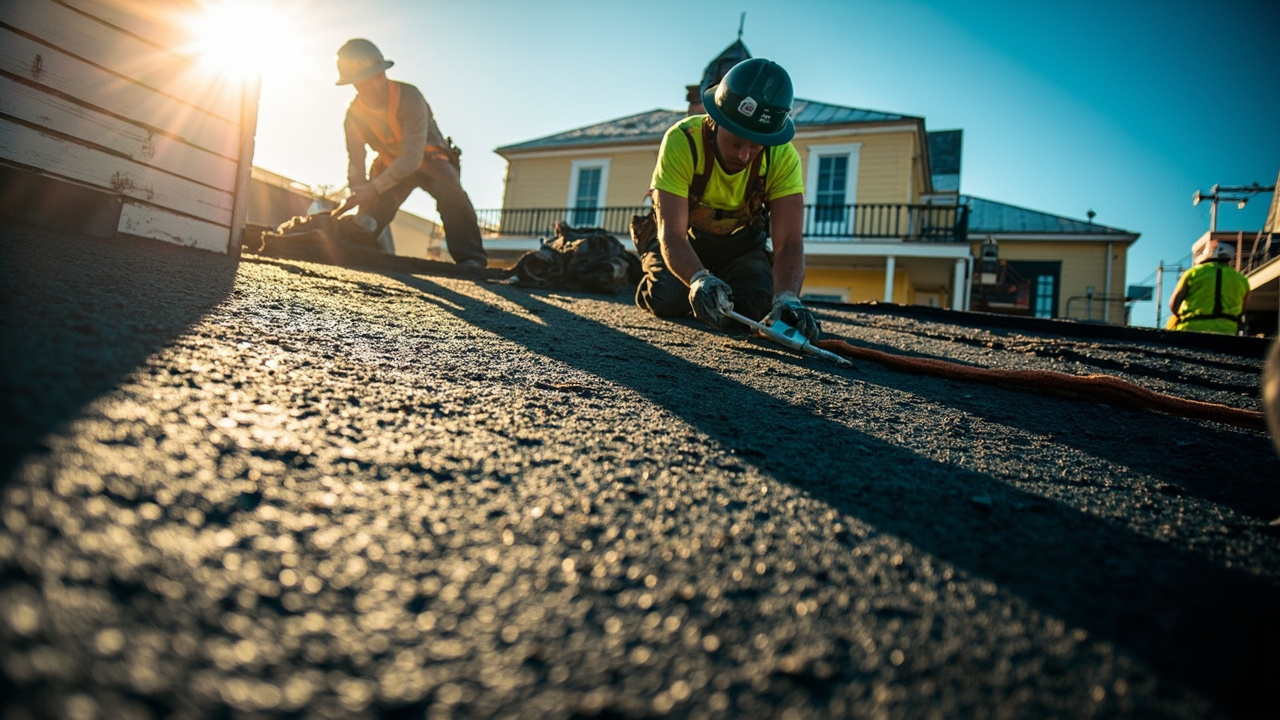
The flood coat and aggregate surfacing complete the assembly. Hot asphalt is applied at 20 to 25 pounds per square, then immediately covered with gravel. The aggregate protects the membrane from UV degradation and provides ballast against wind uplift.

Flashing details receive particular attention. We install metal counterflashing at parapets, pitch pans at penetrations, and expansion joint covers where building sections meet. These transition points determine long-term performance.

What Happens During Your Commercial BUR Installation

Built-Up Roofing in New Orleans | Industrial-Grade Protection That Minimizes Business Downtime
01

Pre-Construction Planning

We conduct a facility walk-through to identify operational constraints, establish material staging areas, and coordinate with your maintenance team. You receive a detailed schedule showing daily work zones, crane placement for material hoisting, and expected noise levels. We determine after-hours installation requirements for sensitive operations and establish communication protocols with building management.
02

Membrane Application

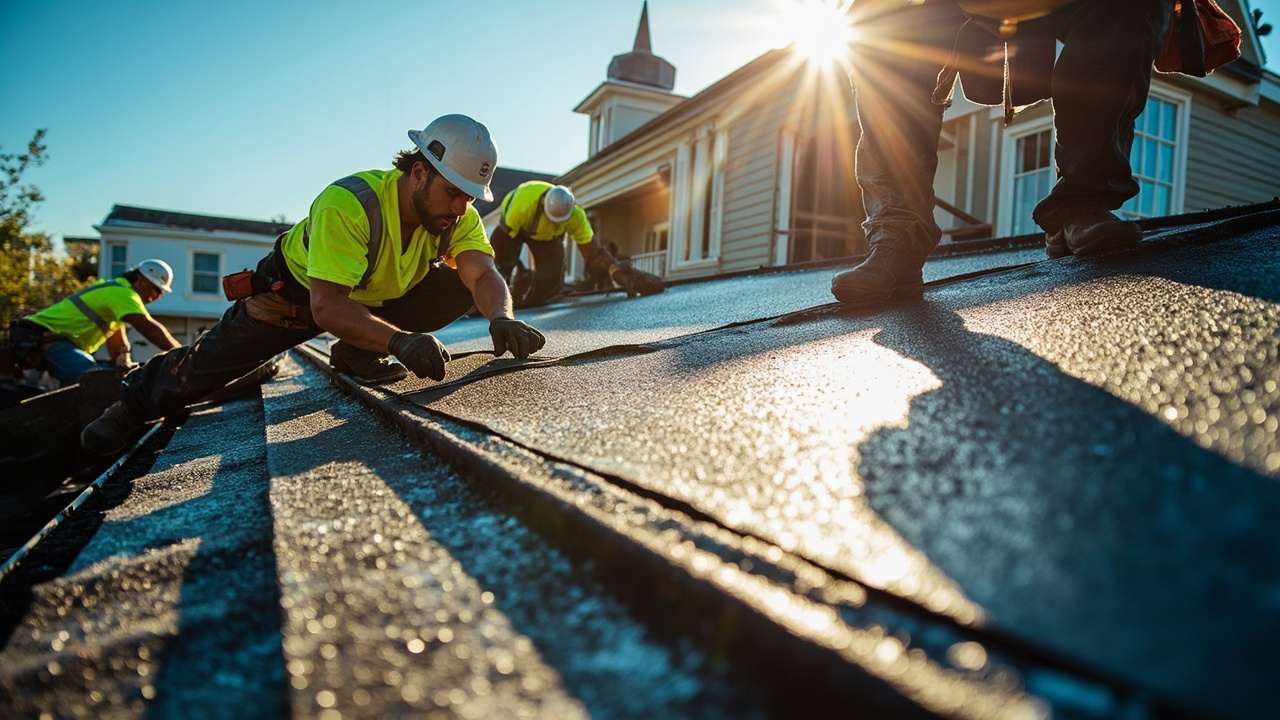
Our crews section the roof into manageable areas, completing each zone before moving to the next. You see systematic progress as base sheets, interply felts, and surface plies go down in sequence. Hot asphalt kettles operate under continuous temperature monitoring to maintain proper viscosity. Each membrane ply receives quality control inspection before the next layer begins. Weather monitoring determines daily start times to avoid moisture entrapment.
03

Final Inspection and Documentation

We conduct a systematic walkover inspection of the completed assembly, checking flood coat coverage, aggregate distribution, and flashing terminations. You receive as-built documentation showing membrane thickness, insulation R-values, and drainage modifications. We photograph all penetration details and provide a roof asset file for your facility management records. The final walk-through confirms proper cleanup and restoration of work areas.

Why New Orleans Commercial Property Owners Choose Heritage Roofing

Commercial roofing in New Orleans requires understanding local building department requirements and the unique challenges of Gulf Coast construction. Heritage Roofing New Orleans brings that specific expertise to every built-up roofing project.

We understand Orleans Parish commercial building codes and the wind load requirements that apply to different occupancy classifications. Our installations meet FM Global windstorm classifications for properties with property insurance requirements. We coordinate inspections with local building officials and provide the documentation needed for certificate of occupancy approvals.

The New Orleans construction environment demands different execution than other markets. Summer heat affects asphalt workability. Afternoon thunderstorms require schedule flexibility. Material deliveries navigate congested urban streets and limited staging areas near the French Quarter and Warehouse District.

Our field crews have completed BUR installations on commercial properties from Metairie to Chalmette. They understand how to protect HVAC equipment common to Louisiana commercial buildings. They know how to detail around the parapet walls typical of historic commercial structures in the Central Business District.

We maintain relationships with local suppliers who stock the specific membrane grades and aggregate types suited to New Orleans applications. Material availability matters when project schedules are tight and business operations cannot tolerate delays.

Commercial property managers value responsiveness. Our project managers provide direct contact information and return calls the same day. We understand that roofing decisions affect tenant relations, property valuations, and operating budgets.

The built-up roofing systems we install protect significant investments. Manufacturing facilities depend on weather-tight enclosures. Retail centers cannot afford water damage to tenant spaces. Our installations deliver the performance that commercial real estate demands.

What Commercial Clients Should Expect From BUR Installation

Project Duration and Scheduling

Commercial built-up roofing projects typically require two to four weeks depending on building size and complexity. We provide a detailed construction schedule showing daily work areas and completion milestones. Weather contingencies are built into the timeline because membrane application requires dry conditions. We coordinate with your facility operations to minimize impact on business activities. Material deliveries are scheduled to avoid interference with employee parking or customer access. For occupied buildings, we establish daily cleanup protocols and noise restriction windows.

Initial Assessment and Specifications

Our estimating team conducts a comprehensive roof survey using infrared scanning to identify wet insulation areas and core samples to verify existing assembly construction. You receive a written specification detailing membrane type, ply count, insulation R-value, and aggregate surfacing. We identify code compliance requirements and recommend upgrades to meet current energy standards. The assessment includes structural load calculations to verify deck capacity for additional layers. We provide options for full replacement versus recover applications based on existing conditions and budget parameters.

Installation Quality and Performance

You receive a roof system engineered for New Orleans wind and weather exposure. Our installations meet ASTM standards for asphalt application rates and ply overlap dimensions. Membrane seams are staggered to prevent water migration paths. Aggregate surfacing is applied at proper coverage rates to protect against UV degradation. Flashing details are fabricated from materials compatible with the membrane system. We conduct flood testing on critical areas before final acceptance. The completed assembly provides a monolithic waterproofing barrier designed for decades of service.

Post-Installation Support and Maintenance

We provide detailed maintenance guidelines specific to built-up roofing systems, including drain cleaning schedules and aggregate redistribution requirements. Our service team offers annual inspection programs to identify minor issues before they become major problems. You receive documentation showing warranty coverage and the proper procedures for submitting claims. We maintain project files with as-built drawings and material specifications for future reference. Emergency repair services are available when unexpected damage occurs. Planned maintenance extends system life and protects your roofing investment.

Frequently Asked Questions

You Have Questions,
We Have Answers

What does built-up roofing mean? +

Built-up roofing is a multi-layer commercial roofing system composed of alternating layers of bitumen and reinforcing fabrics. These layers create a weatherproof membrane over flat or low-slope commercial structures. The system typically includes a base sheet, followed by layers of asphalt or coal tar pitch combined with fiberglass or organic mats, and finished with a surfacing layer of gravel or a reflective coating. In New Orleans, built-up roofing handles high humidity and intense UV exposure well. This proven technology has protected commercial buildings for over a century. The redundancy of multiple layers provides excellent leak resistance and durability for warehouses, retail centers, and office buildings across the metro area.

What is another name for a built up roof? +

Built-up roofing goes by several industry names. Professionals commonly call it BUR, which stands for Built-Up Roof. You will also hear it called tar and gravel roofing, especially when finished with an aggregate surface layer. Some contractors refer to it as a conventional roof system to distinguish it from newer single-ply membranes. The term hot-mopped roof describes the installation method where hot asphalt or coal tar is applied between layers. Regardless of the name, all refer to the same multi-ply bituminous roofing system. In New Orleans commercial construction documents, you will most frequently see BUR or built-up roofing used interchangeably. The terminology varies, but the system remains consistent.

What is the lifespan of a built-up roof? +

A properly installed built-up roof typically lasts 20 to 30 years on commercial buildings in New Orleans. The lifespan depends on several factors. Quality of installation matters significantly. Regular maintenance extends service life considerably. New Orleans climate factors like intense sun, high humidity, and occasional hurricane winds impact longevity. Buildings with proper drainage and minimal foot traffic see longer lifespans. Aggregate-surfaced systems generally outlast smooth-surface versions because gravel protects the membrane from UV degradation. Ponding water from inadequate drainage accelerates deterioration. Commercial property owners who invest in biannual inspections and address minor issues promptly can push their BUR systems toward the 30-year mark. Neglected roofs may require replacement closer to 15 years.

How is a built-up roof installed? +

Installation begins with preparing the roof deck and ensuring proper slope for drainage. Contractors apply a base sheet mechanically fastened or adhered to the substrate. Next, they heat bitumen in a kettle and mop hot asphalt between alternating layers of reinforcing felt or fiberglass. Each ply overlaps the previous layer to create redundancy. Typically, three to five plies are installed depending on specifications. The final surfacing layer consists of hot asphalt embedded with gravel aggregate or a reflective coating. In New Orleans, installers must work quickly before heat and humidity affect material performance. The process requires specialized equipment and trained crews. Proper installation takes several days for most commercial buildings and requires dry weather conditions.

Can you repair a built-up roof? +

Yes, built-up roofs can be repaired, and timely repairs extend system life significantly. Common repairs include patching blisters, resealing flashing, addressing punctures, and fixing splits in the membrane. For localized damage, contractors cut out the affected section, install new layers, and seal the repair area. Gravel must be cleared before work begins and reapplied after completion. New Orleans property managers should address repairs promptly because small leaks worsen rapidly in humid conditions. Extensive damage across large sections may require overlay systems rather than individual patches. Regular inspections identify minor issues before they become structural problems. Professional contractors assess whether repair makes financial sense compared to replacement based on damage extent and remaining roof life.

What does built-up roofing look like? +

Built-up roofing typically appears as a flat, dark surface covered with gravel or smooth coating. Aggregate-surfaced systems feature a layer of light-colored stone embedded in the top layer of asphalt, creating a textured appearance. The gravel protects the underlying membrane and reflects heat. Smooth-surfaced BUR appears dark gray or black without aggregate. You may notice raised blisters or wrinkles on aging systems. Flashing around penetrations like HVAC units, vents, and roof drains appears as metal or coated fabric transitions. From ground level on most New Orleans commercial buildings, you see a uniform gray surface. The multi-layer construction remains hidden beneath the protective top coat. Well-maintained systems look flat and continuous without visible seams or damage.

What are the three types of roofing? +

Commercial roofing falls into three primary categories. Low-slope or flat roof systems include built-up roofing, modified bitumen, single-ply membranes like TPO and EPDM, and spray polyurethane foam. Steep-slope systems encompass metal roofing, asphalt shingles, tile, and slate designed for pitched applications. Green or vegetative roofs represent a specialized third category combining waterproofing membranes with growing medium and plants. In New Orleans commercial construction, low-slope systems dominate because most commercial buildings feature flat or nearly flat roof decks. Each category addresses different structural requirements, budget constraints, and performance needs. The choice depends on building design, intended use, local climate factors, and ownership priorities. Each system offers distinct advantages for specific applications and building types.

How many layers is a built-up roof? +

A built-up roof typically contains three to five plies or layers, though specifications vary based on building requirements and local code. Each ply consists of reinforcing fabric embedded in hot asphalt or coal tar. More layers generally provide better waterproofing and longevity but increase cost and roof load. New Orleans commercial applications commonly use four-ply systems as a balanced approach. The base sheet counts as the first layer, followed by interply sheets, and finished with the surfacing layer. High-traffic roof areas or buildings requiring enhanced protection may specify five-ply construction. The number of plies directly affects system weight, which structural engineers must account for during design. Each layer overlaps to create redundancy against water infiltration.

Is TPO a built-up roof? +

No, TPO is not a built-up roof. TPO stands for thermoplastic polyolefin, a single-ply membrane system. Unlike built-up roofing with multiple layers of asphalt and fabric, TPO arrives in large rolls of factory-manufactured sheets. Installers mechanically attach or adhere TPO to the roof deck, then heat-weld seams together. Built-up roofing requires field-applied hot asphalt between multiple plies. TPO represents newer technology compared to BUR. Both serve flat commercial roofs in New Orleans, but they differ fundamentally in materials, installation methods, and performance characteristics. TPO offers lighter weight and faster installation. Built-up roofing provides proven redundancy through multiple layers. Commercial property owners choose between systems based on budget, building requirements, and long-term performance goals.

How old may a roof be before insurance claims it's too old? +

Insurance companies typically consider commercial roofs 20 years or older as high risk, though policies vary significantly. Some carriers impose restrictions at 15 years depending on system type and condition. Built-up roofs in New Orleans may face scrutiny earlier due to hurricane exposure and weather-related claim history. Age alone does not disqualify coverage, but insurers often require professional inspections for aging roofs. They may exclude wind and hail coverage, increase premiums, or mandate repairs before renewal. Documentation of regular maintenance helps. Some carriers require roof replacement as a condition of policy renewal once systems exceed 20 years. Property owners should review coverage terms annually and budget for replacement before age restrictions trigger coverage gaps or policy cancellations.

How New Orleans Hurricane Exposure Drives Built-Up Roofing Design

New Orleans sits in a high-velocity hurricane zone requiring commercial roofs to resist sustained winds of 150 mph and wind-driven rain penetration. Built-up roofing systems meet these demands through aggregate ballasting and mechanically fastened base sheets that create uplift resistance. The multi-ply construction provides redundancy when membrane damage occurs. Insurance underwriters recognize BUR assemblies as proven performers in Gulf Coast conditions. Property owners in flood zones benefit from the waterproofing integrity that protects interior spaces during storm events and the frequent heavy rainfall common to subtropical Louisiana.

Commercial roofing contractors working in New Orleans must understand local permitting requirements and the specific wind load calculations mandated by the Louisiana State Uniform Construction Code. Heritage Roofing New Orleans maintains current knowledge of Orleans Parish building department procedures and the documentation required for commercial permit approvals. Our installations comply with FM Global property insurance standards that many commercial lenders require. We work with local structural engineers when roof replacements affect building load capacity. This local expertise ensures your project meets all regulatory requirements and protects your property investment.

Roofing Services in The New Orleans Area

Our dedicated team is proud to serve the entire area, bringing our legacy of quality roofing services directly to your neighborhood. Whether you need a simple repair, a full-scale replacement, or an urgent inspection, you can find us easily on the map below. We are committed to being your local roofing partner, delivering expert solutions right where you are. We look forward to working with you to protect your most valuable asset—your home.Our dedicated team is proud to serve the entire area, bringing our legacy of quality roofing services directly to your neighborhood. Whether you need a simple repair, a full-scale replacement, or an urgent inspection, you can find us easily on the map below. We are committed to being your local roofing partner, delivering expert solutions right where you are. We look forward to working with you to protect your most valuable asset—your home.

Address:
Heritage Roofing New Orleans, 3308 Tulane Ave, New Orleans, LA, 70119

Additional Services We Offer

Our news updates

Latest Articles & News from The Blogs

Why Concrete Tile Is Making a Comeback for Modern Homes in Lake Vista Concrete tile roofing is experiencing a significant…

Why Concrete Tile Is Making a Comeback for Modern Homes in Lake Vista

Why Concrete Tile Is Making a Comeback for Modern Homes in Lake Vista Concrete tile roofing is experiencing a significant…

Navigating the VCC and HDLC Roofing Permit Process Without Losing Your Mind

Understanding VCC and HDLC Roofing Permit Requirements in New Orleans Getting a roofing permit in New Orleans can feel overwhelming.…

Managing Overhanging Live Oak Branches Above Your St. Charles Avenue Roof

Managing Overhanging Live Oak Branches Above Your St. Charles Avenue Roof Live Oak branches hanging over St. Charles Avenue homes…

Contact Us

Your facility needs a roof system that performs under Gulf Coast conditions. Contact Heritage Roofing New Orleans at (504) 355-3444 for a comprehensive roof assessment and project proposal. We provide detailed specifications and competitive pricing for commercial built-up roofing installations.