






menu

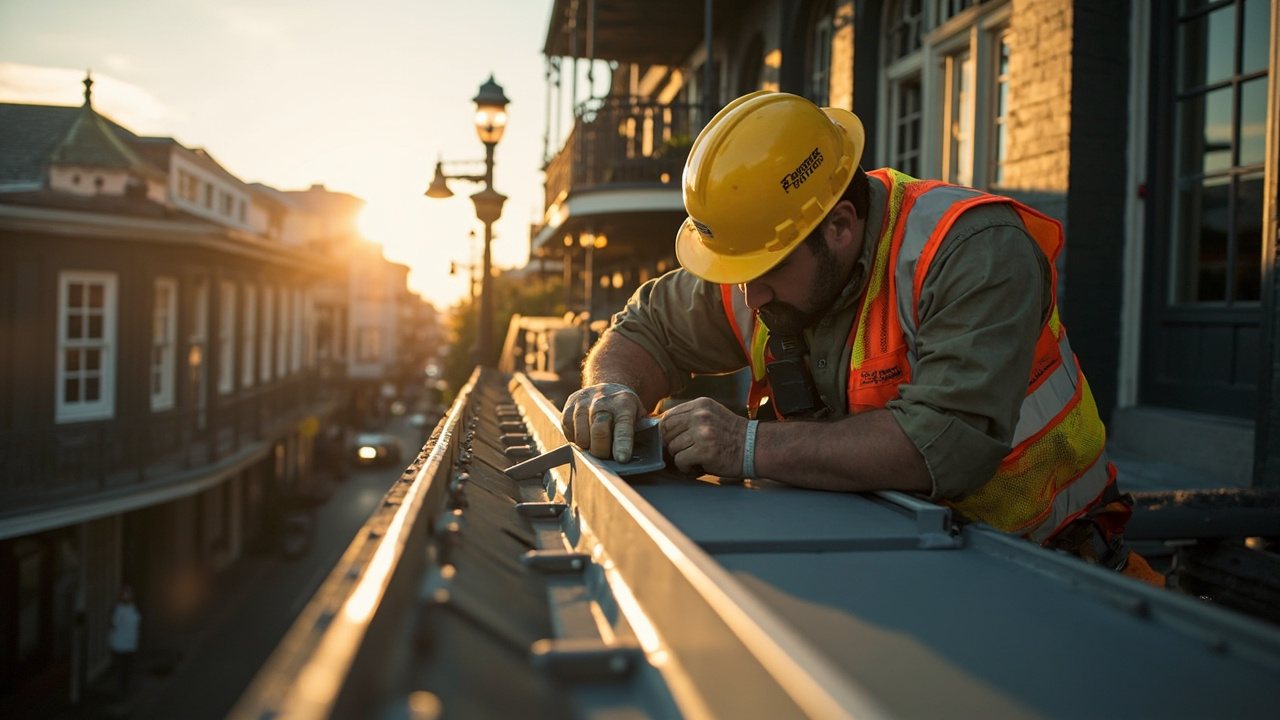
Commercial Gutter Systems in New Orleans – Engineered for Gulf Coast Weather and Zero-Downtime Installation

Industrial-grade commercial roof gutters designed to handle New Orleans's intense rainfall and humidity while protecting your facility's structural integrity and minimizing business disruption during installation.

Slider Image 1
Slider Image 2
Slider Image 3
Slider Image 4
Slider Image 5
Slider Image 7
Slider Image 8
Slider Image 9
Slider Image 10
Slider Image 11

Why Standard Guttering Fails New Orleans Commercial Buildings

New Orleans receives 62 inches of annual rainfall, nearly double the national average. Your commercial building gutters face constant stress from sudden downpours that dump three inches per hour during peak storm season. Most commercial properties in the metro area were built with undersized or deteriorating gutter systems that cannot process this volume.

The city sits below sea level with poor natural drainage. When industrial rain gutters fail or overflow, water pools on flat commercial roofs, seeping through membrane seams and causing interior damage. The combination of high humidity and standing water accelerates corrosion in standard aluminum systems, requiring replacement every 8 to 12 years.

Commercial buildings near the Mississippi River or Lake Pontchartrain face additional salt air exposure that degrades standard materials faster. Mid-City warehouses, Metairie office complexes, and industrial facilities in Gentilly need commercial grade gutters engineered for these conditions. A failed system means water intrusion that damages inventory, interrupts operations, and creates liability.

Your facility needs industrial guttering sized for actual New Orleans rainfall patterns, not generic specifications. The wrong system costs you in emergency repairs, lost productivity, and tenant complaints. Properly engineered commercial roof gutters eliminate these risks by moving water away from your structure efficiently, even during the heaviest storms that define Gulf Coast weather patterns.

Why Standard Guttering Fails New Orleans Commercial Buildings
How We Engineer Commercial Gutter Systems for Performance

How We Engineer Commercial Gutter Systems for Performance

We calculate gutter capacity based on your roof square footage, drainage patterns, and New Orleans rainfall intensity data. Standard 5-inch residential gutters move 1,200 gallons per hour. Commercial building gutters require 6-inch to 8-inch profiles with strategically placed downspouts to handle 3,000 to 5,000 gallons per hour during peak storms.

Our team evaluates your roof slope, parapet walls, and existing drainage infrastructure before specifying materials. We install heavy-gauge aluminum or galvanized steel systems with reinforced hangers spaced 24 inches on center, not the standard 36-inch spacing that leads to sagging. For corrosive environments near water, we recommend copper or stainless steel industrial guttering that lasts 40-plus years.

Proper pitch is critical. We set commercial roof gutters at one-quarter inch drop per 10 feet of run to maintain water velocity without creating stress points. Undersized downspouts create bottlenecks that cause overflow. We size downspouts at one square inch of opening per 100 square feet of roof area, then add 20 percent capacity for New Orleans storm intensity.

We integrate with existing scupper drains and overflow systems required by commercial building codes. All seams are welded or use commercial-grade sealants rated for constant moisture exposure. Our installations include debris barriers at downspout entries to prevent clogs that shut down your entire drainage system. Every connection point is reinforced to handle wind loads up to 110 mph, the threshold for tropical storm conditions.

How Commercial Gutter Installation Actually Works

Commercial Gutter Systems in New Orleans – Engineered for Gulf Coast Weather and Zero-Downtime Installation
01

Site Assessment and Load Calculation

We measure your roof area, document drainage paths, and identify structural attachment points. Our team calculates required gutter capacity using New Orleans rainfall data and your building's specific exposure factors. We photograph existing conditions and map underground drainage connections to ensure proper system integration. You receive capacity specifications and material recommendations within 48 hours.
02

Fabrication and Staging

We fabricate commercial grade gutters to exact measurements, eliminating field seams that create weak points. Materials are delivered and staged to minimize disruption to your operations. Installation happens in sections, allowing your facility to maintain partial drainage capacity throughout the project. We coordinate with your operations manager to schedule work during low-activity periods and protect ground-level areas from debris.
03

Testing and Handoff

After installation, we run water tests at multiple points to verify flow rates and check for leaks at every connection. You receive documentation showing gutter capacity, maintenance access points, and recommended inspection intervals. We provide your facilities team with a maintenance protocol specific to your system, including debris removal schedules and what warning signs indicate needed repairs before they become failures.

Why New Orleans Facility Managers Choose Local Expertise

Generic commercial roofing contractors use standardized gutter specifications developed for moderate climates. Those systems fail in New Orleans because they are not engineered for our rainfall intensity, humidity levels, and storm frequency. We design every industrial rain gutter system for actual Gulf Coast conditions, not textbook assumptions.

Our crews understand New Orleans commercial architecture. Many buildings in the Central Business District and Warehouse District feature parapet walls and interior drains that require specialized integration with perimeter guttering. We have installed systems on historic structures requiring architectural review board approval and modern industrial facilities needing high-capacity drainage for flat membrane roofs.

We maintain relationships with commercial property management companies throughout Jefferson Parish, Orleans Parish, and St. Tammany Parish. When you need emergency repairs after a storm, we prioritize existing clients because we already know your system layout and specifications. You receive faster response than you would get from contractors learning your building for the first time during a crisis.

Local building inspectors know our work. We stay current on code changes affecting commercial drainage requirements and stormwater management regulations. Our installations pass inspection without delays or callbacks. We source materials from regional suppliers, which means faster procurement and better pricing than companies shipping from out of state.

You receive detailed as-built documentation showing gutter locations, capacities, and maintenance requirements. This information becomes part of your facility management records, making future repairs or expansions straightforward. We are available year-round for inspections, maintenance, and emergency service.

What Your Commercial Gutter Project Includes

Project Timeline and Coordination

Most commercial gutter installations take three to seven days depending on building size and complexity. We schedule work in phases to maintain business operations and avoid blocking access points. You receive a detailed timeline before work begins, showing daily activities and any required facility shutdowns. We coordinate with your maintenance staff to protect landscaping, HVAC equipment, and customer access areas. Our crews arrive on schedule and complete sections as promised, minimizing uncertainty about when your property will return to normal operations.

Capacity Analysis and Material Selection

We provide written specifications showing gutter size, downspout placement, and expected flow capacity in gallons per hour. You see exactly how the system will perform during typical rainstorms and extreme weather events. Material recommendations include cost comparisons and lifespan projections so you can make informed decisions based on your budget and facility needs. We explain trade-offs between aluminum, steel, and premium materials like copper. Every recommendation accounts for your building's exposure to salt air, industrial pollutants, or other environmental factors affecting longevity.

Installation Quality and Code Compliance

Your system is installed to exceed Louisiana commercial building code requirements for drainage and wind resistance. We use commercial-grade hangers, reinforced brackets, and proper fastening into structural members, not decorative trim. All penetrations through roofing membranes are sealed with compatible materials to maintain your roof warranty. Downspouts connect to existing underground drainage or discharge away from your foundation as required by code. You receive documentation suitable for insurance requirements and building inspections. Our work includes cleanup and disposal of old materials.

Maintenance Planning and Support

We provide a maintenance schedule tailored to your building's exposure and surrounding vegetation. Most commercial gutter systems need inspection twice yearly before hurricane season and after leaf drop. You learn what signs indicate problems requiring professional attention versus routine debris removal your staff can handle. We offer annual maintenance contracts that include cleaning, inspections, and minor repairs before they become expensive failures. Emergency service is available when storms damage components. You receive priority scheduling because we already have your system specifications and site access information on file.

Frequently Asked Questions

You Have Questions,
We Have Answers

What are the different types of commercial gutters? +

Commercial gutters include K-style, box gutters, half-round, and fascia gutters. K-style gutters offer high capacity and modern aesthetics for most commercial buildings. Box gutters integrate into the roofline and handle heavy New Orleans rainfall but require precise installation to prevent leaks. Half-round gutters suit historic or specialty architecture common in the French Quarter and Garden District. Fascia gutters attach directly to the building face, minimizing visual impact. Material choices include aluminum, galvanized steel, and copper. Your selection depends on building architecture, roof square footage, drainage volume requirements, and local code compliance for commercial structures in Orleans Parish.

How much do commercial gutters cost? +

Commercial gutter costs vary based on building size, material selection, system complexity, and accessibility. Factors include linear footage, gauge thickness, downspout placement, and roof height. Aluminum systems typically cost less than copper or heavy-gauge steel. Buildings with multiple stories or complex rooflines increase labor costs. New Orleans humidity and hurricane exposure require corrosion-resistant materials and reinforced brackets, affecting total investment. Additional expenses include custom fabrication, fascia repair, and drainage system integration. Request a site-specific assessment to determine accurate pricing based on your property's requirements, existing infrastructure condition, and code compliance needs for commercial installations.

What gauge are commercial gutters? +

Commercial gutters typically use 24-gauge to 26-gauge aluminum or 26-gauge to 28-gauge galvanized steel. Lower gauge numbers indicate thicker, stronger material. Most New Orleans commercial properties require 24-gauge or 26-gauge systems to handle intense subtropical rainfall and wind loads during hurricane season. High-rise buildings or structures with large roof areas need heavier gauge materials for structural integrity. Thicker gauge prevents warping, supports longer spans between hangers, and resists corrosion from Gulf Coast humidity. Copper commercial gutters use 16-ounce to 20-ounce weight specifications. Your building's exposure, roof area, and drainage volume determine the appropriate gauge for long-term performance.

What are the three types of gutters? +

The three primary gutter types are K-style, half-round, and box gutters. K-style gutters feature a flat back and decorative front profile, offering maximum water capacity for commercial applications. Half-round gutters provide a semicircular cross-section, commonly specified for historic restorations in New Orleans historic districts. Box gutters sit within the roofline structure rather than hanging from the eave, handling extremely high water volumes. Each type serves different architectural needs and drainage requirements. Material options include aluminum, steel, and copper. Selection depends on building design, roof configuration, water flow calculations, and whether your property falls under historic preservation guidelines.

Which gutter system is best? +

The best commercial gutter system depends on building-specific factors rather than a universal solution. K-style aluminum gutters offer durability and cost efficiency for most commercial structures. Copper systems provide longevity for institutional buildings and historic properties. Box gutters suit flat or low-slope roofs common in New Orleans commercial construction. Your optimal system considers roof square footage, rainfall intensity, building height, architectural requirements, and maintenance access. New Orleans properties need corrosion-resistant materials and adequate capacity for subtropical storms. Proper sizing, gauge selection, hanger spacing, and downspout placement matter more than gutter style alone. Professional assessment ensures code-compliant installation that protects your building investment.

What is the difference between commercial and residential gutters? +

Commercial gutters use heavier gauge materials, larger profiles, and reinforced mounting systems compared to residential gutters. Commercial systems handle higher water volumes from expansive roof areas and require structural calculations for proper sizing. Installation involves engineered hanger spacing, commercial-grade fasteners, and compliance with building codes specific to commercial properties. Commercial gutters accommodate multi-story downspout runs, rooftop equipment drainage, and complex roof configurations. Materials must withstand greater wind loads and longer spans. Liability concerns demand professional installation with proper insurance coverage. New Orleans commercial systems also account for flat roof drainage, parapet walls, and hurricane-rated components that residential installations do not require.

Are there tax credits for new gutters? +

Federal tax credits do not currently apply to gutter replacement alone. However, gutters installed as part of a qualified energy efficiency improvement may qualify under specific circumstances. If your gutter replacement connects to a rainwater harvesting system or storm water management infrastructure that reduces energy consumption, portions may be deductible. Louisiana offers tax incentives for historic preservation projects in designated districts. Commercial properties in New Orleans historic areas may qualify for rehabilitation tax credits when gutters meet preservation standards. Consult your tax advisor about depreciation schedules for commercial building improvements. Document all work with invoices and compliance certificates for potential deductions under commercial property improvement regulations.

How much do gutters cost for a 3,000 sq ft house? +

This question addresses residential sizing rather than commercial applications. Commercial gutter pricing focuses on linear footage, building height, system complexity, and material specifications rather than residential square footage calculations. Commercial properties require engineered drainage solutions based on roof area, parapet height, downspout placement, and code requirements. A 3,000 square foot commercial building needs professional assessment to determine appropriate gutter capacity, gauge requirements, and installation complexity. New Orleans commercial codes mandate specific drainage standards that differ from residential guidelines. Focus on water management capacity, structural load requirements, and long-term maintenance costs rather than residential-based estimates when evaluating commercial gutter investments.

How much is 200 linear feet of gutters? +

Commercial gutter pricing for 200 linear feet depends on material gauge, profile type, building height, and installation complexity. Factors include downspout quantity and placement, corner configurations, fascia condition, and accessibility. Single-story installations cost less than multi-story runs requiring lift equipment. New Orleans commercial projects must account for hurricane-rated fasteners, corrosion-resistant materials for humid conditions, and proper slope calculations for effective drainage. Additional costs include custom fabrication, color matching for commercial aesthetics, and coordination with existing drainage infrastructure. Request site-specific proposals that include material specifications, labor requirements, equipment needs, and code compliance documentation rather than generic per-foot estimates for accurate commercial budgeting.

Is it better to have 5 or 6 inch gutters? +

Commercial properties typically require six-inch or larger gutters rather than five-inch residential systems. Six-inch gutters handle 50 percent more water volume than five-inch profiles, essential for commercial roof areas and New Orleans rainfall intensity. Larger gutters reduce overflow risk during subtropical storms and minimize maintenance frequency. Commercial buildings with expansive roofs often need custom seven-inch or box gutter systems. Proper sizing depends on roof square footage, pitch, rainfall intensity calculations, and downspout spacing rather than arbitrary size selection. Undersized gutters cause water damage, fascia deterioration, and foundation problems. Professional hydraulic calculations determine appropriate gutter dimensions for your specific commercial building requirements and local code compliance.

How New Orleans Subtropical Climate Demands Specialized Commercial Guttering

New Orleans averages 120 days per year with measurable rainfall and experiences sudden afternoon thunderstorms that dump two to four inches in under an hour. Standard commercial building gutters sized for temperate climates overflow within minutes during these events. The city's location at the mouth of the Mississippi River creates constant high humidity that accelerates corrosion in standard galvanized steel systems. Industrial guttering must handle both high-volume water flow and resist degradation from moisture exposure that never fully dries between storms. Facilities near the river or lakefront face additional salt spray that requires upgraded materials.

Commercial properties in New Orleans must comply with stormwater management regulations designed to reduce runoff into the city's pumping system. Properly sized industrial rain gutters are part of your facility's drainage plan and may be reviewed during building inspections or insurance assessments. We work with local engineering firms and understand Orleans Parish drainage requirements. Our installations integrate with existing site drainage infrastructure and meet capacity standards for commercial properties. Choosing contractors familiar with local regulations eliminates delays and ensures your system passes inspection the first time.

Roofing Services in The New Orleans Area

Our dedicated team is proud to serve the entire area, bringing our legacy of quality roofing services directly to your neighborhood. Whether you need a simple repair, a full-scale replacement, or an urgent inspection, you can find us easily on the map below. We are committed to being your local roofing partner, delivering expert solutions right where you are. We look forward to working with you to protect your most valuable asset—your home.Our dedicated team is proud to serve the entire area, bringing our legacy of quality roofing services directly to your neighborhood. Whether you need a simple repair, a full-scale replacement, or an urgent inspection, you can find us easily on the map below. We are committed to being your local roofing partner, delivering expert solutions right where you are. We look forward to working with you to protect your most valuable asset—your home.

Address:
Heritage Roofing New Orleans, 3308 Tulane Ave, New Orleans, LA, 70119

Additional Services We Offer

Our news updates

Latest Articles & News from The Blogs

The 10 Critical Questions That Could Save Your New Orleans Home Roofing in New Orleans isn't just about shingles and…

Questions You Must Ask a New Orleans Roofer Before Signing a Contract

The 10 Critical Questions That Could Save Your New Orleans Home Roofing in New Orleans isn't just about shingles and…

Restoring the Intricate Turrets and Gables on Victorian Homes in the Holy Cross District

Restoring the Intricate Turrets and Gables on Victorian Homes in the Holy Cross District The Holy Cross District in New…

Is Stone Coated Steel the Right Choice for Your Slidell Waterfront Property?

Is Stone Coated Steel the Right Choice for Your Slidell Waterfront Property? Living along the water in Slidell comes with…

Contact Us

Contact Heritage Roofing New Orleans at (504) 355-3444 for a capacity assessment of your commercial property. We provide written specifications and material recommendations within 48 hours of site review. Protect your facility from water damage and operational disruptions.