
Comparing Luxury Slate and Synthetic Alternatives for English Turn Estates
Luxury roofing in English Turn Estates demands materials that match the neighborhood’s prestige while standing up to Louisiana’s punishing climate. English Turn’s waterfront location exposes homes to salt air, hurricane-force winds, and extreme humidity that can destroy inferior roofing materials within years. The choice between natural slate and synthetic alternatives affects not just aesthetics but long-term property value and insurance costs. Specialized Roofing Solutions for Properties in the French Quarter.
Natural slate offers unmatched authenticity with its distinctive cleft texture and color variations that synthetic products struggle to replicate. A properly installed slate roof lasts 75 to 100 years, making it the gold standard for luxury estates. However, slate weighs 800 to 1,500 pounds per square, requiring structural reinforcement for many English Turn homes built to standard residential codes.
Synthetic slate provides a lightweight alternative at 150 to 300 pounds per square, eliminating the need for structural modifications. Modern polymer composites mimic natural slate’s appearance while offering better impact resistance and easier installation. The trade-off comes in longevity, with synthetic products typically lasting 40 to 50 years compared to slate’s century-long lifespan.
Performance Comparison in New Orleans Climate
English Turn’s proximity to the Mississippi River and Gulf of Mexico creates unique challenges. Salt-laden air accelerates corrosion on metal components, while high humidity promotes algae growth on porous surfaces. Hurricane season brings wind speeds exceeding 150 mph, demanding roofing systems that can withstand uplift forces. The Best Shingles to Withstand New Orleans Heat and Humidity.
Natural slate performs exceptionally well in salt air environments. Its dense composition resists water absorption, preventing freeze-thaw damage that plagues less durable materials. The stone’s natural thermal mass helps regulate attic temperatures, reducing cooling costs during New Orleans’ sweltering summers. What to Do When Your New Orleans Roof Starts Leaking During a Downpour.
Synthetic alternatives incorporate UV inhibitors and algae-resistant additives that combat the region’s environmental stressors. Many manufacturers now offer products specifically engineered for coastal applications, with enhanced salt resistance and wind ratings up to 180 mph. The polymer composition flexes slightly under wind load, reducing the risk of cracking during extreme weather events.
Installation Requirements and Costs
Installing natural slate demands specialized craftsmanship. Each piece must be hand-selected, with consistent thickness and proper grain orientation. Installers use copper or stainless steel nails to prevent galvanic corrosion, and the roof requires a reinforced deck capable of supporting the substantial weight.
Installation costs for natural slate range from $25 to $40 per square foot, including materials and labor. The process takes significantly longer than standard roofing, often requiring six to eight weeks for an average estate home. Specialized tools and experienced crews drive up labor costs, but the investment pays dividends in longevity. Roofing Kenner.
Synthetic slate installation proceeds more quickly, typically completing in three to four weeks. The lightweight material allows standard roofing crews to handle the work without specialized training. Installation costs average $12 to $20 per square foot, making synthetic options attractive for homeowners seeking luxury appearance without premium pricing. What Metairie Homeowners Need to Do for Emergency Storm Damage and Tarping.
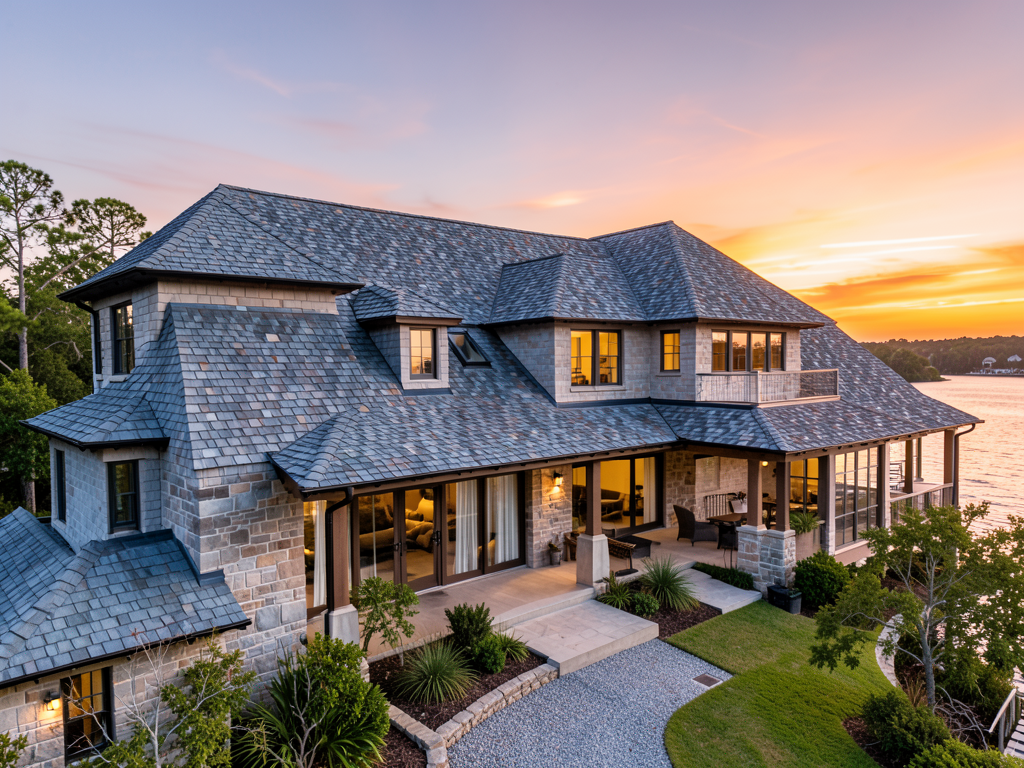
A side-by-side comparison showing natural slate’s cleft texture against synthetic slate’s uniform surface, installed on identical roof pitches in English Turn.
Long-Term Value Analysis
Property appraisers recognize natural slate as a premium feature that enhances estate value. The material’s longevity means future owners avoid replacement costs, and the classic appearance appeals to luxury buyers. Insurance companies often offer premium discounts for slate roofs due to their fire resistance and durability.
Synthetic slate provides excellent value for homeowners planning shorter ownership periods. The lower initial investment and reduced installation time appeal to those who want luxury appearance without the century-long commitment. Many synthetic products now carry 50-year warranties, providing peace of mind for mid-term ownership.
Maintenance requirements differ significantly between materials. Natural slate needs periodic inspection for cracked or slipped pieces, with individual replacements costing $150 to $300 each. The stone resists algae and moss growth, reducing cleaning frequency. Synthetic slate requires more frequent cleaning to maintain appearance, as the polymer surface can accumulate organic growth in humid conditions.
Environmental Impact Considerations
Natural slate extraction and transportation create substantial carbon emissions, with most high-quality slate coming from Vermont or imported from Spain. However, the material’s extreme longevity means fewer replacements over centuries, potentially offsetting initial environmental costs. Slate is completely recyclable and contains no synthetic chemicals.
Synthetic slate production uses petroleum-based materials, creating different environmental concerns. However, many manufacturers now incorporate recycled content and offer take-back programs for end-of-life products. The lighter weight reduces transportation emissions, and the material’s recyclability provides end-of-life options that natural stone cannot match.
Energy efficiency varies between options. Natural slate’s thermal mass helps regulate building temperatures, potentially reducing HVAC costs. Synthetic products often include reflective pigments that reduce heat absorption, providing similar energy benefits through different mechanisms.
Code Compliance and Insurance Requirements
Jefferson Parish building codes require Class A fire ratings for all roofing materials, which both natural and synthetic slate achieve easily. However, English Turn’s location in a high-velocity hurricane zone triggers additional requirements. The International Building Code Section 1609 mandates specific wind uplift resistance ratings based on location and building height.
Natural slate installations must meet TAS 124 testing standards for hurricane resistance, demonstrating the ability to withstand uplift forces exceeding 150 mph. This requires specific underlayment systems and fastening patterns that increase installation complexity and cost. Insurance companies often require documentation of these compliance measures before issuing policies.
Synthetic slate products typically arrive with factory testing documentation showing compliance with TAS 124 and Miami-Dade County standards. This pre-approval simplifies the permitting process and provides insurance companies with immediate verification of product performance. Many synthetic manufacturers also offer enhanced warranties when installed by certified contractors.
Visual Impact and Architectural Integration
English Turn Estates features diverse architectural styles, from traditional Southern mansions to contemporary waterfront designs. Natural slate’s authentic appearance integrates seamlessly with historic and traditional architecture, providing the depth and variation that synthetic products struggle to match. The material’s natural color variations create visual interest that changes with lighting conditions throughout the day.
Synthetic slate offers color consistency and design flexibility that appeals to modern architecture. Manufacturers produce products in colors and patterns not found in nature, allowing homeowners to achieve specific aesthetic goals. The material’s uniform thickness and precise sizing create clean, contemporary lines that complement modern design principles.
Both materials support architectural details like dormers, turrets, and complex roof lines. Natural slate’s weight requires additional structural support for elaborate features, while synthetic slate’s lighter weight simplifies construction of intricate roof designs. The choice often depends on whether authenticity or design flexibility takes priority.
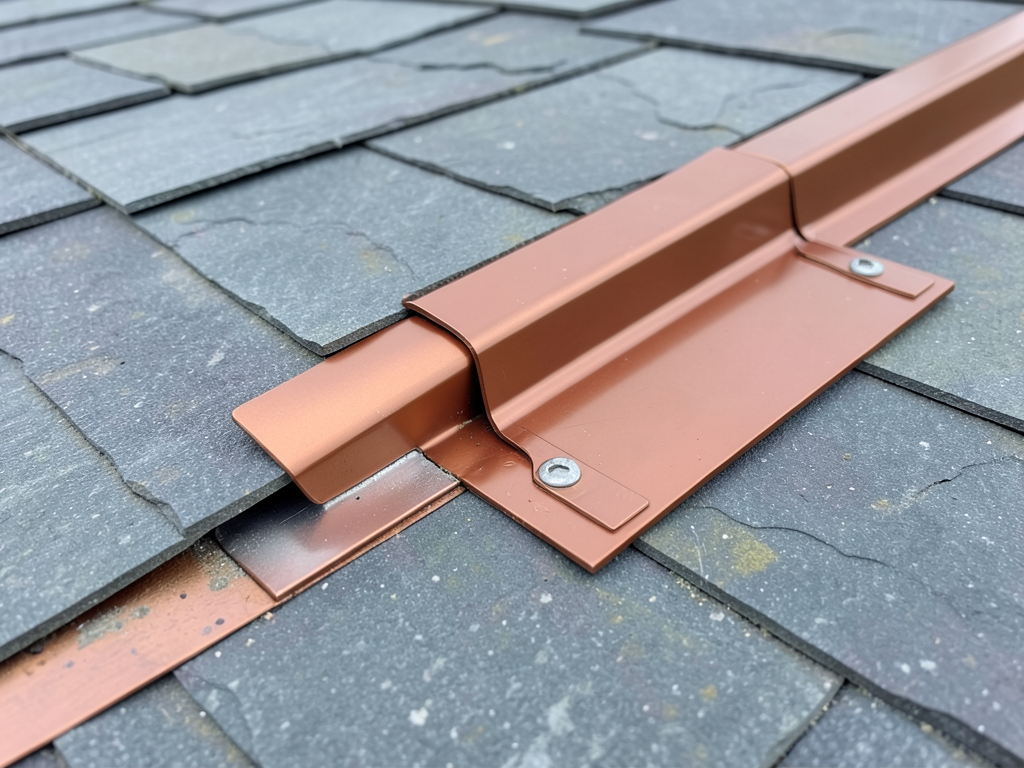
Close-up detail showing copper flashing integration with both natural and synthetic slate roofing systems, highlighting proper water management techniques.
Decision Framework for English Turn Homeowners
Selecting between natural and synthetic slate requires evaluating multiple factors specific to each property. Waterfront homes face different challenges than interior lots, and architectural style influences material selection. Consider these key decision points:
- Ownership duration: Plan to stay 20+ years? Natural slate’s longevity justifies premium costs.
- Structural capacity: Homes built before 2000 may need reinforcement for natural slate weight.
- Architectural style: Traditional designs benefit from natural slate’s authentic appearance.
- Budget constraints: Synthetic options provide luxury appearance at lower initial investment.
- Maintenance preferences: Natural slate requires less frequent but more specialized maintenance.
The investment horizon proves crucial. Natural slate costs 50 to 80 percent more initially but provides 2.5 to 3 times the lifespan. For homeowners viewing their property as a long-term legacy, natural slate offers superior lifetime value despite higher upfront costs.
Installation Best Practices and Common Pitfalls
Both materials require specific installation techniques to achieve optimal performance. Natural slate demands experienced craftsmen who understand stone properties and proper fastening techniques. Common mistakes include using incorrect nail types, improper headlap measurements, and inadequate underlayment installation.
Synthetic slate installation appears simpler but contains its own pitfalls. Overdriving fasteners can crack the polymer material, while underdriven fasteners create wind uplift risks. Some contractors treat synthetic slate like standard shingles, ignoring manufacturer-specific installation requirements that ensure warranty coverage.
Proper underlayment selection proves critical for both materials. High-temperature synthetic underlayment prevents adhesive failure in New Orleans’ extreme heat, while self-adhering ice and water shields protect vulnerable areas. The underlayment system often determines roof performance more than the visible surface material.
Technical diagram showing proper fastening patterns and headlap requirements for both natural and synthetic slate installations in high-wind zones.
Maintenance Requirements and Service Life
Natural slate requires minimal maintenance beyond periodic inspections. The stone resists biological growth, and individual damaged pieces can be replaced without affecting surrounding materials. However, when repairs are needed, they demand specialized skills and matching stone that may be difficult to source decades after initial installation. EPA.
Synthetic slate needs more frequent cleaning to maintain appearance, particularly in shaded areas where algae growth occurs. The material’s uniform composition means color matching for repairs is straightforward, but the polymer surface can become brittle over decades of UV exposure. Most manufacturers recommend professional cleaning every 3 to 5 years.
Both materials benefit from annual inspections, particularly after hurricane season. Look for cracked or missing pieces, damaged flashing, and proper water drainage. Early detection of issues prevents costly repairs and extends overall roof life.
Frequently Asked Questions
How long does a luxury slate roof last in New Orleans?
Natural slate typically lasts 75 to 100 years in the New Orleans climate when properly installed and maintained. Synthetic alternatives generally provide 40 to 50 years of service life. The extreme humidity and hurricane exposure in English Turn can affect longevity, making proper installation and material selection critical.
Does synthetic slate look fake compared to natural stone?
Modern synthetic slate has evolved significantly, with many products achieving near-indistinguishable appearance from natural stone at a distance. Close inspection reveals differences in texture and color variation, but from street level, high-quality synthetic products effectively mimic natural slate’s appearance. The key is selecting premium products from reputable manufacturers.
What are the insurance implications of choosing synthetic over natural slate?
Insurance companies generally view both materials favorably due to their fire resistance and durability. However, natural slate’s proven longevity and performance history often result in slightly better premium rates. Synthetic slate’s enhanced impact resistance and wind ratings can offset this difference, particularly for homes in high-risk hurricane zones like English Turn.
Can my current English Turn home support natural slate weight?
Most homes built after 2000 can support natural slate without modification, as modern building codes account for heavier roofing materials. Homes constructed before 2000 may require structural evaluation and potential reinforcement, adding $5,000 to $15,000 to installation costs. A structural engineer can assess your specific home’s capacity.
What maintenance schedule should I follow for luxury slate roofing?
Schedule professional inspections annually, with additional checks after severe weather events. Natural slate needs minimal maintenance beyond debris removal and occasional cleaning in heavily shaded areas. Synthetic slate benefits from professional cleaning every 3 to 5 years to prevent algae growth and maintain appearance. Both materials require prompt attention to any visible damage.
Making Your Final Decision
The choice between natural and synthetic slate ultimately depends on your priorities, budget, and long-term plans for your English Turn estate. Natural slate offers unmatched authenticity, extreme longevity, and proven performance in harsh coastal environments. The material’s natural beauty and century-long lifespan make it ideal for homeowners viewing their property as a multi-generational investment.
Synthetic slate provides excellent value for those seeking luxury appearance without the premium price tag or structural requirements. Modern manufacturing techniques create products that effectively mimic natural stone while offering enhanced impact resistance and easier installation. The material’s lower initial cost and reduced maintenance requirements appeal to homeowners prioritizing immediate value and design flexibility.
Consider consulting with a roofing specialist who understands English Turn’s unique environmental challenges and can assess your specific home’s structural capacity. The right choice balances aesthetic goals, budget constraints, and long-term performance requirements to protect your investment for decades to come.
Ready to explore luxury roofing options for your English Turn estate? Call (504) 355-3444 today to schedule a consultation with our roofing specialists. We’ll evaluate your home’s specific needs and help you choose the perfect roofing solution for your luxury property. For more information, visit FEMA.
{
“@context”: “https://schema.org”,
“@type”: “BlogPosting”,
“headline”: “Comparing Luxury Slate and Synthetic Alternatives for English Turn Estates”,
“description”: “Compare natural slate vs synthetic roofing for English Turn estates. Learn durability, cost, and hurricane resistance for luxury New Orleans homes.”,
“wordCount”: 2053,
“datePublished”: “2026-03-10T09:43:00.000Z”,
“dateModified”: “2026-03-10T09:43:00.000Z”,
“inLanguage”: “en-US”,
“mainEntityOfPage”: {
“@type”: “WebPage”,
“@id”: “https://heritageroofingneworleans.com”
},
“publisher”: {
“@type”: “LocalBusiness”,
“name”: “Heritage Roofing New Orleans”,
“url”: “https://heritageroofingneworleans.com”
},
“author”: {
“@type”: “Organization”,
“name”: “Heritage Roofing New Orleans”,
“url”: “https://heritageroofingneworleans.com”
},
“image”: {
“@type”: “ImageObject”,
“url”: “https://heritageroofingneworleans.com/wp-content/uploads/2026/03/comparing-luxury-slate-and-synthetic-alternatives-1.png”
}
}
{
“@context”: “https://schema.org”,
“@type”: “RoofingContractor”,
“name”: “Heritage Roofing New Orleans”,
“url”: “https://heritageroofingneworleans.com”,
“address”: {
“@type”: “PostalAddress”,
“addressLocality”: “New Orleans”
},
“areaServed”: {
“@type”: “City”,
“name”: “New Orleans”
}
}
{
“@context”: “https://schema.org”,
“@type”: “FAQPage”,
“mainEntity”: [
{
“@type”: “Question”,
“name”: “How long does a luxury slate roof last in New Orleans?”,
“acceptedAnswer”: {
“@type”: “Answer”,
“text”: “Natural slate typically lasts 75 to 100 years in the New Orleans climate when properly installed and maintained. Synthetic alternatives generally provide 40 to 50 years of service life. The extreme humidity and hurricane exposure in English Turn can affect longevity, making proper installation and material selection critical.”
}
},
{
“@type”: “Question”,
“name”: “Does synthetic slate look fake compared to natural stone?”,
“acceptedAnswer”: {
“@type”: “Answer”,
“text”: “Modern synthetic slate has evolved significantly, with many products achieving near-indistinguishable appearance from natural stone at a distance. Close inspection reveals differences in texture and color variation, but from street level, high-quality synthetic products effectively mimic natural slate’s appearance. The key is selecting premium products from reputable manufacturers.”
}
},
{
“@type”: “Question”,
“name”: “What are the insurance implications of choosing synthetic over natural slate?”,
“acceptedAnswer”: {
“@type”: “Answer”,
“text”: “Insurance companies generally view both materials favorably due to their fire resistance and durability. However, natural slate’s proven longevity and performance history often result in slightly better premium rates. Synthetic slate’s enhanced impact resistance and wind ratings can offset this difference, particularly for homes in high-risk hurricane zones like English Turn.”
}
},
{
“@type”: “Question”,
“name”: “Can my current English Turn home support natural slate weight?”,
“acceptedAnswer”: {
“@type”: “Answer”,
“text”: “Most homes built after 2000 can support natural slate without modification, as modern building codes account for heavier roofing materials. Homes constructed before 2000 may require structural evaluation and potential reinforcement, adding $5,000 to $15,000 to installation costs. A structural engineer can assess your specific home’s capacity.”
}
},
{
“@type”: “Question”,
“name”: “What maintenance schedule should I follow for luxury slate roofing?”,
“acceptedAnswer”: {
“@type”: “Answer”,
“text”: “Schedule professional inspections annually, with additional checks after severe weather events. Natural slate needs minimal maintenance beyond debris removal and occasional cleaning in heavily shaded areas. Synthetic slate benefits from professional cleaning every 3 to 5 years to prevent algae growth and maintain appearance. Both materials require prompt attention to any visible damage.”
}
}
]
}
{
“@context”: “https://schema.org”,
“@type”: “BreadcrumbList”,
“itemListElement”: [
{
“@type”: “ListItem”,
“position”: 1,
“name”: “Home”,
“item”: “https://heritageroofingneworleans.com”
},
{
“@type”: “ListItem”,
“position”: 2,
“name”: “Blog”,
“item”: “https://heritageroofingneworleans.com/blog”
},
{
“@type”: “ListItem”,
“position”: 3,
“name”: “Comparing Luxury Slate and Synthetic Alternatives for English Turn Estates”
}
]
}
{
“@context”: “https://schema.org”,
“@type”: “Service”,
“serviceType”: “Roofing”,
“provider”: {
“@type”: “LocalBusiness”,
“name”: “Heritage Roofing New Orleans”,
“url”: “https://heritageroofingneworleans.com”
},
“areaServed”: {
“@type”: “City”,
“name”: “New Orleans”
},
“description”: “Compare natural slate vs synthetic roofing for English Turn estates. Learn durability, cost, and hurricane resistance for luxury New Orleans homes.”
}