Uptown New Orleans Slate Roof Repair Tips That Won’t Break Your Budget
Historic homes in Uptown New Orleans face unique challenges from the humid Gulf air, sudden downpours, and occasional tropical storms. These delicate stone surfaces require specialized care that balances historic preservation with practical repairs. This guide shows you how to protect your century-old investment while respecting both your roof’s character and your budget. Historic District Landmarks Commission.
Understanding Uptown’s Slate Roof Challenges
The Garden District and St. Charles Avenue corridors experience specific environmental stressors that accelerate slate deterioration. High humidity levels exceeding 75% create perfect conditions for moss growth between slate layers. The region’s expansive clay soil causes subtle foundation shifts that stress roof joints. Many Uptown homes built between 1880-1920 feature Vermont unfading green slate, which develops hairline cracks when exposed to repeated freeze-thaw cycles during rare winter cold snaps.
Common failure patterns include nail sickness, where original iron fasteners corrode within 50-70 years, causing slates to slip and create water infiltration points. The Historic District Landmarks Commission (HDLC) requires that any replacement slate match the original in thickness, color, and texture, making proper sourcing critical for compliant repairs. Repair vs. Replace Analysis.
Diagnostic Testing: The Copper Wire Test
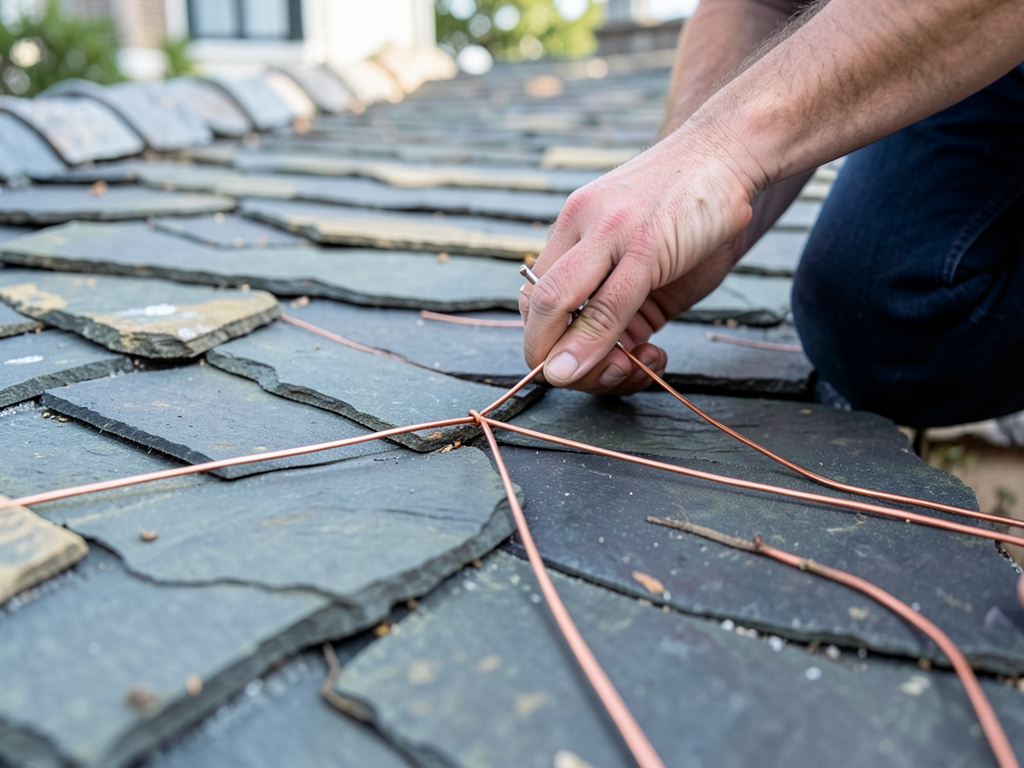
Before any repair work begins, technicians perform a copper wire test to identify compromised areas. This involves sliding a thin copper wire beneath suspect slates to detect movement or gaps. A properly seated slate produces no movement, while loose slates create a telltale clicking sound that echoes through the roof cavity. This diagnostic method prevents unnecessary slate removal and focuses repair efforts on genuinely damaged sections.
Another critical assessment involves checking copper flashing integrity around chimneys and valleys. Many Uptown homes retain original copper flashing that develops verdigris patina over decades. While the green coloration indicates natural weathering, it doesn’t necessarily mean replacement is needed. Technicians use a magnetic field detector to identify areas where flashing separation creates water entry points.
HDLC Compliance and Historic Preservation Requirements
Working within Uptown’s historic district requires understanding HDLC Section 106 review processes. Any slate replacement affecting more than 25% of a roof plane triggers mandatory review, even for emergency repairs. The commission mandates that replacement materials come from certified reclamation yards or manufacturers who can document matching specifications to existing slates.
Copper flashing repairs must use lead-coated copper or traditional tinned copper to maintain historical accuracy. The HDLC specifically prohibits modern aluminum or stainless steel alternatives in visible locations. Repair documentation must include photographs of existing conditions, material samples, and contractor credentials showing experience with historic preservation projects.
Cost-Effective Repair Strategies
Strategic slate repair focuses on targeted replacement rather than wholesale restoration. A typical 200-square-foot repair involving 30-40 slate replacements and minor flashing work averages $3,200-$4,500 in 2026, compared to $28,000-$35,000 for complete roof replacement. The key lies in identifying salvageable slates versus those requiring replacement.
Technicians use specialized slater’s hammers with pointed picks to carefully extract damaged slates without disturbing surrounding materials. Each removed slate undergoes inspection for reusability—surface scratches or minor chips don’t necessarily disqualify a slate if the structural integrity remains sound. Reclaimed slates from demolition sites or architectural salvage yards provide matching materials at 40-60% below new slate costs. Specialized Roofing Solutions for Properties in the French Quarter.
Copper Flashing and Valley Repair Techniques
Copper valley repairs require specific soldering techniques that have changed little since the 1920s. Technicians use oxygen-acetylene torches to create seamless joints that expand and contract with temperature changes. The soldering process involves applying flux, heating the copper to 450-500°F, and introducing lead-free solder that creates watertight seams lasting 80-100 years.
Box gutter integration with slate systems presents unique challenges in Uptown homes. Many original box gutters feature built-up tar and gravel systems that deteriorate from UV exposure and standing water. Modern PVC liner installations within existing box structures provide cost-effective solutions that maintain exterior historical appearance while improving drainage efficiency.
Storm Damage Assessment and Emergency Response
Post-storm inspections require systematic approaches to identify wind-lifted slates and impact damage from falling branches. Hurricane-force winds exceeding 75 mph can create uplift forces that separate slates from their fasteners, particularly along roof edges and ridges. Emergency tarping involves using breathable synthetic underlayment rather than plastic tarps, which trap moisture and accelerate wood deck deterioration.
Insurance claim documentation for slate damage requires specific photographic evidence showing pre-existing conditions versus storm-related damage. HDLC compliance documentation becomes critical during insurance settlements, as many carriers initially underestimate repair costs for historic materials.
Maintenance Schedule for Long-Term Preservation
Annual maintenance inspections in spring and fall identify developing issues before they become costly repairs. Key inspection points include checking for slipped slates after winter storms, verifying flashing seal integrity, and clearing debris from valleys and gutters. The expansive clay soil in Uptown causes foundation movement that creates stress points at roof-wall intersections, requiring bi-annual monitoring.
Moss and algae removal using low-pressure washing prevents organic growth from lifting slate edges. However, aggressive cleaning methods can damage slate surfaces, making professional treatment essential. Copper strips installed along ridges release ions that inhibit moss growth without chemical treatments.
Comparing Repair vs. Replacement Scenarios
| Condition | Recommended Action | Estimated Cost Range | Timeline | HDLC Review Required |
|---|---|---|---|---|
| Less than 15% slate damage | Targeted repair and flashing replacement | $2,800-$4,200 | 2-3 days | No |
| 15-40% slate damage with sound structure | Section replacement with HDLC approval | $8,000-$14,000 | 5-7 days | Yes |
| Structural deck damage | Complete replacement with salvage | $28,000-$35,000 | 2-3 weeks | Yes |
Finding Matching Reclaimed Slate
Sourcing matching slate requires relationships with architectural salvage yards across the Southeast. Vermont unfading green remains the most common Uptown slate, but variations in weathering create matching challenges. Salvage specialists maintain inventories sorted by thickness, color, and surface texture, allowing precise matches for repairs.
The cost differential between new and reclaimed slate often justifies the search time. Premium reclaimed slate costs $8-$12 per square foot versus $18-$25 for new material. Transportation from salvage locations in Birmingham or Atlanta adds $300-$500 to project costs but preserves historical accuracy.
Professional vs. DIY Considerations
Slate repair requires specialized tools and knowledge that make DIY approaches risky for historic homes. The weight of individual slates (7-10 pounds each) creates fall hazards, while improper fastening techniques can damage surrounding slates. Professional technicians carry $2 million liability coverage specifically for historic property work.
Insurance companies often require professional certification for claim approval on historic properties. HDLC violations from unlicensed work can result in fines up to $1,000 per violation and mandatory corrective work at homeowner expense.
Long-Term Value Preservation
Properly maintained slate roofs add 15-20% to historic home values in Uptown. The 100+ year lifespan of quality slate makes it one of the few roofing materials that can outlast the mortgage on a historic property. Regular maintenance prevents the cascade effect where minor issues become major structural problems. Roofing Kenner.
Energy efficiency improvements through proper attic ventilation complement slate preservation efforts. The thermal mass of slate provides natural cooling in summer and insulation in winter, reducing HVAC costs by 8-12% when properly ventilated.
Frequently Asked Questions
How long do slate roof repairs typically take?
Most targeted repairs requiring 20-40 slate replacements and minor flashing work complete in 2-3 days. HDLC approval processes add 1-2 weeks if section replacement requires commission review.
Can I match the color of my existing slate?
Yes, through architectural salvage yards specializing in historic materials. Vermont unfading green slate shows minimal color change over 100 years, making matching feasible. Color variations occur based on original quarry location and weathering patterns.
What happens if I need emergency repairs during hurricane season?
Emergency tarping with breathable underlayment prevents water intrusion while maintaining HDLC compliance. Permanent repairs require HDLC approval but temporary stabilization protects your home until formal approval processes complete.
Call (504) 355-3444 for Your Slate Roof Assessment
Don’t let minor slate issues become major structural problems. Our team understands the unique challenges of Uptown’s historic homes and works within HDLC guidelines to preserve your roof’s character while protecting your investment. Call (504) 355-3444 today to schedule your comprehensive inspection before the next storm hits.
We’ll provide a detailed assessment showing exactly what needs repair versus what can be preserved, helping you make informed decisions about your historic home’s most visible feature. Pick up the phone and call (504) 355-3444 before small problems become expensive emergencies. For more information, visit City of New Orleans Planning Commission.
{
“@context”: “https://schema.org”,
“@type”: “BlogPosting”,
“headline”: “Uptown New Orleans Slate Roof Repair Tips That Won’t Break Your Budget”,
“description”: “Expert slate roof repair strategies for Uptown New Orleans homes. Learn HDLC-compliant techniques, cost-effective solutions, and preservation methods that protect your historic investment.”,
“wordCount”: 1390,
“datePublished”: “2026-02-17T09:27:00.000Z”,
“dateModified”: “2026-02-17T09:27:00.000Z”,
“inLanguage”: “en-US”,
“mainEntityOfPage”: {
“@type”: “WebPage”,
“@id”: “https://heritageroofingneworleans.com”
},
“publisher”: {
“@type”: “LocalBusiness”,
“name”: “Heritage Roofing New Orleans”,
“url”: “https://heritageroofingneworleans.com”
},
“author”: {
“@type”: “Organization”,
“name”: “Heritage Roofing New Orleans”,
“url”: “https://heritageroofingneworleans.com”
},
“image”: {
“@type”: “ImageObject”,
“url”: “https://heritageroofingneworleans.com/wp-content/uploads/2026/03/uptown-new-orleans-slate-roof-repair-tips-that-won-1.png”
}
}
{
“@context”: “https://schema.org”,
“@type”: “RoofingContractor”,
“name”: “Heritage Roofing New Orleans”,
“url”: “https://heritageroofingneworleans.com”,
“address”: {
“@type”: “PostalAddress”,
“addressLocality”: “New Orleans”
},
“areaServed”: {
“@type”: “City”,
“name”: “New Orleans”
}
}
{
“@context”: “https://schema.org”,
“@type”: “FAQPage”,
“mainEntity”: [
{
“@type”: “Question”,
“name”: “How long do slate roof repairs typically take?”,
“acceptedAnswer”: {
“@type”: “Answer”,
“text”: “Most targeted repairs requiring 20-40 slate replacements and minor flashing work complete in 2-3 days. HDLC approval processes add 1-2 weeks if section replacement requires commission review.”
}
},
{
“@type”: “Question”,
“name”: “Can I match the color of my existing slate?”,
“acceptedAnswer”: {
“@type”: “Answer”,
“text”: “Yes, through architectural salvage yards specializing in historic materials. Vermont unfading green slate shows minimal color change over 100 years, making matching feasible. Color variations occur based on original quarry location and weathering patterns.”
}
},
{
“@type”: “Question”,
“name”: “What happens if I need emergency repairs during hurricane season?”,
“acceptedAnswer”: {
“@type”: “Answer”,
“text”: “Emergency tarping with breathable underlayment prevents water intrusion while maintaining HDLC compliance. Permanent repairs require HDLC approval but temporary stabilization protects your home until formal approval processes complete.”
}
}
]
}
{
“@context”: “https://schema.org”,
“@type”: “BreadcrumbList”,
“itemListElement”: [
{
“@type”: “ListItem”,
“position”: 1,
“name”: “Home”,
“item”: “https://heritageroofingneworleans.com”
},
{
“@type”: “ListItem”,
“position”: 2,
“name”: “Blog”,
“item”: “https://heritageroofingneworleans.com/blog”
},
{
“@type”: “ListItem”,
“position”: 3,
“name”: “Uptown New Orleans Slate Roof Repair Tips That Won’t Break Your Budget”
}
]
}
{
“@context”: “https://schema.org”,
“@type”: “Service”,
“serviceType”: “Roofing”,
“provider”: {
“@type”: “LocalBusiness”,
“name”: “Heritage Roofing New Orleans”,
“url”: “https://heritageroofingneworleans.com”
},
“areaServed”: {
“@type”: “City”,
“name”: “New Orleans”
},
“description”: “Expert slate roof repair strategies for Uptown New Orleans homes. Learn HDLC-compliant techniques, cost-effective solutions, and preservation methods that protect your historic investment.”
}