Managing Overhanging Live Oak Branches Above Your St. Charles Avenue Roof
Live Oak branches hanging over St. Charles Avenue homes create serious roofing problems unique to New Orleans. The combination of high humidity, hurricane-force winds, and heavy Spanish moss accelerates shingle damage through constant abrasion and moisture retention. Homeowners in the Garden District and Uptown corridors face costly repairs when branches trap water against roof surfaces, creating perfect conditions for rot, algae growth, and termite infestation. Understanding the specific risks and local regulations helps protect your investment before the next storm season hits. What Metairie Homeowners Need to Do for Emergency Storm Damage and Tarping.
Why St. Charles Avenue Live Oaks Threaten Your Roof Structure
Live Oak branches create multiple failure points for St. Charles Avenue roofs through constant physical contact and environmental factors. The trees’ massive canopies produce continuous shade that prevents roof surfaces from drying completely after rainfall, leading to moisture accumulation under shingles. Spanish moss growing on these branches drops organic debris that clogs gutters and traps additional moisture against roof edges. The Best Shingles to Withstand New Orleans Heat and Humidity.
During hurricane season, these same branches become dangerous projectiles when winds exceed 75 mph. The Louisiana State Uniform Construction Code requires roofing systems to withstand specific wind loads, but overhanging limbs create concentrated stress points that compromise structural integrity. Formosan termites use these branches as bridges to bypass soil treatments and access roof structures directly. Louisiana Department of Agriculture and Forestry.
Local building patterns in the Garden District feature historic shotgun houses and raised Creole cottages with specific ventilation requirements. When Live Oak branches block ridge vents and soffit openings, attic temperatures rise dramatically, accelerating shingle deterioration through thermal expansion and contraction cycles.
Five Critical Roof Damage Patterns from Live Oak Contact
Live Oak branches touching roof surfaces cause five distinct damage patterns that compromise roofing systems. Each pattern requires different diagnostic approaches and repair strategies specific to New Orleans’ climate conditions. What to Do When Your New Orleans Roof Starts Leaking During a Downpour.
- Granule Loss Detection
Examine downspouts and gutter bottoms for black sand-like granules. Live Oak branches cause continuous abrasion that strips protective granules from asphalt shingles, exposing underlying asphalt to UV radiation and accelerating deterioration.. Read more about Using Zinc and Copper Strips to Naturally Kill Algae on Shaded Covington Roofs.
- Moisture Retention Zones
Look for dark streaks or algae growth on shaded roof sections. Live Oak canopies create permanent shade zones where moisture evaporates slowly, promoting moss and lichen growth that holds water against shingle surfaces.. Read more about Removing Thick Moss and Algae From Shaded Roofs in Mandeville and Covington.
- Structural Stress Points
Identify areas where branches contact roof decking directly. The weight of Live Oak limbs during storms creates concentrated pressure points that can crack rafters or split decking materials, especially in older Garden District homes.
- Gutter System Failure
Check for sagging gutters and overflowing drainage. Live Oak leaves and moss clog drainage channels, causing water to back up under shingles and into fascia boards where rot begins.. Read more about Why Standard Gutters Overflow During New Orleans Summer Squalls (And What Sizes Actually Work).
- Pest Access Routes
Inspect for termite mud tubes and rodent entry points. Live Oak branches touching roofs provide direct pathways for Formosan termites and squirrels to access attic spaces without ground contact.
New Orleans Climate Factors That Accelerate Branch-Related Roof Damage
New Orleans’ subtropical climate creates conditions that multiply the damage potential of overhanging Live Oak branches. The city’s average annual humidity exceeds 75%, creating constant moisture availability for accelerated wood rot and algae growth on shaded roof surfaces. City of New Orleans Parks and Parkways.
Summer temperatures regularly exceed 90°F, causing thermal expansion of roofing materials. When Live Oak branches prevent proper ventilation, trapped heat accelerates shingle curling and buckling. The Louisiana Department of Agriculture and Forestry reports that Formosan termites swarm during warm spring nights, using tree branches as aerial highways to access structures. Specialized Roofing Solutions for Properties in the French Quarter.
Heavy rainfall patterns in St. Charles Avenue create additional challenges. The area receives approximately 62 inches of rain annually, with intense downpours common during summer thunderstorms. Live Oak canopies trap this moisture against roof surfaces, preventing proper drainage and creating standing water conditions that degrade roofing materials. Roofing Kenner.
Wind patterns specific to the Mississippi River corridor create unique stresses. The river’s proximity generates localized wind tunnels that intensify during storm events, causing branches to whip against roof surfaces with greater force than in inland areas. This constant mechanical abrasion removes protective coatings and creates entry points for water infiltration.
Local Tree Trimming Laws and Neighbor Rights in Orleans Parish
Louisiana follows the “self-help” doctrine for tree trimming disputes, allowing property owners to trim branches overhanging their property lines. However, St. Charles Avenue residents must navigate specific local ordinances that protect historic Live Oak trees under the City of New Orleans’ tree preservation guidelines.. Read more about How the Humble Drip Edge Keeps New Orleans Rain From Rotting Your Siding.
The New Orleans Department of Parks and Parkways requires permits for trimming Live Oak branches exceeding four inches in diameter. Violations can result in fines up to $1,000 per tree and mandatory replacement of damaged specimens. The Historic District Landmarks Commission adds additional restrictions for properties within designated historic districts.
Louisiana Civil Code Article 688 establishes that while you can trim overhanging branches, you cannot enter your neighbor’s property to do so without permission. This creates practical challenges for St. Charles Avenue homes where mature Live Oaks span multiple property lines and require coordinated maintenance efforts.. Read more about Dealing With Complex Roof Lines and Drainage Valley Clogs in Old Metairie.
Insurance considerations complicate the legal landscape. Most homeowners policies exclude damage from “negligent maintenance” of trees. If overhanging branches cause damage and you failed to address the hazard, your claim may be denied regardless of legal rights to trim.
Six-Step Emergency Response for Branch Damage During Storms
Storm damage from Live Oak branches requires immediate action to prevent water intrusion and structural compromise. The following protocol helps St. Charles Avenue homeowners respond effectively when branches break during tropical systems.
- Safety Assessment
Check for downed power lines and structural hazards before approaching damaged areas. Live Oak branches can weigh hundreds of pounds when wet, creating dangerous conditions for untrained individuals.
- Water Containment
Place buckets or containers under active leaks. Live Oak impacts often create multiple puncture points that allow rapid water infiltration during heavy rainfall.
- Temporary Protection
Apply tarps over damaged areas using 2×4 lumber to secure edges. The tarp should extend at least 3 feet beyond visible damage to account for hidden punctures from branch impacts.
- Documentation
Photograph all damage from multiple angles before cleanup begins. Insurance adjusters require clear evidence of pre-cleanup conditions for claim approval.
- Professional Assessment
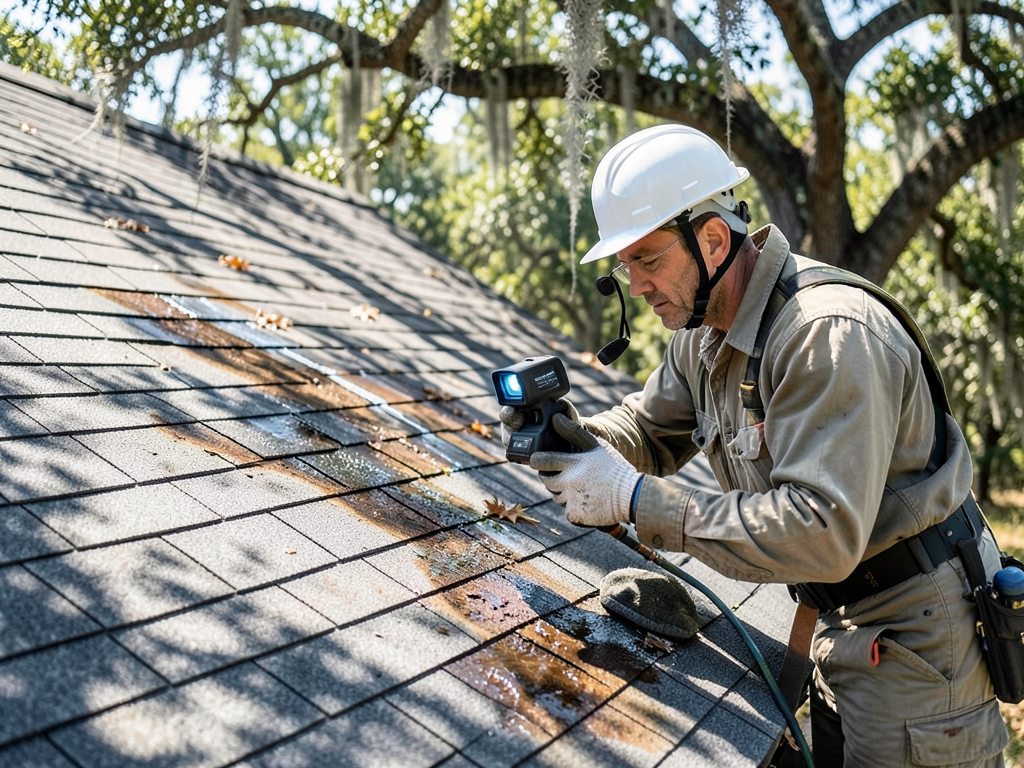
Call (504) 355-3444 for emergency inspection services. Our technicians use thermal imaging to detect hidden moisture intrusion that may not be visible from ground level.
- Insurance Notification
Contact your homeowners insurance provider within 24 hours. Louisiana law requires prompt notification for storm damage claims to maintain coverage eligibility.
Live Oak Branch Clearance Standards for New Orleans Roofs
Professional arborists recommend specific clearance distances based on tree species, roof type, and local weather patterns. For Live Oaks in New Orleans, the minimum safe distance varies by roof component and structural vulnerability.
Shingle surfaces require six feet of clearance to prevent abrasion damage. This distance allows wind movement without branch contact while maintaining adequate shade for energy efficiency. For tile roofs, increase clearance to eight feet due to the brittle nature of clay and concrete materials.
Gutter systems need four feet of clearance to prevent leaf and debris accumulation. Live Oak leaves decompose slowly and create acidic conditions that accelerate metal gutter deterioration. Soffit and fascia boards require five feet of clearance to prevent moisture wicking from direct branch contact.
Ridge vents and other ventilation components need seven feet of clearance to maintain proper airflow. Live Oaks grow asymmetrically, often leaning toward structures due to prevailing winds from the Mississippi River. This growth pattern requires strategic pruning rather than uniform trimming.
Cost factors for professional tree trimming vary significantly based on accessibility and tree size. Live Oaks on St. Charles Avenue often require bucket truck access due to their height and proximity to power lines. Typical pruning costs range from $500 to $2,500 depending on the extent of required work.
Termite Bridge Prevention Through Strategic Branch Management
Formosan subterranean termites pose an existential threat to New Orleans structures, causing over $300 million in annual damage throughout the metropolitan area. Live Oak branches create aerial pathways that bypass traditional soil treatment barriers, allowing termite colonies to access roofs without ground contact.
The Louisiana Department of Agriculture and Forestry identifies branch-to-roof contact as the primary entry method for aerial termite infestations in historic districts. These termites can consume wood at rates up to 1,000 times faster than native species, making early prevention critical for St. Charles Avenue properties.
Effective prevention requires maintaining specific clearance distances based on termite behavior patterns. Formosan termites typically swarm between April and June during warm evenings following rain events. Branches within six feet of roof surfaces provide ideal landing zones for reproductive termites seeking new nesting sites.
Professional termite inspections should include branch clearance verification as part of annual maintenance. Licensed pest control operators use infrared cameras to detect moisture accumulation along branch contact points, which indicates potential termite activity. Early detection can prevent $10,000+ repair costs from established infestations.
Treatment strategies combine physical removal with chemical barriers. Termite shields installed along roof edges prevent ground-based access, while borate treatments applied to branch contact points create chemical deterrents. These integrated approaches provide comprehensive protection for historic New Orleans properties.
Insurance Coverage Considerations for Branch-Related Roof Damage
Louisiana homeowners insurance policies contain specific exclusions and limitations for tree-related roof damage that affect St. Charles Avenue residents. Understanding these provisions helps homeowners make informed decisions about preventive maintenance versus repair costs.
Most policies cover sudden and accidental damage from falling trees or branches. However, damage from branches that have been touching the roof for extended periods often falls under “wear and tear” exclusions. Insurance companies argue that gradual damage from known hazards represents negligent maintenance rather than insurable events.
Deductible structures significantly impact claim economics. Louisiana policies typically feature hurricane deductibles of 2-5% of insured value for wind-related damage. For a $300,000 home, this translates to $6,000-$15,000 out-of-pocket costs before coverage applies, often exceeding the cost of preventive tree trimming.
Documentation requirements prove critical for successful claims. Insurance adjusters look for evidence of regular maintenance and prompt response to identified hazards. Homeowners who can demonstrate documented inspections and timely repairs face fewer coverage disputes than those who deferred maintenance.
Policy endorsements may provide additional protection for historic properties. Some insurers offer specialized coverage for Garden District homes that includes extended replacement cost provisions and coverage for custom architectural features common in St. Charles Avenue residences.
Comparing Roof Materials and Their Vulnerability to Branch Damage
Different roofing materials respond uniquely to Live Oak branch contact, affecting both maintenance requirements and replacement costs. Understanding these material-specific vulnerabilities helps St. Charles Avenue homeowners make informed decisions about roof protection strategies.
| Roofing Material | Branch Contact Tolerance | Typical Lifespan with Branch Contact | Replacement Cost per Square |
|---|---|---|---|
| Asphalt Shingles | Low – 6 feet minimum | 12-15 years | $350-450 |
| Spanish Tile | Very Low – 8 feet minimum | 8-12 years | $800-1,200 |
| Metal Roofing | Medium – 4 feet minimum | 20-25 years | $600-900 |
| Slate Tile | Low – 7 feet minimum | 15-20 years | $1,200-1,800 |
Asphalt shingles dominate St. Charles Avenue due to their cost-effectiveness and moderate durability. However, they show the most visible damage from branch contact through granule loss and surface abrasion. Spanish tile, while aesthetically appropriate for historic homes, cracks easily under branch impact and requires extensive clearance.
Metal roofing offers superior resistance to branch contact but presents challenges in historic districts where architectural compatibility matters. Slate provides excellent durability but at premium costs that may not justify the investment for homes with aggressive Live Oak canopies.
Material selection should consider both immediate costs and long-term maintenance requirements. Homes with extensive Live Oak coverage may benefit from impact-resistant materials despite higher upfront costs, as replacement expenses from branch damage often exceed initial material premiums.
Professional Inspection Protocols for Branch-Affected Roofs
Comprehensive roof inspections for St. Charles Avenue homes require specific protocols that address Live Oak-related vulnerabilities. Professional inspectors use systematic approaches to identify both visible damage and hidden moisture problems that could lead to structural failure.
Initial assessment begins with ground-level examination of branch patterns and contact points. Inspectors document branch diameter, contact frequency, and wind exposure patterns that indicate potential failure points. This baseline data helps prioritize trimming recommendations and repair strategies.
Roof surface inspection focuses on granule loss patterns, shingle deformation, and moisture retention zones. Technicians use moisture meters to detect water infiltration beneath visible surfaces, particularly in areas where Live Oak branches create permanent shade. Thermal imaging reveals temperature variations that indicate compromised insulation or moisture accumulation.
Gutter and drainage system evaluation examines leaf accumulation patterns and water flow efficiency. Live Oak debris creates unique clogging patterns that standard cleaning may not address. Inspectors measure gutter slope and drainage capacity to ensure proper water removal during heavy rainfall events.
Attic inspection reveals the most critical damage indicators. Inspectors check for moisture staining, wood rot, and pest activity along roof deck surfaces. Proper ventilation assessment becomes crucial when Live Oak branches block ridge vents or soffit openings, as trapped heat accelerates material degradation.
Documentation includes detailed photography, moisture mapping, and structural assessment reports. These comprehensive evaluations provide homeowners with clear priorities for maintenance and repair investments, often revealing problems before they require expensive emergency interventions.
Frequently Asked Questions
How close can Live Oak branches be to my roof without causing damage?
Live Oak branches should maintain minimum clearances of six feet from shingle surfaces, eight feet from tile roofs, and four feet from gutters. These distances prevent abrasion damage while allowing adequate airflow to prevent moisture accumulation.
Does homeowners insurance cover damage from overhanging tree branches?
Insurance typically covers sudden damage from falling branches but may deny claims for gradual damage from branches touching the roof. Most policies exclude “wear and tear” from known hazards, making preventive maintenance more cost-effective than repair claims.
How often should I have my Live Oak branches trimmed if they overhang my roof?
Live Oak branches overhanging roofs require professional trimming every 2-3 years in New Orleans’ climate. The rapid growth during warm seasons and hurricane vulnerability make regular maintenance essential for preventing structural damage and pest access.
Take Action Before the Next Storm Hits
Live Oak branches hanging over your St. Charles Avenue roof create serious risks that multiply with each passing season. The combination of moisture retention, termite access, and hurricane vulnerability makes immediate action essential for protecting your home investment. Professional assessment can identify hidden damage and provide targeted solutions that prevent costly emergency repairs.
Heritage Roofing specializes in the unique challenges facing New Orleans homes, from historic Garden District properties to modern structures in surrounding neighborhoods. Our technicians understand the specific vulnerabilities created by Live Oak canopies and provide comprehensive solutions that address both immediate concerns and long-term protection.
Don’t wait for the next tropical system to reveal hidden damage. Call (504) 355-3444 today to schedule your professional roof inspection. Our team provides detailed assessments, clear recommendations, and honest guidance about whether repair or replacement makes the most sense for your situation. Early intervention prevents the $10,000+ repair bills that result from deferred maintenance and storm damage.
Protecting your home starts with understanding the risks and taking decisive action. Contact us now to ensure your roof can withstand whatever the New Orleans climate throws its way.
Heritage Roofing
Serving Greater New Orleans including Kenner, Harvey, and Timberlane
Emergency services available 24/7
(504) 355-3444
You may also find this helpful. How Dense Tree Canopy in Folsom Leads to Accelerated Roof Decay.
You may also find this helpful. Matching the Original Roof Profile on Greek Revival Renovations in the Lower Garden District.
{
“@context”: “https://schema.org”,
“@type”: “BlogPosting”,
“headline”: “Managing Overhanging Live Oak Branches Above Your St. Charles Avenue Roof”,
“description”: “Learn how Live Oak branches threaten St. Charles Avenue roofs through abrasion, moisture retention, and termite access. Discover local pruning laws and hurricane preparation.”,
“wordCount”: 2583,
“datePublished”: “2026-05-16T13:59:00.000Z”,
“dateModified”: “2026-05-16T13:59:00.000Z”,
“inLanguage”: “en-US”,
“mainEntityOfPage”: {
“@type”: “WebPage”,
“@id”: “https://heritageroofingneworleans.com”
},
“publisher”: {
“@type”: “LocalBusiness”,
“name”: “Heritage Roofing New Orleans”,
“url”: “https://heritageroofingneworleans.com”
},
“author”: {
“@type”: “Organization”,
“name”: “Heritage Roofing New Orleans”,
“url”: “https://heritageroofingneworleans.com”
},
“image”: {
“@type”: “ImageObject”,
“url”: “https://heritageroofingneworleans.com/wp-content/uploads/2026/03/managing-overhanging-live-oak-branches-above-your-1.png”
}
}
{
“@context”: “https://schema.org”,
“@type”: “RoofingContractor”,
“name”: “Heritage Roofing New Orleans”,
“url”: “https://heritageroofingneworleans.com”,
“address”: {
“@type”: “PostalAddress”,
“addressLocality”: “New Orleans”
},
“areaServed”: {
“@type”: “City”,
“name”: “New Orleans”
}
}
{
“@context”: “https://schema.org”,
“@type”: “FAQPage”,
“mainEntity”: [
{
“@type”: “Question”,
“name”: “How close can Live Oak branches be to my roof without causing damage?”,
“acceptedAnswer”: {
“@type”: “Answer”,
“text”: “Live Oak branches should maintain minimum clearances of six feet from shingle surfaces, eight feet from tile roofs, and four feet from gutters. These distances prevent abrasion damage while allowing adequate airflow to prevent moisture accumulation.”
}
},
{
“@type”: “Question”,
“name”: “Does homeowners insurance cover damage from overhanging tree branches?”,
“acceptedAnswer”: {
“@type”: “Answer”,
“text”: “Insurance typically covers sudden damage from falling branches but may deny claims for gradual damage from branches touching the roof. Most policies exclude \”wear and tear\” from known hazards, making preventive maintenance more cost-effective than repair claims.”
}
},
{
“@type”: “Question”,
“name”: “How often should I have my Live Oak branches trimmed if they overhang my roof?”,
“acceptedAnswer”: {
“@type”: “Answer”,
“text”: “Live Oak branches overhanging roofs require professional trimming every 2-3 years in New Orleans’ climate. The rapid growth during warm seasons and hurricane vulnerability make regular maintenance essential for preventing structural damage and pest access.”
}
}
]
}
{
“@context”: “https://schema.org”,
“@type”: “HowTo”,
“name”: “Roof Damage Assessment”,
“step”: [
{
“@type”: “HowToStep”,
“position”: 1,
“name”: “Granule Loss Detection”,
“text”: “Examine downspouts and gutter bottoms for black sand-like granules. Live Oak branches cause continuous abrasion that strips protective granules from asphalt shingles, exposing underlying asphalt to UV radiation and accelerating deterioration.”
},
{
“@type”: “HowToStep”,
“position”: 2,
“name”: “Moisture Retention Zones”,
“text”: “Look for dark streaks or algae growth on shaded roof sections. Live Oak canopies create permanent shade zones where moisture evaporates slowly, promoting moss and lichen growth that holds water against shingle surfaces.”
},
{
“@type”: “HowToStep”,
“position”: 3,
“name”: “Structural Stress Points”,
“text”: “Identify areas where branches contact roof decking directly. The weight of Live Oak limbs during storms creates concentrated pressure points that can crack rafters or split decking materials, especially in older Garden District homes.”
},
{
“@type”: “HowToStep”,
“position”: 4,
“name”: “Gutter System Failure”,
“text”: “Check for sagging gutters and overflowing drainage. Live Oak leaves and moss clog drainage channels, causing water to back up under shingles and into fascia boards where rot begins.”
},
{
“@type”: “HowToStep”,
“position”: 5,
“name”: “Pest Access Routes”,
“text”: “Inspect for termite mud tubes and rodent entry points. Live Oak branches touching roofs provide direct pathways for Formosan termites and squirrels to access attic spaces without ground contact.”
}
],
“image”: “https://heritageroofingneworleans.com/wp-content/uploads/2026/03/managing-overhanging-live-oak-branches-above-your-1.png”
}
{
“@context”: “https://schema.org”,
“@type”: “BreadcrumbList”,
“itemListElement”: [
{
“@type”: “ListItem”,
“position”: 1,
“name”: “Home”,
“item”: “https://heritageroofingneworleans.com”
},
{
“@type”: “ListItem”,
“position”: 2,
“name”: “Blog”,
“item”: “https://heritageroofingneworleans.com/blog”
},
{
“@type”: “ListItem”,
“position”: 3,
“name”: “Managing Overhanging Live Oak Branches Above Your St. Charles Avenue Roof”
}
]
}
{
“@context”: “https://schema.org”,
“@type”: “Service”,
“serviceType”: “Roofing”,
“provider”: {
“@type”: “LocalBusiness”,
“name”: “Heritage Roofing New Orleans”,
“url”: “https://heritageroofingneworleans.com”
},
“areaServed”: {
“@type”: “City”,
“name”: “New Orleans”
},
“description”: “Learn how Live Oak branches threaten St. Charles Avenue roofs through abrasion, moisture retention, and termite access. Discover local pruning laws and hurricane preparation.”
}