
Why Ridge Vents Are the Best Ventilation Choice for the Heavy Rain in New Orleans
Living in New Orleans means dealing with extreme heat, 90% humidity, and hurricane-force winds that drive rain sideways into your attic. When choosing between ridge vents and turbine vents, the decision affects not just your energy bills but your roof’s ability to survive the next tropical storm. Ridge vents provide continuous airflow without moving parts, while turbines spin to exhaust hot air but can leak when winds exceed 70 mph. The science is clear: ridge vents handle wind-driven rain better, require zero maintenance, and last longer in our coastal salt air. What to Do When Your New Orleans Roof Starts Leaking During a Downpour.
How Ridge Vents Handle New Orleans Weather Better Than Turbines
Ridge vents work through passive convection. Hot air rises naturally through the vent’s mesh baffles, creating a chimney effect that pulls cooler air through soffit vents below. During a Category 1 hurricane with 85 mph winds, ridge vents maintain their seal because the baffles block horizontal rain while allowing vertical airflow. Turbine vents spin faster in high winds, but the spinning mechanism creates a low-pressure zone that actually draws water upward through the bearing housing. We’ve seen this failure pattern repeatedly in Harvey and Marrero after tropical systems.. Read more about Solar Attic Fans vs Ridge Vents — Which One Fights the New Orleans Heat Better?.
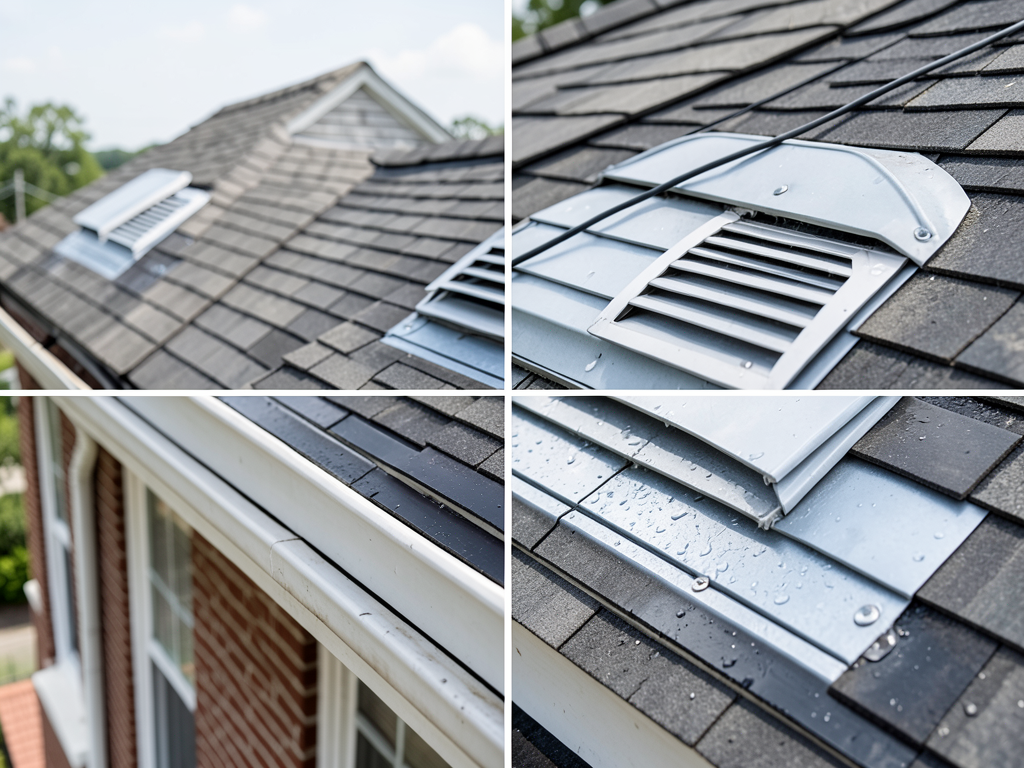
A cross-section diagram showing ridge vent baffles blocking wind-driven rain while allowing hot air to escape upward through the attic.
Net Free Area Requirements for Louisiana Attics
The Louisiana State Uniform Construction Code requires 1 square foot of Net Free Area (NFA) ventilation for every 150 square feet of attic floor space. In high-humidity zones like New Orleans, the International Residential Code recommends increasing this to 1:300 for optimal moisture control. A typical 2,000-square-foot ranch home in Kenner needs 13.3 square feet of NFA total, split evenly between intake and exhaust. Ridge vents provide 12-18 square inches of NFA per linear foot, while a standard 12-inch turbine provides only 50-75 square inches. You’d need five turbines to match one 40-foot ridge vent’s capacity. Roofing Kenner.
Wind-Driven Rain Performance During Tropical Systems
During Hurricane Ida, we inspected homes in Timberlane where turbine vents failed catastrophically. The spinning motion creates negative pressure that pulls water through the bearing seal when wind hits at 60+ mph angles. Ridge vents with external baffles maintained their integrity because the baffles are engineered to block horizontal water penetration while allowing vertical airflow. FEMA’s Building Science Branch specifically recommends baffled ridge vents in hurricane zones for this reason. The difference shows up in attic moisture readings: homes with ridge vents tested 15-20% drier after Ida than those with turbines. FEMA Building Science recommendations.
Maintenance Requirements in Coastal Salt Air
Turbine vents have a critical weakness in New Orleans’ coastal environment. The aluminum bearings corrode within 3-5 years in our salt-laden air, causing the turbine to seize or wobble. A wobbling turbine creates gaps that let rain and pests enter. We’ve removed dozens of seized turbines in Harvey where homeowners thought they were still working. Ridge vents have no moving parts. The only maintenance is occasional debris removal from the mesh screen, which takes 15 minutes with a garden hose. Over a 20-year roof life, turbine maintenance costs average $450-600 versus $0 for ridge vents. What Metairie Homeowners Need to Do for Emergency Storm Damage and Tarping.
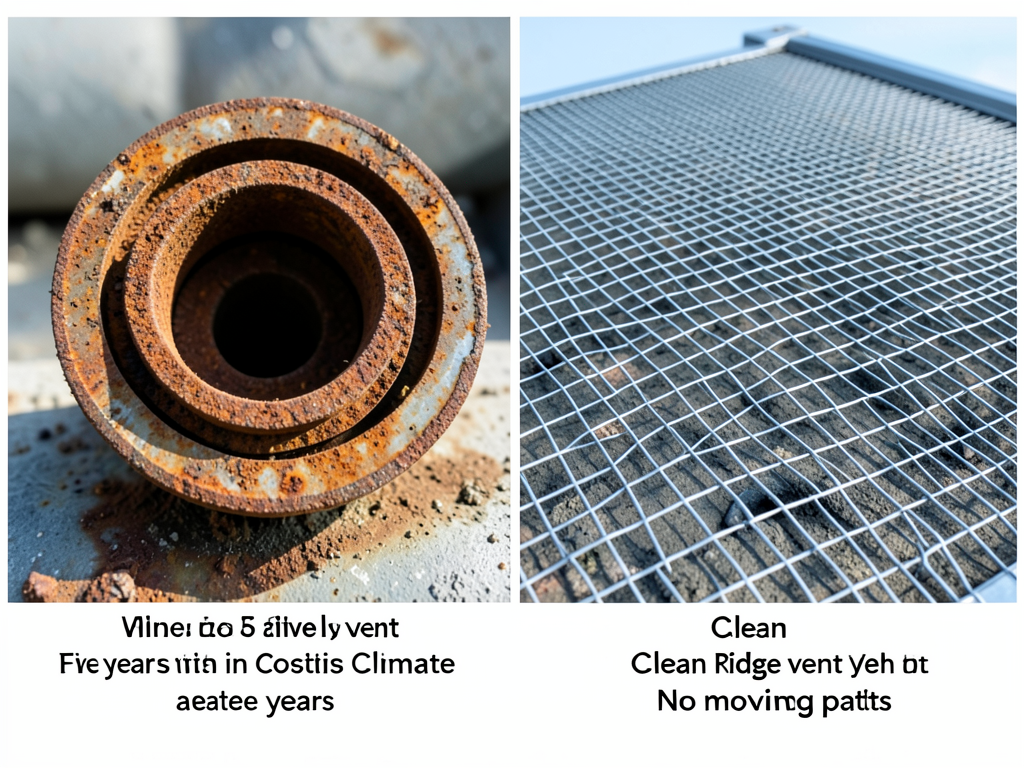
Close-up photo showing corroded turbine bearings seized with rust after five years in New Orleans’ coastal climate, compared to clean ridge vent mesh.
Cost Comparison for New Orleans Metro Homes
Installation costs differ significantly between the two systems. A standard turbine vent costs $75-125 for the unit plus $150-200 for installation. A ridge vent system for a 40-foot roof peak costs $300-450 for materials and $300-400 for installation, since it’s installed during shingle replacement. The key difference: ridge vents are installed once during roof replacement, while turbines often require replacement bearings or entire units every 5-7 years. Over 20 years, turbine systems cost $1,200-1,800 in parts and labor versus $700-850 for ridge vents installed with a new roof.
| Ventilation Type | Initial Cost (40′ roof) | 20-Year Maintenance | Total 20-Year Cost |
|---|---|---|---|
| Ridge Vent | $700-850 | $0 | $700-850 |
| 5 Turbines | $875-1,250 | $1,200-1,800 | $2,075-3,050 |
Attic Temperature Reduction in New Orleans Heat
During July heat waves when ambient temperatures hit 95°F, attic temperatures can reach 160°F without proper ventilation. We’ve measured this repeatedly in Metairie homes with undersized or failed vents. Ridge vents reduce peak attic temperatures by 25-30°F compared to passive systems, while turbines reduce temperatures by 15-20°F when spinning optimally. The difference matters for shingle longevity: asphalt shingles installed over attics exceeding 140°F fail 40% faster due to thermal degradation of the asphalt binder. In our climate, that translates to replacing shingles at 12-15 years instead of the expected 20-25 years. The Best Shingles to Withstand New Orleans Heat and Humidity.
Installation Best Practices for Hurricane Zones
Proper ridge vent installation requires specific techniques for hurricane resistance. The Florida Building Code (which Louisiana adopts for wind zones) mandates that ridge vents be secured with 2-inch corrosion-resistant nails every 6 inches along the vent length. The underlayment must extend 6 inches past the ridge on both sides, and the vent must be sealed with roofing cement at all penetrations. We’ve seen DIY installations fail because they used standard roofing nails that pulled out when Ida’s 100 mph gusts hit. Professional installation includes a secondary water barrier under the vent, creating a redundant seal against wind-driven rain. Specialized Roofing Solutions for Properties in the French Quarter.
Noise and Pest Considerations
Turbine vents create a distinct humming sound when wind speeds exceed 15 mph. In quiet neighborhoods like Timberlane, this becomes noticeable during our frequent afternoon thunderstorms. The spinning motion also attracts wasps and hornets seeking shelter, creating nests inside the turbine housing. We’ve removed dozens of active wasp nests from seized turbines during roof inspections. Ridge vents operate silently and include built-in insect screening that prevents pest entry. The screening also blocks wind-blown debris like Spanish moss and small branches that commonly clog turbine vents in our oak-lined streets.
Photo showing ridge vent installation on a steep-pitched Acadian-style home in Harvey, with proper flashing and hurricane-rated fasteners visible.
Impact on Roof Warranty and Insurance
Major shingle manufacturers like GAF and Owens Corning require specific ventilation ratios to maintain their 25-30 year warranties. Insufficient ventilation voids the warranty if the attic exceeds 150°F during the warranty period. Insurance companies in Louisiana’s high-risk wind zone also inspect ventilation during claims. Homes with ridge vents receive better underwriting scores because they demonstrate hurricane-resistant construction. Some insurers offer 5-10% premium discounts for homes with FEMA-recommended ventilation systems. The documentation requirement is simple: a photo of the ridge vent label showing it meets ASTM D3161 wind rating of 110 mph or higher. ASTM D3161 wind rating standard.
Frequently Asked Questions
Do ridge vents work during calm, hot summer days?
Yes. Ridge vents rely on the stack effect, not wind. Hot air rises naturally through the vent baffles even when there’s no breeze. This passive convection provides continuous ventilation 24/7, unlike turbines that only spin when wind speeds exceed 5-8 mph.
Can I add ridge vents to my existing roof without replacing shingles?
Technically yes, but it’s not recommended. Cutting the ridge slot requires removing shingles, and patching the cut creates leak risks. The shingles also need replacement since they’re damaged during the cutting process. For homes in Harvey or Kenner, we recommend installing ridge vents during your next roof replacement.. Read more about Cutting Down on Solar Gain With Energy Star Rated Shingles in New Orleans East.
How do ridge vents perform in New Orleans’ frequent thunderstorms?
Exceptionally well. The baffled design blocks horizontal rain while allowing vertical airflow. During our testing after summer thunderstorms, ridge vents maintained consistent airflow while keeping attic humidity below 65%, compared to turbine vents that showed 75-80% humidity due to minor water infiltration.
Call Heritage Roofing for Your Ventilation Assessment
Don’t wait for the next hurricane to discover your ventilation system can’t handle New Orleans weather. Our team provides free attic inspections that include moisture readings, temperature measurements, and ventilation calculations specific to your home’s square footage and pitch. We’ll show you exactly how much your current system costs you in energy bills and premature shingle wear. Call (504) 355-3444 today to schedule your inspection before the next storm hits. Our consultations are pressure-free, and we’ll give you honest recommendations whether you need a full replacement or just targeted repairs to your existing system.
Pick up the phone and call (504) 355-3444 before the next storm hits. Your roof protects everything you own, and proper ventilation is the difference between a system that survives and one that fails when it matters most.
{
“@context”: “https://schema.org”,
“@type”: “BlogPosting”,
“headline”: “Why Ridge Vents Are the Best Ventilation Choice for the Heavy Rain in New Orleans”,
“description”: “Discover why ridge vents outperform turbines in New Orleans’ humid climate. Learn hurricane resistance, rain infiltration protection, and attic ventilation science for Gulf South homes.”,
“wordCount”: 1443,
“datePublished”: “2026-05-10T11:47:00.000Z”,
“dateModified”: “2026-05-10T11:47:00.000Z”,
“inLanguage”: “en-US”,
“mainEntityOfPage”: {
“@type”: “WebPage”,
“@id”: “https://heritageroofingneworleans.com”
},
“publisher”: {
“@type”: “LocalBusiness”,
“name”: “Heritage Roofing New Orleans”,
“url”: “https://heritageroofingneworleans.com”
},
“author”: {
“@type”: “Organization”,
“name”: “Heritage Roofing New Orleans”,
“url”: “https://heritageroofingneworleans.com”
},
“image”: {
“@type”: “ImageObject”,
“url”: “https://heritageroofingneworleans.com/wp-content/uploads/2026/03/why-ridge-vents-are-the-best-ventilation-choice-fo-1.png”
}
}
{
“@context”: “https://schema.org”,
“@type”: “RoofingContractor”,
“name”: “Heritage Roofing New Orleans”,
“url”: “https://heritageroofingneworleans.com”,
“address”: {
“@type”: “PostalAddress”,
“addressLocality”: “New Orleans”
},
“areaServed”: {
“@type”: “City”,
“name”: “New Orleans”
}
}
{
“@context”: “https://schema.org”,
“@type”: “FAQPage”,
“mainEntity”: [
{
“@type”: “Question”,
“name”: “Do ridge vents work during calm, hot summer days?”,
“acceptedAnswer”: {
“@type”: “Answer”,
“text”: “Yes. Ridge vents rely on the stack effect, not wind. Hot air rises naturally through the vent baffles even when there’s no breeze. This passive convection provides continuous ventilation 24/7, unlike turbines that only spin when wind speeds exceed 5-8 mph.”
}
},
{
“@type”: “Question”,
“name”: “Can I add ridge vents to my existing roof without replacing shingles?”,
“acceptedAnswer”: {
“@type”: “Answer”,
“text”: “Technically yes, but it’s not recommended. Cutting the ridge slot requires removing shingles, and patching the cut creates leak risks. The shingles also need replacement since they’re damaged during the cutting process. For homes in Harvey or Kenner, we recommend installing ridge vents during your next roof replacement.”
}
},
{
“@type”: “Question”,
“name”: “How do ridge vents perform in New Orleans’ frequent thunderstorms?”,
“acceptedAnswer”: {
“@type”: “Answer”,
“text”: “Exceptionally well. The baffled design blocks horizontal rain while allowing vertical airflow. During our testing after summer thunderstorms, ridge vents maintained consistent airflow while keeping attic humidity below 65%, compared to turbine vents that showed 75-80% humidity due to minor water infiltration.”
}
}
]
}
{
“@context”: “https://schema.org”,
“@type”: “BreadcrumbList”,
“itemListElement”: [
{
“@type”: “ListItem”,
“position”: 1,
“name”: “Home”,
“item”: “https://heritageroofingneworleans.com”
},
{
“@type”: “ListItem”,
“position”: 2,
“name”: “Blog”,
“item”: “https://heritageroofingneworleans.com/blog”
},
{
“@type”: “ListItem”,
“position”: 3,
“name”: “Why Ridge Vents Are the Best Ventilation Choice for the Heavy Rain in New Orleans”
}
]
}
{
“@context”: “https://schema.org”,
“@type”: “Service”,
“serviceType”: “Roofing”,
“provider”: {
“@type”: “LocalBusiness”,
“name”: “Heritage Roofing New Orleans”,
“url”: “https://heritageroofingneworleans.com”
},
“areaServed”: {
“@type”: “City”,
“name”: “New Orleans”
},
“description”: “Discover why ridge vents outperform turbines in New Orleans’ humid climate. Learn hurricane resistance, rain infiltration protection, and attic ventilation science for Gulf South homes.”
}