
Hidden Wood Rot in Your Broadmoor Roof Decking (And Why Humidity Is to Blame)
The first sign often appears as a small water stain on your ceiling. By the time you notice it, the real damage has been spreading silently for months. In Broadmoor’s humid subtropical climate, wood rot thrives in the dark spaces above your ceiling where warm Gulf air meets cool attic spaces. The combination of New Orleans’ average 76% relative humidity and frequent afternoon thunderstorms creates the perfect breeding ground for fungal decay that can compromise your entire roof structure. What to Do When Your New Orleans Roof Starts Leaking During a Downpour.
Wood rot in Broadmoor homes isn’t just a cosmetic issue. The fungal organisms that cause decay feed on the cellulose in your roof decking, rafters, and fascia boards. Once established, these organisms continue breaking down wood fibers even after moisture levels drop. What starts as a small soft spot can evolve into structural failure that puts your entire home at risk during the next tropical system.
How Broadmoor’s Climate Accelerates Wood Rot
Broadmoor sits in a low-lying area of New Orleans where the water table remains consistently high. This creates unique challenges for roof ventilation and moisture management. When afternoon temperatures climb into the 90s and Gulf moisture rolls in, the air inside your attic becomes saturated. Without proper airflow, this moisture condenses on the underside of your roof decking, creating the damp environment wood rot organisms need to thrive.. Read more about What Every New Orleans Homeowner Should Know Before Installing Solar Panels on an Old Roof.
The problem compounds because many Broadmoor homes were built before modern building codes required adequate attic ventilation. Homes constructed in the 1940s through 1960s often have minimal soffit vents and no ridge ventilation. This lack of airflow means moisture gets trapped, creating conditions where wood rot can spread undetected for years.
Golden Nugget #1: Broadmoor’s average annual rainfall of 64 inches exceeds the national average by over 20 inches. This concentrated precipitation, combined with poor attic ventilation in older homes, creates conditions where wood rot can establish in as little as 6-8 weeks of continuous moisture exposure.
Diagnostic Signs of Hidden Roof Wood Rot
Identifying wood rot early requires understanding what to look for. The decay process creates specific visual and physical indicators that trained professionals recognize immediately. Here are the diagnostic signs that suggest wood rot may be compromising your Broadmoor roof:
- Visual Inspection
Look for dark discoloration on fascia boards, soffits, and roof decking edges. Fungal growth often appears as black, brown, or white patches. Pay special attention to areas around chimneys, valleys, and where roof planes meet walls.
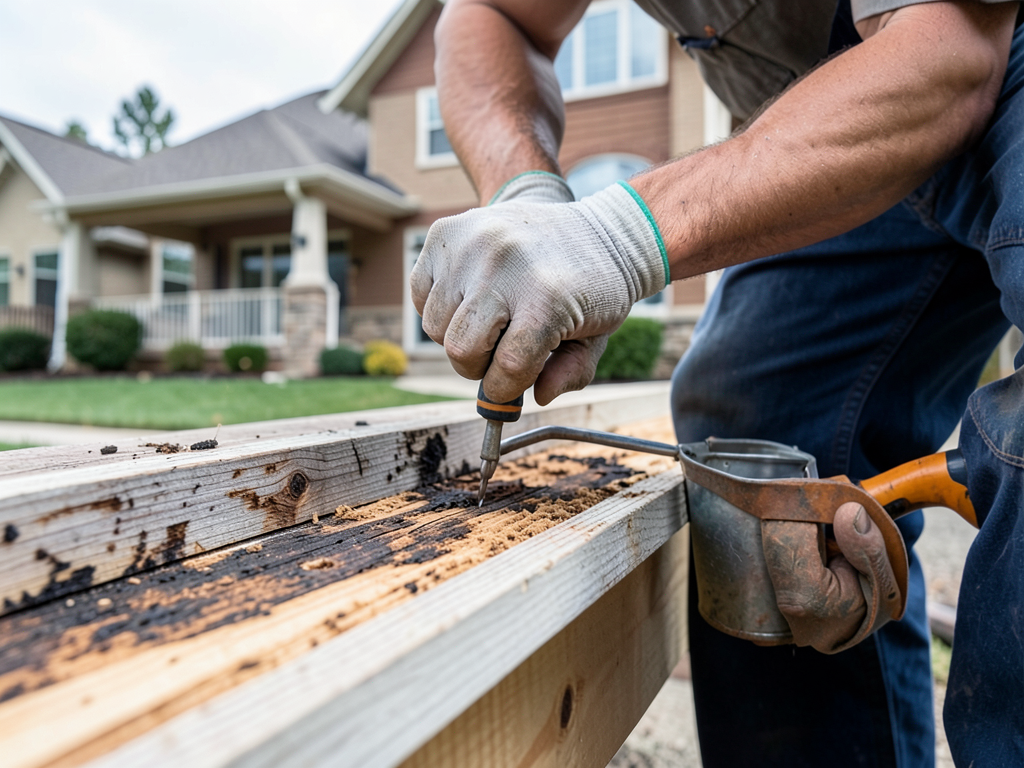
- The Screwdriver Test
Press a screwdriver into suspect wood. Healthy wood resists penetration. Rotted wood feels spongy and the tool sinks in easily. This simple test reveals internal decay that visual inspection misses.
- Moisture Meter Readings
Wood with moisture content above 20% is vulnerable to rot. Use a moisture meter at multiple depths to detect elevated readings that indicate ongoing moisture problems.
- Structural Assessment
Check for sagging roof sections, which indicate compromised decking. Look for gaps between fascia boards and roof edges where moisture can penetrate.
Golden Nugget #2: The ‘screwdriver test’ remains the most reliable field diagnostic for wood rot. If the tool penetrates wood with minimal pressure, the cellulose structure has been compromised by fungal organisms. This test costs nothing but can save thousands in structural repairs.
Common Rot Locations in Broadmoor Homes
Wood rot follows predictable patterns based on water flow and moisture accumulation. In Broadmoor’s older homes, certain areas consistently show higher decay rates due to construction methods and environmental exposure.
Rafter tails extending beyond exterior walls are particularly vulnerable. These horizontal members support the roof overhang and are exposed to both rain and gutter overflow. When gutters clog with oak leaves common in Broadmoor’s mature neighborhoods, water backs up and saturates the fascia boards connected to rafter tails.
Roof decking near plumbing vents and chimneys represents another high-risk zone. These penetrations create gaps where flashing can fail, allowing water to enter the roof assembly. The constant moisture exposure in these areas accelerates fungal growth compared to the main roof field.
Soffit vents in older Broadmoor homes often become blocked by insulation or debris. When ventilation stops, moisture accumulates in the rafter bays, creating conditions where dry rot can develop even without active leaks. This type of decay spreads rapidly once established because the wood remains at optimal moisture levels for fungal growth.
Wet Rot vs. Dry Rot: Critical Differences
Understanding the type of rot affecting your roof determines the appropriate repair strategy. Wet rot and dry rot, despite their names, both require moisture to initiate but behave differently once established. EPA Mold and Moisture Control Guide.
Wet rot remains confined to continuously damp areas. It appears as dark brown or black decay with a soft, spongy texture. The wood typically stays in place but loses structural integrity. Wet rot stops spreading when moisture sources are eliminated, but the damage remains permanent.
Dry rot, caused by the fungus Serpula lacrymans, represents a more aggressive threat. This organism can transport moisture through its network of hyphae, allowing it to spread across dry wood surfaces. Dry rot creates distinctive cuboidal cracking patterns and produces a musty odor. It can travel through masonry and behind walls, making complete elimination challenging.
Golden Nugget #3: Dry rot can spread up to 3 feet per year through a home’s structure even after moisture sources are eliminated. The fungus produces its own water through metabolic processes, allowing it to continue consuming wood in relatively dry conditions.
Formosan Termites: The Rot Imposter
Broadmoor homeowners face a unique diagnostic challenge: Formosan subterranean termites often create damage that mimics wood rot. These aggressive insects arrived in New Orleans in the 1950s and have since become endemic to the area. Their feeding patterns can destroy wood from the inside out, leaving a surface that appears intact until tested. What Metairie Homeowners Need to Do for Emergency Storm Damage and Tarping.
Termite damage typically shows clean, smooth galleries where insects have eaten the soft wood grain. The remaining wood often sounds hollow when tapped. In contrast, fungal rot creates irregular decay patterns with darker coloration and a characteristic musty smell.
The critical distinction: termite damage requires immediate pest control intervention before any repairs begin. Treating wood rot without addressing active termite infestation wastes money and allows continued structural damage. Repair vs. Replace Analysis.
Professional inspection using moisture meters and visual assessment helps distinguish between these threats. Termite damage often concentrates near ground level and follows mud tubes up foundation walls. Wood rot in roof structures typically results from moisture intrusion rather than ground contact.
Repair vs. Replacement: Making the Right Call
Not every case of wood rot requires complete roof replacement. The decision depends on several factors including the extent of damage, structural involvement, and the age of existing roofing materials. Specialized Roofing Solutions for Properties in the French Quarter.
Small areas of rot affecting less than 10% of roof decking can often be repaired by removing damaged sections and replacing them with pressure-treated lumber. This approach works when the underlying moisture problem has been resolved and surrounding wood remains sound.
Extensive rot affecting rafters, decking, and structural supports typically requires more comprehensive intervention. When decay compromises the roof’s ability to support its own weight plus wind loads, replacement becomes the only safe option. This is particularly true in Broadmoor where older homes may have undersized rafters by modern standards.
The presence of multiple rot types or active termite damage usually indicates systemic problems requiring full replacement. Patching isolated areas in these situations provides only temporary relief while allowing underlying issues to worsen.
Prevention Strategies for Broadmoor Homes
Preventing wood rot requires addressing the moisture sources that allow fungal growth. In Broadmoor’s climate, this means focusing on ventilation, drainage, and material selection.
Improving attic ventilation represents the single most effective prevention strategy. Installing ridge vents combined with adequate soffit ventilation creates continuous airflow that removes moisture-laden air before it can condense on wood surfaces. Current building codes require minimum ventilation ratios, but many older Broadmoor homes fall short of these standards.
Gutter maintenance prevents one of the most common rot sources. Clogged gutters cause water to back up under roofing materials and overflow behind fascia boards. Cleaning gutters twice yearly, particularly after oak trees shed their leaves, prevents this moisture intrusion. Roofing Kenner.
Material selection matters in humid climates. Pressure-treated lumber rated for ground contact (UC4A) resists fungal decay better than standard construction lumber. For fascia boards and rafter tails, using treated wood or composite materials provides longer service life in Broadmoor’s moisture-rich environment.
Building Code Requirements for Rot Repairs
Louisiana State Uniform Construction Code and Jefferson Parish amendments govern wood rot repairs in Broadmoor. These regulations ensure repairs meet structural requirements and resist future decay.
Section 2303.1.7 of the International Residential Code, adopted by Louisiana, requires that replacement wood in roof structures be pressure-treated when exposed to weather or moisture. This applies to fascia boards, soffits, and any decking in areas prone to water intrusion.
Structural repairs must comply with span tables for the specific lumber grade and species used. Replacing rotted 2×4 rafters with inadequate dimensional lumber creates safety hazards. Building permits are required for structural repairs affecting roof framing members.
Flashing details around chimneys, valleys, and roof penetrations must meet manufacturer specifications to prevent water intrusion. Improper flashing installation remains a leading cause of recurring wood rot in repaired roof sections.
Cost Factors for Wood Rot Repair in Broadmoor
Repair costs vary significantly based on damage extent, accessibility, and the materials required. Understanding these variables helps homeowners budget appropriately for necessary repairs.
Surface repairs involving fascia board replacement typically range from $500 to $1,500 for standard ranch-style homes common in Broadmoor. These repairs address cosmetic damage without structural involvement.
Decking replacement costs increase substantially when water damage extends beyond visible surfaces. Removing and replacing roof decking runs $8 to $15 per square foot, including labor and materials. A typical 1,500-square-foot roof might require $3,000 to $5,000 in decking repairs.
Structural repairs involving rafters or trusses represent the highest cost category. These repairs often require permits, engineering approval, and specialized equipment to support the roof during reconstruction. Costs typically start at $5,000 and increase based on the extent of damage and structural complexity.
Golden Nugget #4: Homes in Broadmoor’s 70125 and 70114 zip codes often require 20-30% higher repair costs than suburban areas due to older construction methods, limited access for equipment, and the prevalence of termite damage complicating rot repairs.
Insurance Considerations for Wood Rot
Standard homeowners insurance policies in Louisiana typically exclude coverage for wood rot and other gradual deterioration. Insurance companies consider rot a maintenance issue rather than sudden damage requiring coverage.
Coverage may apply if rot results from a covered peril such as wind damage that creates openings for water intrusion. In these cases, the insurance would cover repairs to restore the roof to its pre-damage condition but not address pre-existing rot.
Documenting the extent and cause of damage helps in insurance negotiations. Professional inspections with moisture readings and photographic evidence support claims for covered damage while identifying pre-existing conditions that fall outside coverage.
Some insurance companies offer endorsements for extended coverage that includes certain types of water damage. These policies typically cost more but provide broader protection against the moisture-related issues common in Broadmoor’s climate.
Professional Inspection: When to Call an Expert
While homeowners can identify obvious signs of wood rot, professional inspection becomes necessary when damage extent or structural involvement remains unclear. Certain indicators suggest immediate professional evaluation is warranted.
Sagging roof sections indicate structural compromise requiring immediate attention. This condition suggests extensive rot affecting load-bearing members and poses safety risks if left unaddressed.
Multiple water stains on ceilings or walls suggest widespread moisture intrusion with potential for extensive hidden damage. Professional moisture mapping can identify the full extent of affected areas.
Homes over 20 years old in Broadmoor’s climate zone benefit from periodic professional inspections even without visible symptoms. The combination of age, humidity, and construction methods in this area creates high risk for developing rot problems.
Professional inspectors use thermal imaging cameras and moisture meters to detect problems invisible to visual inspection. These tools identify temperature differences and elevated moisture levels that indicate active rot or moisture intrusion.
Long-Term Solutions for Broadmoor Homeowners
Addressing wood rot effectively requires both immediate repairs and long-term prevention strategies. Successful outcomes combine proper repair techniques with environmental modifications that prevent recurrence.
Complete roof ventilation upgrades often accompany rot repairs in older Broadmoor homes. Installing adequate intake and exhaust ventilation reduces attic moisture levels year-round, creating conditions where wood rot cannot establish.
Material upgrades during repairs provide better long-term performance. Replacing standard lumber with pressure-treated alternatives or composite materials resists future decay even if moisture issues recur.
Regular maintenance schedules prevent minor issues from becoming major problems. Annual roof inspections, gutter cleaning, and prompt attention to small leaks prevent the moisture accumulation that leads to wood rot.
Professional monitoring through periodic inspections helps detect developing problems before they require extensive repairs. Early intervention typically costs 60-70% less than addressing advanced rot damage.
Frequently Asked Questions
Can I repair wood rot myself?
Small areas of surface rot affecting fascia boards or trim might be suitable for DIY repair if you have carpentry experience. However, structural repairs involving roof decking or rafters require professional expertise to ensure safety and code compliance. Improper repairs can create hazards and void insurance coverage.
How long does wood rot repair take?
Minor repairs typically require 1-2 days. Decking replacement for a standard roof takes 2-3 days including removal and installation. Structural repairs involving rafters or trusses may require 3-5 days plus additional time for inspections and permitting. Weather conditions in Broadmoor can extend these timelines during hurricane season.
Will wood rot spread to other areas?
Yes, fungal organisms that cause wood rot can spread to adjacent wood surfaces if moisture conditions remain favorable. Dry rot is particularly aggressive and can travel through masonry and across dry wood surfaces. Eliminating moisture sources and treating affected areas prevents further spread.
How can I tell if I have termites or wood rot?
Termite damage typically shows clean, smooth galleries and sounds hollow when tapped. Wood rot creates irregular decay patterns with darker coloration and a musty odor. Professional inspection using moisture meters and visual assessment provides definitive identification. Termite damage requires pest control treatment before repairs begin.
Is wood rot covered by homeowners insurance?
Standard policies exclude coverage for gradual deterioration like wood rot. Coverage may apply if rot results from a covered peril such as wind damage creating openings for water intrusion. Documented damage from covered events may qualify for partial coverage, but pre-existing rot typically falls under maintenance responsibilities.
Hidden wood rot in your Broadmoor roof represents a serious threat to your home’s structural integrity and your family’s safety. The combination of New Orleans’ extreme humidity, frequent rainfall, and older home construction creates conditions where fungal decay can spread undetected for years. Early detection through professional inspection and prompt repair of affected areas prevents the extensive damage and high costs associated with advanced rot.
Don’t wait for visible ceiling stains or sagging roof sections to take action. The moisture that feeds wood rot continues to spread as long as conditions remain favorable. Professional inspection can identify problems while they remain manageable and prevent the structural failures that put your entire home at risk.
Call (504) 355-3444 today to schedule your comprehensive roof inspection. Our experienced technicians use moisture meters, thermal imaging, and visual assessment to identify hidden wood rot before it becomes a major structural problem. We serve Broadmoor and all Greater New Orleans communities with honest assessments and effective solutions that protect your home for years to come.
Pick up the phone and call (504) 355-3444 before the next storm hits. In Broadmoor’s climate, waiting even a few weeks can mean the difference between a simple repair and a major roof replacement. Let our 15+ years of local experience protect your home from the hidden dangers of wood rot. For more information, visit LSU AgCenter Formosan Termite Information.
You may also find this helpful. Stop Pine Needles From Rotting Your Mandeville Roof With These Maintenance Steps.
{
“@context”: “https://schema.org”,
“@type”: “BlogPosting”,
“headline”: “Hidden Wood Rot in Your Broadmoor Roof Decking (And Why Humidity Is to Blame)”,
“description”: “Discover why Broadmoor homes are vulnerable to hidden roof wood rot from New Orleans’ extreme humidity. Learn diagnostic signs, repair options, and prevention strategies.”,
“wordCount”: 2693,
“datePublished”: “2026-03-15T09:54:00.000Z”,
“dateModified”: “2026-03-15T09:54:00.000Z”,
“inLanguage”: “en-US”,
“mainEntityOfPage”: {
“@type”: “WebPage”,
“@id”: “https://heritageroofingneworleans.com”
},
“publisher”: {
“@type”: “LocalBusiness”,
“name”: “Heritage Roofing New Orleans”,
“url”: “https://heritageroofingneworleans.com”
},
“author”: {
“@type”: “Organization”,
“name”: “Heritage Roofing New Orleans”,
“url”: “https://heritageroofingneworleans.com”
},
“image”: {
“@type”: “ImageObject”,
“url”: “https://heritageroofingneworleans.com/wp-content/uploads/2026/03/hidden-wood-rot-in-your-broadmoor-roof-decking-and-1.png”
}
}
{
“@context”: “https://schema.org”,
“@type”: “RoofingContractor”,
“name”: “Heritage Roofing New Orleans”,
“url”: “https://heritageroofingneworleans.com”,
“address”: {
“@type”: “PostalAddress”,
“addressLocality”: “New Orleans”
},
“areaServed”: {
“@type”: “City”,
“name”: “New Orleans”
}
}
{
“@context”: “https://schema.org”,
“@type”: “FAQPage”,
“mainEntity”: [
{
“@type”: “Question”,
“name”: “Can I repair wood rot myself?”,
“acceptedAnswer”: {
“@type”: “Answer”,
“text”: “Small areas of surface rot affecting fascia boards or trim might be suitable for DIY repair if you have carpentry experience. However, structural repairs involving roof decking or rafters require professional expertise to ensure safety and code compliance. Improper repairs can create hazards and void insurance coverage.”
}
},
{
“@type”: “Question”,
“name”: “How long does wood rot repair take?”,
“acceptedAnswer”: {
“@type”: “Answer”,
“text”: “Minor repairs typically require 1-2 days. Decking replacement for a standard roof takes 2-3 days including removal and installation. Structural repairs involving rafters or trusses may require 3-5 days plus additional time for inspections and permitting. Weather conditions in Broadmoor can extend these timelines during hurricane season.”
}
},
{
“@type”: “Question”,
“name”: “Will wood rot spread to other areas?”,
“acceptedAnswer”: {
“@type”: “Answer”,
“text”: “Yes, fungal organisms that cause wood rot can spread to adjacent wood surfaces if moisture conditions remain favorable. Dry rot is particularly aggressive and can travel through masonry and across dry wood surfaces. Eliminating moisture sources and treating affected areas prevents further spread.”
}
},
{
“@type”: “Question”,
“name”: “How can I tell if I have termites or wood rot?”,
“acceptedAnswer”: {
“@type”: “Answer”,
“text”: “Termite damage typically shows clean, smooth galleries and sounds hollow when tapped. Wood rot creates irregular decay patterns with darker coloration and a musty odor. Professional inspection using moisture meters and visual assessment provides definitive identification. Termite damage requires pest control treatment before repairs begin.”
}
}
]
}
{
“@context”: “https://schema.org”,
“@type”: “HowTo”,
“name”: “How to Identify Wood Rot”,
“step”: [
{
“@type”: “HowToStep”,
“position”: 1,
“name”: “Visual Inspection”,
“text”: “Look for dark discoloration on fascia boards, soffits, and roof decking edges. Fungal growth often appears as black, brown, or white patches. Pay special attention to areas around chimneys, valleys, and where roof planes meet walls.”
},
{
“@type”: “HowToStep”,
“position”: 2,
“name”: “The Screwdriver Test”,
“text”: “Press a screwdriver into suspect wood. Healthy wood resists penetration. Rotted wood feels spongy and the tool sinks in easily. This simple test reveals internal decay that visual inspection misses.”
},
{
“@type”: “HowToStep”,
“position”: 3,
“name”: “Moisture Meter Readings”,
“text”: “Wood with moisture content above 20% is vulnerable to rot. Use a moisture meter at multiple depths to detect elevated readings that indicate ongoing moisture problems.”
},
{
“@type”: “HowToStep”,
“position”: 4,
“name”: “Structural Assessment”,
“text”: “Check for sagging roof sections, which indicate compromised decking. Look for gaps between fascia boards and roof edges where moisture can penetrate.”
}
],
“image”: “https://heritageroofingneworleans.com/wp-content/uploads/2026/03/hidden-wood-rot-in-your-broadmoor-roof-decking-and-1.png”
}
{
“@context”: “https://schema.org”,
“@type”: “BreadcrumbList”,
“itemListElement”: [
{
“@type”: “ListItem”,
“position”: 1,
“name”: “Home”,
“item”: “https://heritageroofingneworleans.com”
},
{
“@type”: “ListItem”,
“position”: 2,
“name”: “Blog”,
“item”: “https://heritageroofingneworleans.com/blog”
},
{
“@type”: “ListItem”,
“position”: 3,
“name”: “Hidden Wood Rot in Your Broadmoor Roof Decking (And Why Humidity Is to Blame)”
}
]
}
{
“@context”: “https://schema.org”,
“@type”: “Service”,
“serviceType”: “Roofing”,
“provider”: {
“@type”: “LocalBusiness”,
“name”: “Heritage Roofing New Orleans”,
“url”: “https://heritageroofingneworleans.com”
},
“areaServed”: {
“@type”: “City”,
“name”: “New Orleans”
},
“description”: “Discover why Broadmoor homes are vulnerable to hidden roof wood rot from New Orleans’ extreme humidity. Learn diagnostic signs, repair options, and prevention strategies.”
}