
How We Handle Roof Repairs in Tight Alleyways Between Shotgun Houses
Roofing in New Orleans’ historic neighborhoods presents unique challenges when working between shotgun houses. These narrow, single-story homes often sit just inches apart with no side yards, creating zero-lot-line conditions that require specialized techniques and equipment. At Heritage Roofing, we’ve developed proven methods for handling these tight-space repairs while protecting neighboring properties and meeting all local historic district requirements. New Orleans HDLC requirements.
Working in neighborhoods like the Irish Channel, Marigny, and parts of Mid-City means navigating alleyways as narrow as 36 inches wide. Standard roofing equipment simply won’t fit, and traditional debris removal methods become impossible. Our approach combines compact machinery, careful neighbor coordination, and deep knowledge of Vieux Carré Commission and HDLC regulations to complete repairs safely and efficiently. Roofing Kenner.
The Unique Challenges of Narrow-Space Roofing
Shotgun houses in New Orleans create several specific obstacles that don’t exist in suburban settings. The most obvious is physical access. When houses share walls with only a 24-36 inch gap between them, getting materials to the roof becomes a puzzle. Standard dumpsters can’t fit in these alleys, and even ladders must be positioned carefully to avoid damaging neighboring properties.
Another major challenge is debris management. Traditional roofing generates tons of waste, and in tight spaces, there’s nowhere to stage a dumpster or pile materials. Every piece of old roofing material must be removed immediately and efficiently. Weather protection becomes critical too, since there’s often no room to stage tarps or cover materials without blocking the entire alleyway. Roofing Timberlane.
Noise and disruption to neighbors present additional complications. In these dense neighborhoods, your work affects not just the immediate property but potentially three or four adjacent homes. Without proper coordination, a simple repair can quickly become a neighborhood dispute. Repair vs. Replace Analysis.
Specialized Equipment for Tight-Space Roofing
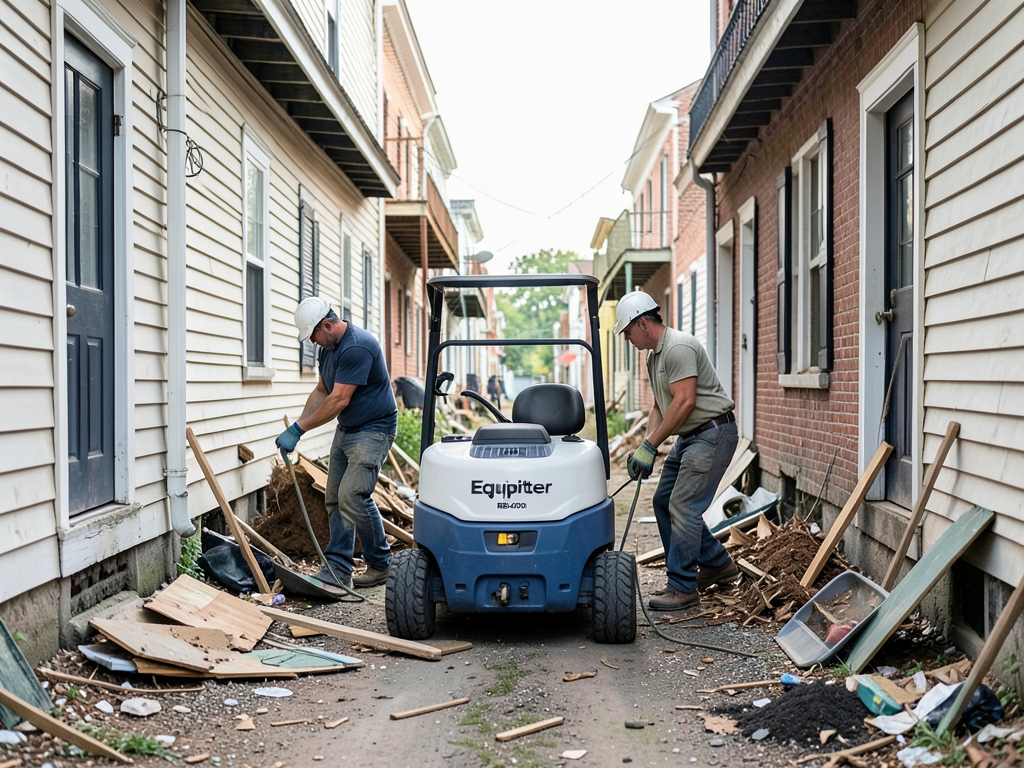
We’ve invested in compact equipment specifically designed for New Orleans’ unique architecture. The Equipter RB4000 has become our go-to machine for tight-space projects. This self-propelled dump trailer is only 31 inches wide, allowing it to navigate even the narrowest alleyways. It can lift materials directly to the roof and collect debris without requiring a traditional dumpster.
For materials transport, we use custom-built dollies and narrow-base scaffolding systems that can fit through standard doorways and turn corners in tight spaces. Our ladders are specifically selected for their narrow profiles and stability in confined areas. We also employ compact boom lifts when access allows, though these must be carefully positioned to avoid overhead power lines common in older New Orleans neighborhoods.
Debris removal requires a different approach entirely. We use chute systems that direct waste directly from the roof into waiting Equipters or compact trucks. This eliminates the need for ground-level staging areas and keeps the work site clean throughout the project. All materials are removed daily to maintain clear access for residents and emergency vehicles.
Neighbor Coordination and Property Protection
Before any work begins, we conduct a thorough site assessment and neighbor notification process. This includes walking the property lines with homeowners to identify any potential concerns. We then provide written notice to all adjacent properties at least 48 hours before starting work, explaining the scope, timeline, and contact information for our project manager.
During the project, we maintain clear communication channels. Our crews carry cell phones and can immediately address any concerns that arise. We also establish designated parking areas for our vehicles to minimize disruption to street parking, which is often at a premium in these neighborhoods.
Property protection is paramount. We use protective coverings on all adjacent walls, install temporary barriers where needed, and take extra precautions around gardens and landscaping that often exist in the small front yards typical of shotgun houses. Our crews are trained to work in confined spaces without damaging neighboring structures or property.
Vieux Carré Commission and HDLC Compliance
Working in historic districts requires strict adherence to local preservation guidelines. The Vieux Carré Commission (VCC) and Historic District Landmarks Commission (HDLC) have specific requirements for roofing work in their jurisdictions. These often include material specifications, color approvals, and installation methods that preserve the historic character of the neighborhood.. Read more about Special Roofing Challenges for New Orleans Camelback Additions.
We maintain current relationships with both commissions and understand their specific requirements for different architectural styles. For example, many shotgun houses in the Marigny and Bywater areas feature specific roofing materials and patterns that must be matched exactly. We also navigate the permitting process efficiently, knowing which applications require additional documentation and which can be expedited.
Noise ordinances in historic districts are often more restrictive than in other areas. We schedule our work to comply with these regulations while still maintaining efficient project timelines. This might mean starting later in the morning or taking additional precautions to minimize sound transmission between closely spaced buildings.
Ventilation Challenges in Dense Urban Settings
The tight spacing between New Orleans buildings creates unique ventilation challenges that affect roof longevity. When houses are built with zero side clearance, natural airflow around the roof structure is severely limited. This can lead to moisture buildup in the attic space, even with proper intake and exhaust vents installed. Roof Ventilation Explained.
We address these challenges through specialized ventilation design. This might include ridge vents with enhanced airflow characteristics, strategically placed gable vents when possible, or even solar-powered attic fans to improve circulation. The goal is to create positive airflow through the attic space despite the physical constraints of the building envelope.
Humidity management becomes particularly important in these settings. The combination of New Orleans’ high humidity and restricted airflow can create conditions that accelerate wood rot and compromise roofing materials. We use moisture-resistant underlayments and ensure all ventilation components are properly sealed and integrated with the roofing system.
Step-by-Step Process for Tight-Space Roof Repairs
- Site Assessment and Planning
Evaluate access points, measure clearances, identify neighbor concerns, and develop a detailed logistics plan before ordering any materials.
- Permit Acquisition and Compliance Review
Obtain necessary permits from the Department of Safety and Permits, submit VCC/HDLC applications if required, and review all historic district guidelines.
- Neighbor Notification and Coordination
Provide written notice to all adjacent properties, establish communication protocols, and coordinate access timing to minimize disruption.
- Equipment Staging and Protection Setup
Position compact equipment, install protective barriers on adjacent properties, and establish debris removal protocols.
- Material Transport and Installation
Use specialized dollies and equipment to move materials through tight spaces, following the pre-planned logistics sequence.
- Quality Control and Final Inspection
Conduct thorough inspections, ensure all ventilation components function properly, and verify compliance with historic district requirements.
Common Tight-Space Repair Scenarios
Leaking pipe boots represent one of the most frequent repair needs in tight spaces. When a vent pipe boot fails between shotgun houses, accessing it safely requires careful planning. We often use our compact equipment to create a stable platform that allows technicians to work without leaning against neighboring walls. Leaking Pipe Boot & Vents.
Shingle replacement in narrow alleys requires special techniques. Traditional methods of sliding new shingles up the roof aren’t possible when there’s no room to maneuver. Instead, we use our Equipter to lift bundles directly to the work area, then distribute them using our specialized dollies.
Emergency repairs after storms present additional challenges. When a tree limb damages a roof in a tight space, quick response is critical, but so is protecting neighboring properties. Our emergency response protocols include immediate site protection measures and rapid deployment of our compact equipment to prevent further damage.
Cost Factors for Tight-Space Roofing
Roof repairs in narrow alleyways typically cost 15-25% more than standard repairs due to the specialized equipment and additional labor required. The exact premium depends on several factors including alleyway width, roof accessibility, and whether historic district compliance is required.
Projects requiring VCC or HDLC approval may have additional permit fees and longer lead times. However, these costs are often offset by the increased property values in historic districts and the specialized expertise required for proper restoration work.
We provide detailed, fixed-price quotes for all tight-space projects that include all equipment fees, neighbor coordination costs, and compliance-related expenses. This transparency helps homeowners budget accurately and understand the value of our specialized approach.
Why Experience Matters in Tight Spaces
Roofing in confined urban spaces isn’t just about having the right equipment. It requires years of experience working in New Orleans’ specific architectural context. Our crews understand the nuances of working between historic homes, know how to protect delicate plaster walls and original wood siding, and can anticipate problems before they arise.
We’ve developed specific techniques for each neighborhood based on local conditions. For example, the Irish Channel’s slightly wider lots allow for different equipment configurations than the ultra-tight spaces found in parts of the Marigny. This neighborhood-specific knowledge allows us to work more efficiently while maintaining the highest quality standards.
Our experience also means we can provide accurate timelines and realistic expectations. We know which repairs can be completed in a single day and which require more extensive planning. This helps homeowners make informed decisions about whether to repair or replace their roofing systems.
Frequently Asked Questions
How wide does an alleyway need to be for standard roofing equipment?
Standard roofing equipment typically requires 6-8 feet of clearance. For alleyways narrower than 5 feet, specialized compact equipment like the Equipter RB4000 becomes necessary.
Will roofing work damage my neighbor’s property?
When properly executed by experienced contractors, roofing work should not damage neighboring properties. We use protective coverings, establish clear work zones, and maintain constant communication throughout the project.
How long do tight-space roof repairs typically take?
Most minor repairs can be completed in 1-2 days. Full replacements in tight spaces typically require 3-5 days due to the additional logistics involved.
Do I need special permits for roofing in historic districts?
Yes, work in historic districts requires permits from both the Department of Safety and Permits and the appropriate historic commission (VCC or HDLC). We handle all permitting as part of our service.
What happens if it rains during the repair?
We monitor weather closely and have protocols for sudden storms. Our compact equipment allows us to quickly cover exposed areas, and we maintain materials on-site to handle unexpected weather events.
Ready to Address Your Tight-Space Roofing Needs?
Roof repairs in New Orleans’ narrow alleyways require specialized expertise, proper equipment, and deep knowledge of local regulations. Heritage Roofing has the experience and tools to handle even the most challenging tight-space projects while protecting your property and maintaining good relationships with your neighbors.
Don’t let the constraints of your property prevent you from getting quality roofing work. Our compact equipment and proven processes mean we can tackle projects that other contractors might avoid. Whether you need a simple repair or a complete replacement, we’ll develop a customized approach that works for your specific situation.
Call (504) 355-3444 today to schedule your tight-space roofing assessment. We’ll evaluate your property, explain our approach, and provide a detailed quote with no hidden fees. Let our experience in New Orleans’ unique architectural environment work for you. For more information, visit OSHA safety standards.
You may also find this helpful. Who Is Responsible for a Leaking Shared Roof Line Between Two Irish Channel Cottages?.
You may also find this helpful. How Shared Rooflines and Party Walls Work for Row Houses in the Faubourg Marigny.
{
“@context”: “https://schema.org”,
“@type”: “BlogPosting”,
“headline”: “How We Handle Roof Repairs in Tight Alleyways Between Shotgun Houses”,
“description”: “Discover how Heritage Roofing tackles narrow-space roof repairs in New Orleans’ shotgun houses. Learn about specialized equipment, neighbor coordination, and Vieux Carré compliance.”,
“wordCount”: 1848,
“datePublished”: “2026-05-21T09:54:00.000Z”,
“dateModified”: “2026-05-21T09:54:00.000Z”,
“inLanguage”: “en-US”,
“mainEntityOfPage”: {
“@type”: “WebPage”,
“@id”: “https://heritageroofingneworleans.com”
},
“publisher”: {
“@type”: “LocalBusiness”,
“name”: “Heritage Roofing New Orleans”,
“url”: “https://heritageroofingneworleans.com”
},
“author”: {
“@type”: “Organization”,
“name”: “Heritage Roofing New Orleans”,
“url”: “https://heritageroofingneworleans.com”
},
“image”: {
“@type”: “ImageObject”,
“url”: “https://heritageroofingneworleans.com/wp-content/uploads/2026/03/how-we-handle-roof-repairs-in-tight-alleyways-betw-1.png”
}
}
{
“@context”: “https://schema.org”,
“@type”: “RoofingContractor”,
“name”: “Heritage Roofing New Orleans”,
“url”: “https://heritageroofingneworleans.com”,
“address”: {
“@type”: “PostalAddress”,
“addressLocality”: “New Orleans”
},
“areaServed”: {
“@type”: “City”,
“name”: “New Orleans”
}
}
{
“@context”: “https://schema.org”,
“@type”: “FAQPage”,
“mainEntity”: [
{
“@type”: “Question”,
“name”: “How wide does an alleyway need to be for standard roofing equipment?”,
“acceptedAnswer”: {
“@type”: “Answer”,
“text”: “Standard roofing equipment typically requires 6-8 feet of clearance. For alleyways narrower than 5 feet, specialized compact equipment like the Equipter RB4000 becomes necessary.”
}
},
{
“@type”: “Question”,
“name”: “Will roofing work damage my neighbor’s property?”,
“acceptedAnswer”: {
“@type”: “Answer”,
“text”: “When properly executed by experienced contractors, roofing work should not damage neighboring properties. We use protective coverings, establish clear work zones, and maintain constant communication throughout the project.”
}
},
{
“@type”: “Question”,
“name”: “How long do tight-space roof repairs typically take?”,
“acceptedAnswer”: {
“@type”: “Answer”,
“text”: “Most minor repairs can be completed in 1-2 days. Full replacements in tight spaces typically require 3-5 days due to the additional logistics involved.”
}
},
{
“@type”: “Question”,
“name”: “Do I need special permits for roofing in historic districts?”,
“acceptedAnswer”: {
“@type”: “Answer”,
“text”: “Yes, work in historic districts requires permits from both the Department of Safety and Permits and the appropriate historic commission (VCC or HDLC). We handle all permitting as part of our service.”
}
},
{
“@type”: “Question”,
“name”: “Ready to Address Your Tight-Space Roofing Needs?”,
“acceptedAnswer”: {
“@type”: “Answer”,
“text”: “Roof repairs in New Orleans’ narrow alleyways require specialized expertise, proper equipment, and deep knowledge of local regulations. Heritage Roofing has the experience and tools to handle even the most challenging tight-space projects while protecting your property and maintaining good relationships with your neighbors.”
}
}
]
}
{
“@context”: “https://schema.org”,
“@type”: “HowTo”,
“name”: “How to Handle Tight-Space Roof Repairs”,
“step”: [
{
“@type”: “HowToStep”,
“position”: 1,
“name”: “Site Assessment and Planning”,
“text”: “Evaluate access points, measure clearances, identify neighbor concerns, and develop a detailed logistics plan before ordering any materials.”
},
{
“@type”: “HowToStep”,
“position”: 2,
“name”: “Permit Acquisition and Compliance Review”,
“text”: “Obtain necessary permits from the Department of Safety and Permits, submit VCC/HDLC applications if required, and review all historic district guidelines.”
},
{
“@type”: “HowToStep”,
“position”: 3,
“name”: “Neighbor Notification and Coordination”,
“text”: “Provide written notice to all adjacent properties, establish communication protocols, and coordinate access timing to minimize disruption.”
},
{
“@type”: “HowToStep”,
“position”: 4,
“name”: “Equipment Staging and Protection Setup”,
“text”: “Position compact equipment, install protective barriers on adjacent properties, and establish debris removal protocols.”
},
{
“@type”: “HowToStep”,
“position”: 5,
“name”: “Material Transport and Installation”,
“text”: “Use specialized dollies and equipment to move materials through tight spaces, following the pre-planned logistics sequence.”
},
{
“@type”: “HowToStep”,
“position”: 6,
“name”: “Quality Control and Final Inspection”,
“text”: “Conduct thorough inspections, ensure all ventilation components function properly, and verify compliance with historic district requirements.”
}
],
“image”: “https://heritageroofingneworleans.com/wp-content/uploads/2026/03/how-we-handle-roof-repairs-in-tight-alleyways-betw-1.png”
}
{
“@context”: “https://schema.org”,
“@type”: “BreadcrumbList”,
“itemListElement”: [
{
“@type”: “ListItem”,
“position”: 1,
“name”: “Home”,
“item”: “https://heritageroofingneworleans.com”
},
{
“@type”: “ListItem”,
“position”: 2,
“name”: “Blog”,
“item”: “https://heritageroofingneworleans.com/blog”
},
{
“@type”: “ListItem”,
“position”: 3,
“name”: “How We Handle Roof Repairs in Tight Alleyways Between Shotgun Houses”
}
]
}
{
“@context”: “https://schema.org”,
“@type”: “Service”,
“serviceType”: “Roofing”,
“provider”: {
“@type”: “LocalBusiness”,
“name”: “Heritage Roofing New Orleans”,
“url”: “https://heritageroofingneworleans.com”
},
“areaServed”: {
“@type”: “City”,
“name”: “New Orleans”
},
“description”: “Discover how Heritage Roofing tackles narrow-space roof repairs in New Orleans’ shotgun houses. Learn about specialized equipment, neighbor coordination, and Vieux Carré compliance.”
}