
Installing Authentic Copper Gutters to Match Your Historic Garden District Aesthetic
The Garden District’s iconic oak-lined streets and stately mansions demand gutter systems that match their architectural heritage while withstanding New Orleans’ punishing climate. Copper gutters deliver both the authentic 19th-century appearance and the durability that aluminum alternatives cannot match. Today’s homeowners face a critical choice: install temporary solutions that will need replacement in 10-15 years or invest in copper systems that will last 50-100 years while developing the rich verdigris patina that defines historic New Orleans architecture. Historic District Landmarks Commission.
Copper gutters offer exceptional resistance to the salt air corrosion from the Gulf, the relentless humidity that accelerates material degradation, and the hurricane-force winds that batter our city. Unlike painted aluminum that chips and fades, copper develops a protective oxide layer that actually strengthens over time. The material’s natural antimicrobial properties also prevent the algae and moss growth that plague other gutter materials in our subtropical climate.. Read more about Bringing Natural Light Into a Dark New Orleans Shotgun Home With Leak-Proof Skylights.
Historic District Landmarks Commission guidelines specifically recognize copper as an appropriate material for properties within the Garden District, making these gutters not just an aesthetic choice but often a preservation requirement. The seamless construction eliminates leak points while the natural expansion and contraction of copper accommodate temperature swings from our humid summers to occasional winter freezes.. Read more about Why Standard Gutters Overflow During New Orleans Summer Squalls (And What Sizes Actually Work).
Modern fabrication techniques allow for custom half-round profiles that match original 1800s installations, complete with decorative leader heads and downspouts that complement Greek Revival columns and Italianate cornices. The investment in authentic copper gutters pays dividends through eliminated replacement costs, preserved property values, and the satisfaction of maintaining your home’s historic integrity. Repair vs. Replace Analysis.

Half-Round vs K-Style Copper Gutter Profiles for Garden District Homes
Half-round copper gutters dominate historic New Orleans installations, offering the curved profile that matches original 19th-century designs. These gutters provide superior water flow characteristics and eliminate the flat surfaces where debris accumulates. The smooth interior reduces friction, allowing water to move efficiently during our torrential summer downpours that can drop 3-4 inches in an hour. What to Do When Your New Orleans Roof Starts Leaking During a Downpour.
K-style copper gutters offer more modern angular profiles that some homeowners prefer for their contemporary appearance. While they hold more water than half-round profiles of the same width, K-style gutters create corners and flat surfaces that trap leaves and pine needles from our abundant live oaks. The choice between profiles often depends on your home’s architectural style and the level of maintenance you’re willing to perform. What Metairie Homeowners Need to Do for Emergency Storm Damage and Tarping.
Half-round gutters typically require 6-inch widths for homes over 3,000 square feet, while K-style options can use 5-inch widths for similar roof areas. The wider profile of half-round gutters provides better debris passage and reduces the frequency of cleaning required in our climate where sweet gum balls and oak leaves constantly fall.
Installation costs for half-round copper gutters average $25-35 per linear foot compared to $20-28 for K-style, reflecting the additional forming and welding required for the curved profile. Both styles use the same high-quality copper material and require identical maintenance schedules.
The Patina Process: What to Expect in New Orleans’ Subtropical Climate
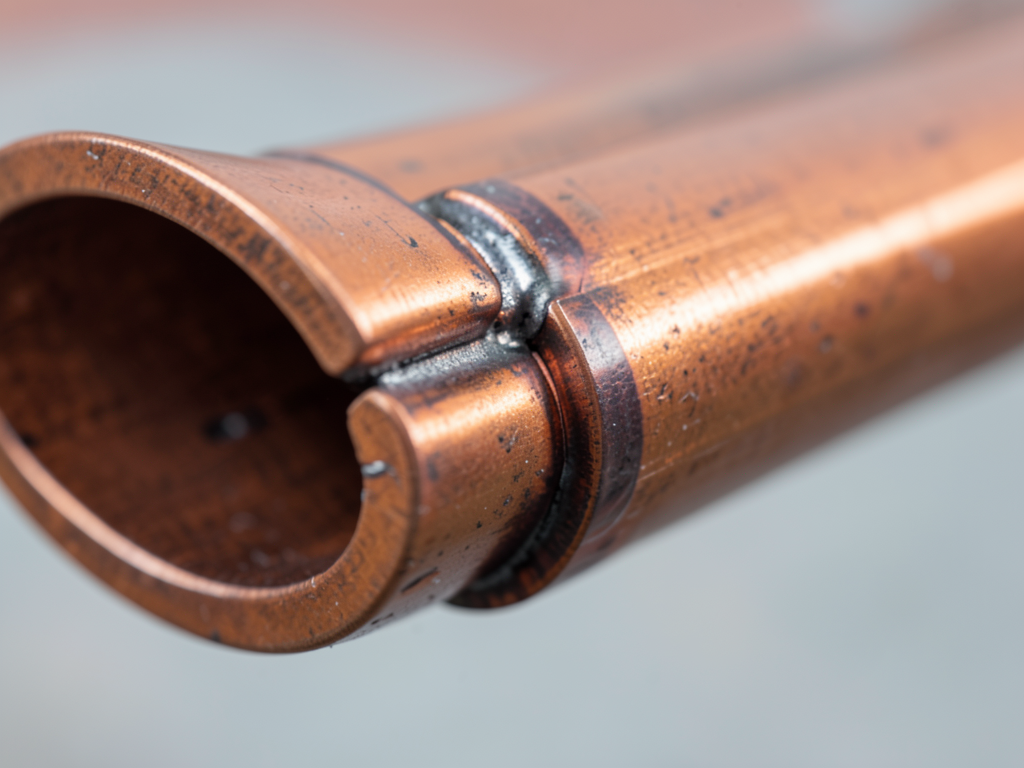
Copper’s transformation from bright metallic orange to deep bronze and finally to the characteristic blue-green verdigris creates a living finish that evolves over decades. In New Orleans’ high-humidity environment with abundant rainfall, this process accelerates significantly compared to drier climates. The Gulf’s salt air and intense UV exposure also influence the patina development, often producing more dramatic color variations.. Read more about How the Humble Drip Edge Keeps New Orleans Rain From Rotting Your Siding.
Within the first 6-12 months, newly installed copper gutters develop a brown oxide layer that protects the underlying metal. This initial stage appears as a dull, chocolate-brown finish that many homeowners mistake for damage or poor quality. The oxide layer forms as a natural defense mechanism, preventing further corrosion while the copper continues its transformation.
Years 1-3 bring dramatic changes as the brown patina darkens to a deep bronze or even near-black appearance. This stage often concerns homeowners who expected immediate green coloration. The darkening results from continued oxidation and the formation of copper sulfide compounds in our sulfur-rich air from local industries and vehicle emissions.
Years 3-10 mark the emergence of green tones as copper carbonate and copper chloride compounds form. The final verdigris stage typically appears first in sheltered areas where moisture persists, then spreads across exposed surfaces. New Orleans’ high humidity accelerates this final stage, often producing the classic green patina within 10-15 years instead of the 20-30 years required in arid regions.
The entire process creates a unique finish for each installation, influenced by your home’s specific exposure, nearby vegetation, and the exact composition of your local rainfall. No two copper gutter installations develop identical patinas, making each system a truly custom feature that enhances your property’s historic character.
Historic District Compliance: VCC and HDLC Guidelines for Copper Gutters
The Vieux Carré Commission and Historic District Landmarks Commission maintain strict guidelines for exterior modifications in New Orleans’ historic districts. Copper gutters receive explicit approval for installation on properties within the Garden District, with specific requirements for profile dimensions, mounting methods, and joint construction. These regulations ensure that modern installations maintain the authentic appearance of original 19th-century systems.
Commission guidelines mandate that copper gutters must be installed with exposed copper brackets rather than hidden hangers that would alter the historic profile. The brackets must match original spacing patterns, typically 24-30 inches on center, and be finished to match the gutter material. Soldered joints are required rather than mechanical connections that would create visible seams inconsistent with historic construction methods.
Color matching presents a unique challenge since new copper appears dramatically different from aged installations on neighboring properties. Commission staff recommend installing new gutters during renovation phases when other exterior work creates natural transitions. The rapid patina development in our climate means new installations blend with existing materials within 3-5 years, minimizing visual disruption to the historic streetscape.
Documentation requirements include submitting detailed drawings showing gutter profiles, mounting details, and connection to existing drainage systems. Commission staff review these submissions to ensure compliance with both preservation guidelines and modern building codes. The approval process typically takes 2-3 weeks, though complex installations may require additional review time.
Maintenance requirements under commission guidelines emphasize preserving the natural patina development rather than attempting to maintain the original bright copper finish. Harsh cleaning chemicals or mechanical abrasion that would accelerate patina removal are specifically prohibited, as they would damage the historic character the commission seeks to protect.
Copper Gutter Installation: The Soldering Process and Quality Standards
Professional copper gutter installation requires specialized skills that differ significantly from standard aluminum or vinyl systems. The soldering process creates permanent watertight joints that will last the lifetime of the gutter system. This technique involves heating copper joints to 450-500 degrees Fahrenheit using propane torches, then applying lead-free solder that flows into seams through capillary action. Specialized Roofing Solutions for Properties in the French Quarter.
The preparation process begins with cleaning all joint surfaces using stainless steel brushes to remove oxidation and oils. Technicians then apply flux, a chemical compound that prevents further oxidation during heating and helps the solder flow smoothly. The actual soldering requires maintaining precise temperature control – too cool and the solder won’t flow properly, too hot and the copper can warp or the flux can burn away. EPA Lead Information.
Quality installations feature soldered joints every 10-12 feet for sections longer than standard coil lengths. These expansion joints accommodate the thermal movement of copper, which can expand up to 0.5 inches per 10 feet between our coldest winter nights and hottest summer afternoons. Without these joints, the expansion stress could cause buckling or joint separation.
The downspout connection represents a critical junction where most gutter failures occur. Professional installers use Y-fitting transitions with internal solder joints rather than external bands or screws that create leak points. The connection to the downspout must maintain the same watertight integrity as the main gutter runs.
Testing procedures involve running water through the entire system to check for leaks, proper slope, and drainage capacity. Technicians use levels to verify the 1/4 inch per 10 feet slope required for optimal water flow. They also check that all joints remain watertight after thermal cycling, which can reveal weak solder connections that might fail months after installation.
Maintenance Requirements for Copper Gutters in New Orleans’ Climate
Copper gutters require significantly less maintenance than other materials, but our subtropical climate creates unique challenges. The high humidity and abundant rainfall mean debris accumulates faster, and the constant moisture can accelerate biological growth if gutters become clogged. A comprehensive maintenance schedule ensures your investment performs optimally for decades.
Quarterly cleaning represents the minimum requirement for copper gutter systems in New Orleans. During late spring, summer, and early fall, sweet gum balls, oak leaves, and pine needles constantly fall from our abundant tree canopy. These materials trap moisture against the copper surface, potentially creating localized corrosion points and preventing proper water flow during heavy rains.
Spring maintenance should include inspection for winter damage from occasional freezes that can cause temporary copper contraction. Check all soldered joints for signs of separation, examine brackets for secure mounting, and verify that downspouts remain clear of debris. Our spring thunderstorms can produce rainfall rates exceeding 4 inches per hour, testing every component of your drainage system.
Summer maintenance focuses on debris removal and checking for pest intrusion. The high humidity creates ideal conditions for mosquito breeding in standing water, making gutter cleanliness critical for both system performance and public health. Remove any nests from birds or rodents that might have established themselves during the breeding season.
Fall maintenance addresses the heaviest leaf fall from our deciduous trees. Live oaks, while technically evergreen, shed leaves throughout fall and winter, creating continuous maintenance needs. Consider installing copper mesh guards that allow water passage while blocking larger debris. These guards cost $3-5 per linear foot but can reduce cleaning frequency by 70%.
Winter maintenance, though minimal in our climate, should include checking for any damage from rare freezing events. Ensure all downspouts direct water at least 5 feet from your foundation to prevent the soil expansion that occurs when our clay soil alternates between wet and dry conditions.
Cost Analysis: Copper vs Aluminum Gutters for Historic Properties
The initial cost difference between copper and aluminum gutters creates sticker shock for many homeowners, but the lifetime cost analysis tells a different story. Copper gutters cost $25-35 per linear foot installed compared to $8-12 for aluminum systems. However, copper’s 50-100 year lifespan versus aluminum’s 15-20 years means you’ll replace aluminum systems 3-5 times during copper’s service life.
Maintenance costs favor copper significantly. Aluminum gutters require repainting every 5-7 years at $2-3 per linear foot, plus more frequent cleaning due to their flat profiles that trap debris. Copper’s natural patina eliminates painting costs while its smooth half-round profile reduces cleaning frequency by approximately 40%.
Property value considerations strongly favor copper installations in historic districts. Real estate appraisers recognize copper gutters as premium features that enhance historic authenticity and reduce long-term maintenance liabilities. Homes with original or restored copper gutters typically appraise 3-5% higher than comparable properties with modern replacements.
Insurance implications favor copper systems in hurricane-prone areas. The material’s superior wind resistance and impact durability mean copper gutters often qualify for premium discounts under wind mitigation programs. Some insurers offer 5-10% premium reductions for homes with hurricane-rated copper gutter systems.
Environmental considerations increasingly influence homeowner decisions. Copper is 100% recyclable and contains 87% recycled content in most modern installations. The material’s longevity means less manufacturing waste over time compared to the multiple aluminum replacements required during a single copper system’s lifespan.
Heavy-Duty Hanger Systems for Hurricane Resistance
New Orleans’ vulnerability to hurricane-force winds demands gutter mounting systems that exceed standard specifications. Copper gutters require specialized hanger systems that account for the material’s weight – approximately 1.5 pounds per linear foot when empty, and up to 5 pounds when full of water during tropical downpours. The mounting system must withstand uplift forces that can exceed 30 pounds per square foot during Category 3 hurricanes. The Best Shingles to Withstand New Orleans Heat and Humidity.
Professional installations use heavy-gauge copper brackets with integrated expansion joints that accommodate the thermal movement of the gutter system. These brackets mount directly to the fascia board using stainless steel screws that resist the galvanic corrosion that occurs when dissimilar metals contact in our humid environment. The spacing between brackets never exceeds 24 inches, compared to the 30-36 inch spacing acceptable for aluminum systems.
The fascia attachment method proves critical for long-term performance. Hurricane-rated installations use through-bolts that penetrate the fascia and secure into the roof truss tails. This creates a load path that transfers wind uplift forces into the building’s structural system rather than relying on the fascia board’s integrity alone. The bolts use oversized washers that distribute the load over a 2-inch diameter area, preventing pull-through during extreme wind events.
Expansion joint placement follows strict engineering guidelines based on your home’s dimensions and local wind exposure. Buildings over 30 feet long require expansion joints every 40 feet to prevent the accordion effect that can cause gutter buckling. These joints use soldered slip connections that allow 1-2 inches of linear movement while maintaining watertight integrity.
Testing procedures for hurricane-rated installations include simulated wind loading using specialized equipment that applies upward forces to verify bracket strength. Quality installers provide engineering calculations showing the system’s capacity to withstand winds up to 130 mph, exceeding the 110 mph requirement for most of New Orleans’ flood zones.
Frequently Asked Questions
How long do copper gutters last in New Orleans’ climate?
Copper gutters typically last 50-100 years in New Orleans, significantly longer than aluminum alternatives. The material’s natural corrosion resistance and the protective oxide layer that forms make it exceptionally durable in our high-humidity, salt-air environment. Many historic homes in the Garden District still have original copper gutter systems functioning after 80+ years.
Will new copper gutters look out of place next to aged ones on my historic home?
New copper gutters appear bright orange initially but begin developing their brown patina within weeks. In New Orleans’ humid climate, the transformation to the classic verdigris green typically occurs within 10-15 years. The rapid patina development means new installations blend naturally with existing aged copper within 3-5 years.
Are copper gutters worth the higher initial cost?
Yes, when considering lifetime costs. While copper gutters cost 2-3 times more initially than aluminum, their 50-100 year lifespan means you’ll replace aluminum systems 3-5 times during one copper installation. Copper also requires less maintenance, adds property value, and often qualifies for insurance premium discounts.
Do copper gutters require special maintenance in New Orleans?
Copper gutters need quarterly cleaning in our climate due to abundant tree debris and high humidity. However, they require less frequent cleaning than aluminum systems because their smooth half-round profile sheds debris better. The natural patina eliminates painting costs, and the material’s antimicrobial properties resist algae growth.
Will copper gutters affect my historic district approval?
Copper gutters receive explicit approval from both the Vieux Carré Commission and Historic District Landmarks Commission for Garden District properties. These commissions recognize copper as an appropriate historic material and provide specific guidelines for installation methods, bracket spacing, and joint construction to maintain authentic appearance.
- Assess Your Home’s Architecture
Examine your home’s architectural style to determine whether half-round or K-style profiles best complement existing features. Greek Revival and Italianate homes typically suit half-round profiles, while more contemporary designs might accommodate K-style options.
- Check Historic District Requirements
Contact the Historic District Landmarks Commission to understand specific requirements for your property. They provide guidelines for gutter profiles, mounting methods, and color expectations that ensure your installation meets preservation standards.
- Evaluate Climate Considerations
Consider New Orleans’ unique challenges including salt air corrosion, high humidity, and hurricane-force winds. Choose heavy-gauge copper (typically 16 ounces per square foot) and hurricane-rated mounting systems that can withstand our extreme weather conditions.
- Plan for Patina Development
Understand that new copper appears bright orange and transitions through brown to green over 10-15 years. This natural aging process creates a living finish that enhances your home’s character while providing superior durability compared to painted alternatives.
Ready to Enhance Your Garden District Home with Authentic Copper Gutters?
Installing copper gutters represents a significant investment in your historic home’s preservation and long-term value. The combination of authentic appearance, superior durability, and reduced maintenance makes copper the logical choice for discerning Garden District homeowners who understand that quality materials pay dividends over decades rather than years.
Our team specializes in copper gutter installations that meet both modern performance standards and historic preservation requirements. We handle everything from initial design consultation through final inspection, ensuring your new gutters enhance rather than detract from your home’s architectural character.
Don’t wait until your existing gutters fail during the next tropical storm. Call (504) 355-3444 today to schedule your consultation and discover how authentic copper gutters can transform your home’s exterior while providing the durability New Orleans demands.
Pick up the phone and call (504) 355-3444 before the next storm hits. Your historic Garden District home deserves the protection and beauty that only copper gutters can provide.
Why Choose Our Copper Gutter Installation Services
We bring 15+ years of experience installing copper gutters in New Orleans’ unique climate. Our technicians understand the specific challenges of working with copper in high-humidity environments and follow historic district guidelines meticulously. Every installation includes engineering calculations for wind resistance and detailed documentation for historic commission approval.
Our commitment to quality means using only heavy-gauge copper, professional soldering techniques, and hurricane-rated mounting systems. We stand behind our work with comprehensive warranties that cover both materials and workmanship. Most importantly, we treat your historic home with the respect it deserves, preserving its character while enhancing its functionality.
Ready to get started? Call (504) 355-3444 today and speak with our copper gutter specialists about transforming your Garden District home with authentic, durable gutters that will last for generations.
You may also find this helpful. Managing Overhanging Live Oak Branches Above Your St. Charles Avenue Roof.
You may also find this helpful. Navigating the VCC and HDLC Roofing Permit Process Without Losing Your Mind.
You may also find this helpful. Can Your Old Double Gallery Home Actually Support the Weight of a Slate Roof?.
{
“@context”: “https://schema.org”,
“@type”: “BlogPosting”,
“headline”: “Installing Authentic Copper Gutters to Match Your Historic Garden District Aesthetic”,
“description”: “Learn how authentic copper gutters enhance your Garden District home’s historic charm while providing superior durability against New Orleans’ tropical climate and meeting VCC/HDLC preservation guidelines.”,
“wordCount”: 3011,
“datePublished”: “2026-04-28T13:03:00.000Z”,
“dateModified”: “2026-04-28T13:03:00.000Z”,
“inLanguage”: “en-US”,
“mainEntityOfPage”: {
“@type”: “WebPage”,
“@id”: “https://heritageroofingneworleans.com”
},
“publisher”: {
“@type”: “LocalBusiness”,
“name”: “Heritage Roofing New Orleans”,
“url”: “https://heritageroofingneworleans.com”
},
“author”: {
“@type”: “Organization”,
“name”: “Heritage Roofing New Orleans”,
“url”: “https://heritageroofingneworleans.com”
},
“image”: {
“@type”: “ImageObject”,
“url”: “https://heritageroofingneworleans.com/wp-content/uploads/2026/03/installing-authentic-copper-gutters-to-match-your-1.png”
}
}
{
“@context”: “https://schema.org”,
“@type”: “RoofingContractor”,
“name”: “Heritage Roofing New Orleans”,
“url”: “https://heritageroofingneworleans.com”,
“address”: {
“@type”: “PostalAddress”,
“addressLocality”: “New Orleans”
},
“areaServed”: {
“@type”: “City”,
“name”: “New Orleans”
}
}
{
“@context”: “https://schema.org”,
“@type”: “FAQPage”,
“mainEntity”: [
{
“@type”: “Question”,
“name”: “How long do copper gutters last in New Orleans’ climate?”,
“acceptedAnswer”: {
“@type”: “Answer”,
“text”: “Copper gutters typically last 50-100 years in New Orleans, significantly longer than aluminum alternatives. The material’s natural corrosion resistance and the protective oxide layer that forms make it exceptionally durable in our high-humidity, salt-air environment. Many historic homes in the Garden District still have original copper gutter systems functioning after 80+ years.”
}
},
{
“@type”: “Question”,
“name”: “Will new copper gutters look out of place next to aged ones on my historic home?”,
“acceptedAnswer”: {
“@type”: “Answer”,
“text”: “New copper gutters appear bright orange initially but begin developing their brown patina within weeks. In New Orleans’ humid climate, the transformation to the classic verdigris green typically occurs within 10-15 years. The rapid patina development means new installations blend naturally with existing aged copper within 3-5 years.”
}
},
{
“@type”: “Question”,
“name”: “Are copper gutters worth the higher initial cost?”,
“acceptedAnswer”: {
“@type”: “Answer”,
“text”: “Yes, when considering lifetime costs. While copper gutters cost 2-3 times more initially than aluminum, their 50-100 year lifespan means you’ll replace aluminum systems 3-5 times during one copper installation. Copper also requires less maintenance, adds property value, and often qualifies for insurance premium discounts.”
}
},
{
“@type”: “Question”,
“name”: “Do copper gutters require special maintenance in New Orleans?”,
“acceptedAnswer”: {
“@type”: “Answer”,
“text”: “Copper gutters need quarterly cleaning in our climate due to abundant tree debris and high humidity. However, they require less frequent cleaning than aluminum systems because their smooth half-round profile sheds debris better. The natural patina eliminates painting costs, and the material’s antimicrobial properties resist algae growth.”
}
},
{
“@type”: “Question”,
“name”: “Will copper gutters affect my historic district approval?”,
“acceptedAnswer”: {
“@type”: “Answer”,
“text”: “Copper gutters receive explicit approval from both the Vieux Carré Commission and Historic District Landmarks Commission for Garden District properties. These commissions recognize copper as an appropriate historic material and provide specific guidelines for installation methods, bracket spacing, and joint construction to maintain authentic appearance.”
}
},
{
“@type”: “Question”,
“name”: “Ready to Enhance Your Garden District Home with Authentic Copper Gutters?”,
“acceptedAnswer”: {
“@type”: “Answer”,
“text”: “Installing copper gutters represents a significant investment in your historic home’s preservation and long-term value. The combination of authentic appearance, superior durability, and reduced maintenance makes copper the logical choice for discerning Garden District homeowners who understand that quality materials pay dividends over decades rather than years.”
}
}
]
}
{
“@context”: “https://schema.org”,
“@type”: “HowTo”,
“name”: “How to Choose Copper Gutters”,
“step”: [
{
“@type”: “HowToStep”,
“position”: 1,
“name”: “Assess Your Home’s Architecture”,
“text”: “Examine your home’s architectural style to determine whether half-round or K-style profiles best complement existing features. Greek Revival and Italianate homes typically suit half-round profiles, while more contemporary designs might accommodate K-style options.”
},
{
“@type”: “HowToStep”,
“position”: 2,
“name”: “Check Historic District Requirements”,
“text”: “Contact the Historic District Landmarks Commission to understand specific requirements for your property. They provide guidelines for gutter profiles, mounting methods, and color expectations that ensure your installation meets preservation standards.”
},
{
“@type”: “HowToStep”,
“position”: 3,
“name”: “Evaluate Climate Considerations”,
“text”: “Consider New Orleans’ unique challenges including salt air corrosion, high humidity, and hurricane-force winds. Choose heavy-gauge copper (typically 16 ounces per square foot) and hurricane-rated mounting systems that can withstand our extreme weather conditions.”
},
{
“@type”: “HowToStep”,
“position”: 4,
“name”: “Plan for Patina Development”,
“text”: “Understand that new copper appears bright orange and transitions through brown to green over 10-15 years. This natural aging process creates a living finish that enhances your home’s character while providing superior durability compared to painted alternatives.”
}
],
“image”: “https://heritageroofingneworleans.com/wp-content/uploads/2026/03/installing-authentic-copper-gutters-to-match-your-1.png”
}
{
“@context”: “https://schema.org”,
“@type”: “BreadcrumbList”,
“itemListElement”: [
{
“@type”: “ListItem”,
“position”: 1,
“name”: “Home”,
“item”: “https://heritageroofingneworleans.com”
},
{
“@type”: “ListItem”,
“position”: 2,
“name”: “Blog”,
“item”: “https://heritageroofingneworleans.com/blog”
},
{
“@type”: “ListItem”,
“position”: 3,
“name”: “Installing Authentic Copper Gutters to Match Your Historic Garden District Aesthetic”
}
]
}
{
“@context”: “https://schema.org”,
“@type”: “Service”,
“serviceType”: “Roofing”,
“provider”: {
“@type”: “LocalBusiness”,
“name”: “Heritage Roofing New Orleans”,
“url”: “https://heritageroofingneworleans.com”
},
“areaServed”: {
“@type”: “City”,
“name”: “New Orleans”
},
“description”: “Learn how authentic copper gutters enhance your Garden District home’s historic charm while providing superior durability against New Orleans’ tropical climate and meeting VCC/HDLC preservation guidelines.”
}