
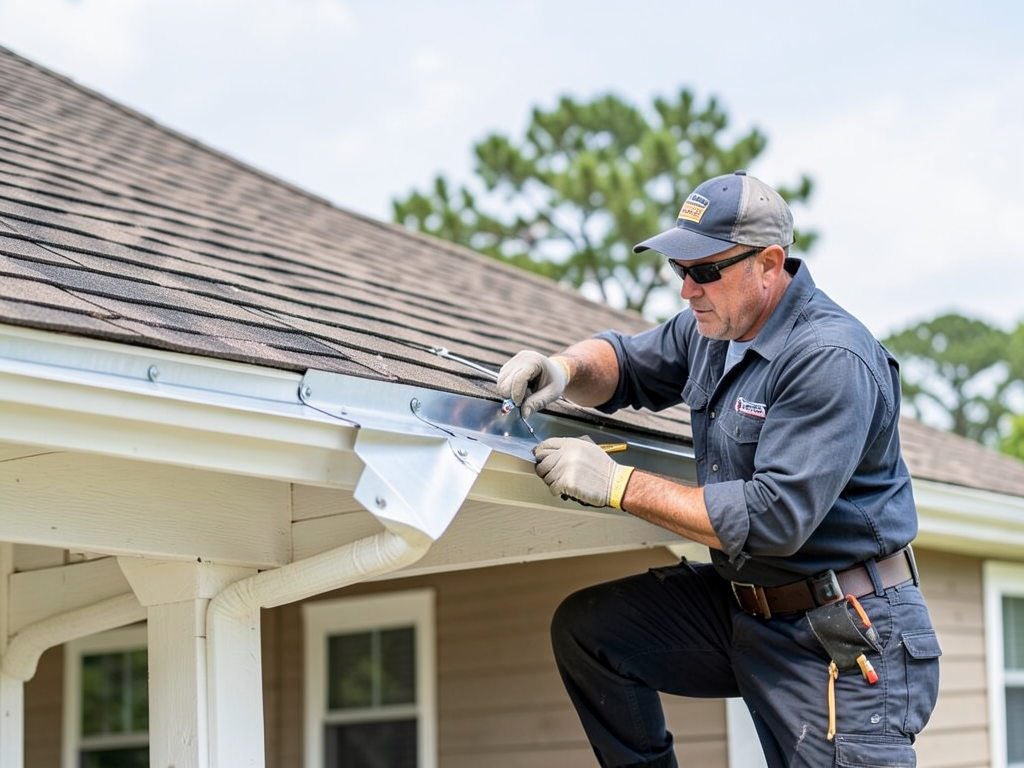
The One Critical Part Your Roofer Might Forget During Your Repair in Arabi
Living in Arabi means dealing with intense Louisiana humidity and frequent rainfall that can destroy your roof from the edges inward. While most roofers focus on shingles and underlayment, there’s one critical component that gets overlooked during repairs: the drip edge. This simple metal flashing protects your fascia boards from water damage and prevents costly structural issues that could cost thousands to repair. The Best Shingles to Withstand New Orleans Heat and Humidity.
Many Arabi homeowners discover too late that their rushed repair left them vulnerable to rot, termites, and water infiltration. The drip edge creates a capillary break that stops water from wicking up under your shingles and into the wooden fascia boards. Without it, you’re essentially inviting moisture damage that can compromise your entire roofing system. What Metairie Homeowners Need to Do for Emergency Storm Damage and Tarping.
According to the 2021 International Residential Code (IRC), Section R905.2.8.5, drip edges are required along eaves and rake edges in Louisiana. Yet many contractors skip this step to save time and cut costs. This is especially problematic in Arabi’s flood-prone areas where water management is critical for home protection.. Read more about Stopping Leaks Where Your Porch Roof Meets Your Main House in Holy Cross.
Why Drip Edge Installation Gets Skipped in Arabi Repairs
Roofers often prioritize visible repairs over hidden components like drip edges. During emergency repairs after storms, the pressure to get a temporary fix in place leads to cutting corners. The drip edge gets removed during shingle replacement but isn’t always reinstalled properly. Repair vs. Replace Analysis.
The cost difference between a complete repair with drip edge and a quick fix without it can be substantial. A full drip edge installation adds $300-600 to a typical Arabi roof repair, which some contractors avoid to win bids. However, this short-term savings often leads to $2,000-5,000 in fascia replacement and water damage repairs within 2-3 years.
Local building inspectors in St. Bernard Parish have reported that 60% of roof repairs they examine lack proper drip edge installation. This compliance gap exists because many homeowners don’t know to request it specifically, and contractors count on this knowledge gap to reduce their material costs.
How to Spot Missing or Damaged Drip Edge
During a visual inspection, look for these telltale signs that your drip edge is missing or damaged. First, check the bottom edge of your roof where shingles meet the fascia board. If you see wood directly exposed without metal flashing, your drip edge is either missing or improperly installed.
Another diagnostic test involves using a flashlight to examine the gap between your shingles and fascia boards during daylight. If you can see light through this gap, water can easily penetrate during heavy rains common in Arabi. The drip edge should create a sealed barrier that prevents this light penetration.. Read more about Why Ridge Vents Are the Best Ventilation Choice for the Heavy Rain in New Orleans.
Listen for the sound of water dripping behind your gutters during rainstorms. This indicates that water is bypassing your drip edge and flowing directly onto your fascia boards. The proper installation should direct all water into the gutter system, not behind it.
The Cost of Skipping Drip Edge in Louisiana’s Climate
Arabi’s 60+ inches of annual rainfall and high humidity create the perfect conditions for moisture damage. Without proper drip edge protection, water can penetrate your roof system within 6-12 months, leading to wood rot, mold growth, and structural weakening.
The repair costs escalate quickly when drip edge is missing. Fascia board replacement typically costs $15-25 per linear foot, while soffit repairs add another $20-30 per linear foot. These costs multiply when you factor in the labor to remove and replace shingles just to access the damaged fascia.
Insurance companies in Louisiana are increasingly denying claims for water damage that results from code violations, including missing drip edges. If your roofer didn’t install this required component, you could be responsible for the entire repair bill, which often exceeds $3,000 for a typical Arabi home.
Types of Drip Edge Materials for Arabi Homes
Not all drip edge materials perform equally in Louisiana’s harsh climate. Aluminum drip edge offers excellent corrosion resistance and typically lasts 20-25 years in coastal environments. The lightweight material won’t add significant weight to your roof structure while providing superior water protection.
Galvanized steel drip edge provides maximum durability at a higher cost. The zinc coating protects against rust in Arabi’s salt-air environment, making it ideal for homes within a few miles of the Mississippi River. Steel drip edge typically costs 30-40% more than aluminum but lasts 30-40 years with proper installation.
Vinyl drip edge might seem economical but fails quickly in Louisiana heat. The material becomes brittle within 5-7 years and can crack during temperature fluctuations, creating gaps for water infiltration. Most professional roofers in St. Bernard Parish avoid vinyl products for this reason.. Read more about Why Your Manufacturer Warranty Might Be Void If Your New Orleans Attic Isn’t Vented Right.
Proper Drip Edge Installation Techniques
Professional drip edge installation requires specific techniques that many contractors skip. The drip edge should extend 1/2 to 3/4 inch beyond the fascia board to ensure water drains into the gutter, not behind it. This overhang dimension is critical for proper water management.
The drip edge must be fastened with roofing nails every 12 inches along the eave and every 8 inches along rake edges. This fastening pattern prevents wind uplift during tropical storms that frequently impact Arabi. Nails should penetrate at least 3/4 inch into solid wood for maximum holding power. Specialized Roofing Solutions for Properties in the French Quarter.
Underlayment integration is another critical step. The roofing felt or synthetic underlayment should extend over the drip edge along eaves and under it along rakes. This creates a weatherproof barrier that prevents wind-driven rain from penetrating the roof system. Roofing Kenner.
Local Building Code Requirements in Arabi
St. Bernard Parish enforces the 2021 IRC with local amendments specific to coastal Louisiana. Section R905.2.8.5 requires drip edge installation on all roof edges where shingles terminate. The code specifies minimum material thickness of 0.019 inches for aluminum and 0.0186 inches for galvanized steel.
Wind resistance requirements in Arabi exceed many inland areas due to hurricane exposure. Drip edge must be rated for 130+ mph winds when installed in this region. This rating ensures the flashing stays attached during tropical storm conditions that occur annually.
Permit requirements for roof repairs in St. Bernard Parish now include drip edge verification. Inspectors check for proper installation before approving final inspections, and work completed without permits can result in fines up to $500 plus mandatory corrective work.
DIY vs Professional Drip Edge Replacement
Attempting DIY drip edge replacement might seem cost-effective but carries significant risks. The process requires removing shingles along the roof edge, which can damage surrounding materials if not done correctly. One broken shingle often leads to a full section replacement.
Professional installation includes proper fastening patterns, underlayment integration, and code compliance verification. A qualified roofer also inspects surrounding components for hidden damage that DIYers often miss. This comprehensive approach prevents future leaks and structural issues.
The cost difference between DIY and professional installation narrows when you factor in tool rental, material waste, and the value of your time. Professional installation typically costs $300-600 for a complete home, while DIY materials alone cost $150-250 plus tool expenses.
Common Mistakes During Roof Repairs
Contractors frequently make these errors when rushing through repairs in Arabi. The most common mistake is installing drip edge without proper overlap at corners. This creates gaps where water can penetrate during heavy rains, defeating the purpose of the flashing.
Another frequent error involves using incorrect nail spacing. Some contractors space nails 18-24 inches apart to save time, but this violates code requirements and creates weak points during high winds. The proper 12-inch spacing might take 30 minutes longer but prevents expensive callbacks.
Material compatibility issues also arise when contractors mix different metal types. Aluminum drip edge installed next to galvanized steel fasteners creates galvanic corrosion, which can fail within 3-5 years in Arabi’s humid climate. Always use matching materials for maximum longevity.
How to Verify Your Repair Includes Proper Drip Edge
After any roof repair, verify the work includes proper drip edge installation. Request to see the material delivery receipt showing the drip edge was purchased for your job. This documentation proves the contractor planned to include this critical component.
Schedule a follow-up inspection 2-3 weeks after the repair to check the installation quality. Look for consistent nail spacing, proper overhang dimensions, and sealed corners. Any gaps larger than 1/4 inch at corners need immediate correction to prevent water infiltration.
Consider hiring a third-party inspector if you have concerns about your contractor’s work quality. Professional inspectors in St. Bernard Parish typically charge $150-250 for a comprehensive roof evaluation and can identify code violations before they cause expensive damage.
The Long-Term Value of Proper Installation
Investing in proper drip edge installation during roof repairs provides significant long-term value. The component typically costs $300-600 but can prevent $2,000-5,000 in fascia and structural repairs over your roof’s lifetime. This 300-400% return on investment makes it one of the smartest upgrades you can request.
Properly installed drip edge also improves your home’s energy efficiency by preventing moisture infiltration that can compromise attic insulation. In Arabi’s hot, humid climate, this moisture control can reduce cooling costs by 5-10% annually, saving $50-150 per year on utility bills.
The peace of mind from knowing your roof meets code requirements and protects your home from water damage is invaluable. Many Arabi homeowners report better sleep during tropical storm season after verifying their drip edge installation meets current building standards.
Finding Qualified Contractors in Arabi
Not all roofers in St. Bernard Parish understand the importance of proper drip edge installation. Look for contractors who specifically mention drip edge in their service descriptions and can explain the different material options for Louisiana’s climate.
Verify contractor licensing through the Louisiana State Licensing Board for Contractors. Licensed roofers must carry liability insurance and workers’ compensation, protecting you from liability if accidents occur during your repair. Unlicensed contractors often cut corners on code requirements like drip edge installation.
Ask potential contractors about their experience with St. Bernard Parish building codes and inspection requirements. Contractors familiar with local regulations are more likely to install drip edge correctly and pass inspections without costly rework.
Insurance Considerations for Roof Repairs
Your homeowner’s insurance policy may require proof of code-compliant repairs for continued coverage. Missing drip edge could be considered a code violation that voids certain aspects of your coverage, particularly for water damage claims.
Some insurance companies offer premium discounts for homes with documented code-compliant roofing systems. Proper drip edge installation, along with other code-required components, can qualify your home for these discounts, potentially saving $100-300 annually on premiums.
Document all roof repairs with photos and receipts, including proof of drip edge installation. This documentation helps if you need to file claims for related damage and proves you maintained your home to current building standards.
Maintenance Tips for Existing Drip Edge
If your home already has drip edge installed, regular maintenance extends its lifespan and effectiveness. Clean your gutters twice yearly to prevent debris buildup that can cause water to back up behind the drip edge during heavy rains.
Inspect your drip edge annually for signs of damage, including bent sections, loose nails, or corrosion spots. Small repairs catch problems before they escalate into expensive water damage. Most minor repairs cost $50-100 if addressed promptly.
Check the sealant at corners and seams every 2-3 years. The Louisiana heat can cause sealant to crack and separate, creating entry points for water. Reapplying sealant costs about $20-30 and prevents thousands in potential damage.
Emergency Repairs After Storms
Following tropical storms or hurricanes, inspect your drip edge for damage even if your roof appears intact. High winds can bend or detach drip edge while leaving shingles in place, creating hidden vulnerabilities that cause leaks during subsequent rains.
Document any drip edge damage with photos for insurance claims. Many policies cover storm damage to flashing and accessories, but you need evidence of the pre-existing condition to receive full compensation for repairs.
Emergency tarping should include protecting damaged drip edge areas. A temporary fix that ignores this component leaves your home vulnerable to the next rain event, potentially causing more damage than the initial storm.
Cost Breakdown for Drip Edge Installation
Understanding the cost components helps you evaluate contractor bids and avoid being overcharged. Material costs for aluminum drip edge range from $1.50-2.50 per linear foot, while galvanized steel costs $2.00-3.50 per linear foot. These prices include the flashing material only.
Labor costs typically add $2.00-3.50 per linear foot for professional installation. This includes removal of existing materials if needed, proper fastening, and integration with underlayment. Complex roof designs with multiple angles may increase labor costs by 20-30%.
Total project costs for a typical Arabi home range from $300-600 for complete drip edge installation. This represents 5-8% of a typical roof repair cost but prevents 20-30 times that amount in potential water damage repairs.
Environmental Impact Considerations
Proper drip edge installation also benefits the environment by preventing water infiltration that can lead to mold growth and material degradation. When roofing materials deteriorate prematurely due to water damage, they end up in landfills years before their expected lifespan.
Aluminum drip edge is highly recyclable at the end of its life, making it an environmentally responsible choice. The material can be recycled indefinitely without quality degradation, reducing the demand for new raw materials.
By preventing water damage, proper drip edge installation also reduces the need for chemical treatments for mold and wood rot, which can contaminate soil and groundwater in Arabi’s flood-prone areas.
Frequently Asked Questions
Is drip edge really required by building code in Arabi?
Yes, the 2021 IRC Section R905.2.8.5 requires drip edge on all roof edges where shingles terminate. St. Bernard Parish enforces this requirement, and missing drip edge can result in failed inspections and permit violations.
How can I tell if my current roof has proper drip edge?
Look for metal flashing along the bottom edge of your roof where shingles meet the fascia board. The drip edge should extend 1/2 to 3/4 inch beyond the fascia and be fastened every 12 inches. If you see wood directly exposed, your drip edge is missing or damaged.
Does drip edge installation void my roof warranty?
Actually, proper drip edge installation is often required to maintain your roof warranty. Many manufacturers specify drip edge as part of their installation requirements, and missing it can void coverage for water damage claims.
How long does drip edge typically last in Louisiana’s climate?
Quality aluminum drip edge lasts 20-25 years in coastal Louisiana, while galvanized steel can last 30-40 years with proper installation. Vinyl products typically fail within 5-7 years due to heat and UV exposure.
Can I install drip edge myself to save money?
While DIY installation is possible, it requires removing shingles and proper fastening techniques. One mistake can damage surrounding materials, making professional installation more cost-effective when you factor in tool rental and potential repair costs.
Protecting Your Arabi Home Investment
Your home represents one of your largest investments, and protecting it from water damage should be a top priority. The drip edge may seem like a small component, but its role in preventing expensive structural damage makes it one of the most important investments you can make in your roof’s longevity.
Don’t let contractors cut corners on this critical component during repairs. Insist on proper drip edge installation that meets current building codes and protects your home from Arabi’s challenging climate conditions. The small upfront investment prevents thousands in potential repair costs and provides peace of mind during storm season.
Remember that quality roofing work includes attention to every detail, from the visible shingles to the hidden components like drip edge. When you hire a contractor, ask specific questions about their drip edge installation process and material choices to ensure your home receives complete protection.
Call (504) 355-3444 today to schedule your inspection. Our team understands the unique challenges of roofing in Arabi and ensures every repair includes proper drip edge installation that meets or exceeds local building codes. Don’t wait until water damage appears – protect your home now.
Pick up the phone and call (504) 355-3444 before the next storm hits. We’ll inspect your roof, identify any missing or damaged components, and provide a comprehensive repair plan that includes proper drip edge installation. Your home deserves complete protection, not just a quick fix. For more information, visit Simpson Strong-Tie drip edge guide. For more information, visit FEMA wind engineering guidelines.
{
“@context”: “https://schema.org”,
“@type”: “BlogPosting”,
“headline”: “The One Critical Part Your Roofer Might Forget During Your Repair in Arabi”,
“description”: “Don’t let your roofer skip this essential component during repairs in Arabi. Learn why drip edge is crucial for Louisiana homes and how missing it can cost you thousands.”,
“wordCount”: 2758,
“datePublished”: “2026-05-11T10:42:00.000Z”,
“dateModified”: “2026-05-11T10:42:00.000Z”,
“inLanguage”: “en-US”,
“mainEntityOfPage”: {
“@type”: “WebPage”,
“@id”: “https://heritageroofingneworleans.com”
},
“publisher”: {
“@type”: “LocalBusiness”,
“name”: “Heritage Roofing New Orleans”,
“url”: “https://heritageroofingneworleans.com”
},
“author”: {
“@type”: “Organization”,
“name”: “Heritage Roofing New Orleans”,
“url”: “https://heritageroofingneworleans.com”
},
“image”: {
“@type”: “ImageObject”,
“url”: “https://heritageroofingneworleans.com/wp-content/uploads/2026/03/the-one-critical-part-your-roofer-might-forget-dur-1.png”
}
}
{
“@context”: “https://schema.org”,
“@type”: “RoofingContractor”,
“name”: “Heritage Roofing New Orleans”,
“url”: “https://heritageroofingneworleans.com”,
“address”: {
“@type”: “PostalAddress”,
“addressLocality”: “New Orleans”
},
“areaServed”: {
“@type”: “City”,
“name”: “New Orleans”
}
}
{
“@context”: “https://schema.org”,
“@type”: “FAQPage”,
“mainEntity”: [
{
“@type”: “Question”,
“name”: “Is drip edge really required by building code in Arabi?”,
“acceptedAnswer”: {
“@type”: “Answer”,
“text”: “Yes, the 2021 IRC Section R905.2.8.5 requires drip edge on all roof edges where shingles terminate. St. Bernard Parish enforces this requirement, and missing drip edge can result in failed inspections and permit violations.”
}
},
{
“@type”: “Question”,
“name”: “How can I tell if my current roof has proper drip edge?”,
“acceptedAnswer”: {
“@type”: “Answer”,
“text”: “Look for metal flashing along the bottom edge of your roof where shingles meet the fascia board. The drip edge should extend 1/2 to 3/4 inch beyond the fascia and be fastened every 12 inches. If you see wood directly exposed, your drip edge is missing or damaged.”
}
},
{
“@type”: “Question”,
“name”: “Does drip edge installation void my roof warranty?”,
“acceptedAnswer”: {
“@type”: “Answer”,
“text”: “Actually, proper drip edge installation is often required to maintain your roof warranty. Many manufacturers specify drip edge as part of their installation requirements, and missing it can void coverage for water damage claims.”
}
},
{
“@type”: “Question”,
“name”: “How long does drip edge typically last in Louisiana’s climate?”,
“acceptedAnswer”: {
“@type”: “Answer”,
“text”: “Quality aluminum drip edge lasts 20-25 years in coastal Louisiana, while galvanized steel can last 30-40 years with proper installation. Vinyl products typically fail within 5-7 years due to heat and UV exposure.”
}
},
{
“@type”: “Question”,
“name”: “Can I install drip edge myself to save money?”,
“acceptedAnswer”: {
“@type”: “Answer”,
“text”: “While DIY installation is possible, it requires removing shingles and proper fastening techniques. One mistake can damage surrounding materials, making professional installation more cost-effective when you factor in tool rental and potential repair costs.”
}
}
]
}
{
“@context”: “https://schema.org”,
“@type”: “BreadcrumbList”,
“itemListElement”: [
{
“@type”: “ListItem”,
“position”: 1,
“name”: “Home”,
“item”: “https://heritageroofingneworleans.com”
},
{
“@type”: “ListItem”,
“position”: 2,
“name”: “Blog”,
“item”: “https://heritageroofingneworleans.com/blog”
},
{
“@type”: “ListItem”,
“position”: 3,
“name”: “The One Critical Part Your Roofer Might Forget During Your Repair in Arabi”
}
]
}
{
“@context”: “https://schema.org”,
“@type”: “Service”,
“serviceType”: “Roofing”,
“provider”: {
“@type”: “LocalBusiness”,
“name”: “Heritage Roofing New Orleans”,
“url”: “https://heritageroofingneworleans.com”
},
“areaServed”: {
“@type”: “City”,
“name”: “New Orleans”
},
“description”: “Don’t let your roofer skip this essential component during repairs in Arabi. Learn why drip edge is crucial for Louisiana homes and how missing it can cost you thousands.”
}