
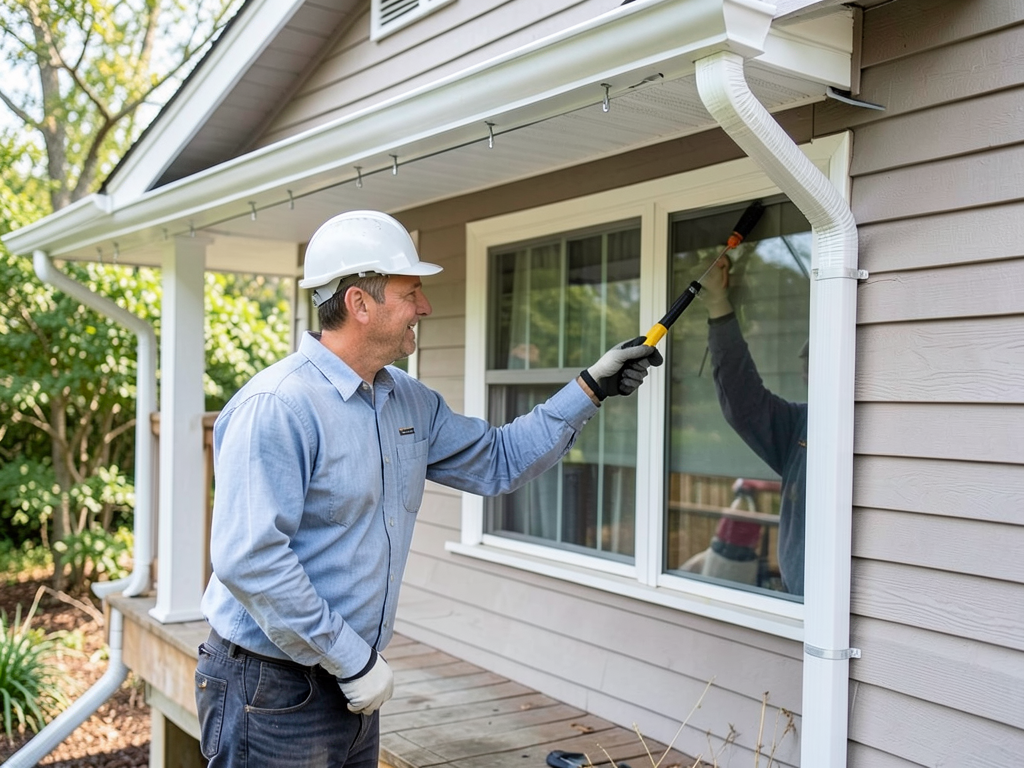
Why Standard Gutters Overflow During New Orleans Summer Squalls (And What Sizes Actually Work)
New Orleans summers bring sudden tropical squalls that dump inches of rain in minutes. Your standard 5-inch gutters simply cannot handle this volume. When water cascades over the sides and pools near your foundation, you’re watching thousands of gallons overwhelm an undersized system designed for milder climates. What to Do When Your New Orleans Roof Starts Leaking During a Downpour.
Most homes in Harvey Kenner and Timberlane were built with 5-inch gutters that work fine for average rainfall. But during a typical summer thunderstorm these systems back up within minutes. The math is simple: a 2,000 square foot roof produces over 1,200 gallons of water during just one inch of rainfall. When that rain falls in 30 minutes instead of 24 hours your gutters need to move water at rates standard sizes cannot achieve. Roofing Kenner.
Understanding the difference between 5-inch and 6-inch gutters means understanding water volume capacity. A 5-inch K-style gutter handles about 1.2 gallons per linear foot. A 6-inch system moves 2.0 gallons per foot. That 67% increase in capacity often means the difference between water flowing safely away from your home and water flooding your crawl space or basement.
The problem gets worse when you consider New Orleans’ unique architectural styles. Many homes in the West Bank have steep roof pitches that accelerate water flow. A 12:12 pitch roof sends water down at twice the velocity of a standard 4:12 pitch. This increased speed means more water arrives at your gutters simultaneously overwhelming systems designed for slower flow rates.
Jefferson Parish building codes recognize this issue. Section 15.10.040 of the local code requires proper drainage calculations based on roof area and rainfall intensity. Homes in flood zones like AE and X must handle even higher volumes. Yet many contractors still install 5-inch systems without calculating actual water loads. Jefferson Parish Building Code.
The solution isn’t just bigger gutters. It’s the right combination of size downspout capacity and proper installation. A 6-inch gutter paired with 3×4 inch downspouts moves water at twice the rate of a 5-inch system with standard 2×3 downspouts. This combination handles the 2-3 inch per hour rainfall rates common during New Orleans summer storms.
The Core Difference: Capacity and Flow Rate
Water volume capacity determines whether your gutters protect or fail your home. A 5-inch gutter holds approximately 1.2 gallons per linear foot while a 6-inch system handles 2.0 gallons per foot. This difference becomes critical when calculating actual rainfall loads.
Consider a typical Harvey home with a 2,500 square foot roof. During a 1-inch rainfall event this roof sheds 1,560 gallons of water. If that rain falls over 24 hours standard gutters can handle it. But when the same volume arrives in 30 minutes the flow rate increases dramatically.
Flow rate calculations show why 5-inch gutters fail. Standard systems move water at about 4-5 gallons per minute per linear foot. During intense squalls flow rates can exceed 15 gallons per minute. This creates a bottleneck where water backs up and overflows.
The physics are straightforward. Water velocity increases with roof pitch. A steep 12:12 pitch roof sends water down at speeds approaching 8-10 feet per second. This accelerated flow means more water arrives at your gutter system simultaneously creating surges that overwhelm standard capacities.
Material choice also affects performance. Aluminum gutters expand and contract with temperature changes common in New Orleans. During summer heat aluminum can expand up to 1/4 inch per 10 feet. This expansion affects joint integrity and can create small gaps where water escapes.
Proper sizing also considers downspout capacity. A 2×3 inch downspout handles about 600 gallons per hour. A 3×4 inch downspout moves 1,200 gallons per hour. Without adequate downspout capacity even 6-inch gutters cannot move water fast enough.
Why New Orleans Weather Demands Larger Gutters
New Orleans receives 60-65 inches of rainfall annually. But the problem isn’t total volume. It’s the intensity and timing. Summer squalls can dump 2-3 inches of rain in 30-60 minutes. These intense bursts overwhelm standard drainage systems.
The National Weather Service tracks rainfall intensity in New Orleans. Average peak rates during summer thunderstorms reach 2-3 inches per hour. Standard 5-inch gutters begin overflowing when rainfall exceeds 1.5 inches per hour. This means your system fails during exactly the weather events that matter most. National Weather Service.
Humidity compounds the problem. New Orleans averages 75% relative humidity. This moisture affects fascia boards and soffits. When water overflows from undersized gutters it saturates wood structures. In our humid climate this wood rarely dries completely leading to rot and structural damage.
Foundation protection becomes critical in areas with expansive clay soils like much of Jefferson Parish. When gutters overflow water pools near foundations. Clay soil absorbs this moisture and expands. This expansion creates pressure that can crack foundations shift walls and damage roof structures.
Insurance companies have noticed these patterns. Homes with properly sized drainage systems file fewer water damage claims. Some insurers offer premium discounts for homes with documented drainage improvements. This makes gutter sizing both a practical and financial decision.
Local architecture affects drainage needs. Many West Bank homes feature raised foundations common in flood-prone areas. These raised structures still need proper drainage to prevent moisture damage to piers and support beams. Undersized gutters allow water to saturate the ground around these supports.. Read more about When Ground Subsidence in Gentilly Starts Affecting Your Roof Pitch and Drainage.
Pros and Cons Comparison Table
| Feature | 5-Inch Gutters | 6-Inch Gutters |
|---|---|---|
| Water Capacity | 1.2 gallons/foot | 2.0 gallons/foot |
| Cost per Linear Foot | $4-6 | $6-9 |
| Best For | Small roofs <1,500 SF | Large roofs >2,000 SF |
| Visual Profile | Lower profile | More prominent |
| Overflow Threshold | 1.5 inches/hour | 2.5 inches/hour |
| Maintenance Needs | Higher (more clogs) | Lower (less backup) |
Roof Pitch and Surface Area: The Calculation
Calculating proper gutter size starts with understanding your roof’s actual water collection area. The horizontal footprint doesn’t tell the full story. Roof pitch multiplies the effective surface area.
A 4:12 pitch roof increases surface area by 5.4% over its horizontal footprint. A 12:12 pitch roof increases it by 41%. This means a 2,000 square foot footprint with a 12:12 pitch actually sheds water from 2,820 square feet of surface.
Water velocity also increases with pitch. Standard 4:12 pitch roofs move water at about 4 feet per second. Steeper pitches can reach 8-10 feet per second. This velocity increase means more water arrives at each point on your gutter simultaneously.
Calculating your needs requires measuring both dimensions. First measure your roof’s horizontal footprint. Then determine the pitch. Most New Orleans homes range from 4:12 to 8:12 pitch with some historic homes reaching 12:12.
The formula considers both factors. For each 100 square feet of roof area you need approximately 1 linear foot of 5-inch gutter under normal conditions. For 6-inch gutters you need about 0.7 linear feet per 100 square feet. But these are baseline numbers.
Local conditions modify these calculations. Homes near Lake Pontchartrain or in low-lying areas need additional capacity. Buildings with large roof areas relative to their footprint need wider gutters even at moderate pitches.. Read more about Flat Roof Maintenance Tips for Mixed Use Buildings Along Magazine Street.
Roof valleys concentrate water flow. Where two roof planes meet water volume doubles. These areas need special attention. Many contractors install oversized gutters or add additional downspouts at valley locations.. Read more about Special Roofing Challenges for New Orleans Camelback Additions.
Price Guide: Cost per Linear Foot in Louisiana
Gutter pricing in New Orleans reflects both material costs and installation complexity. Standard aluminum 5-inch gutters cost $4-6 per linear foot installed. This includes basic hangers and 2×3 inch downspouts.. Read more about Dealing With Complex Roof Lines and Drainage Valley Clogs in Old Metairie.
6-inch aluminum systems cost $6-9 per linear foot installed. The price difference reflects more material and often requires upgraded hangers and larger downspouts. Premium colors or specialty finishes add $1-2 per foot.
Copper gutters represent the premium option. 5-inch copper costs $18-25 per linear foot. 6-inch copper runs $25-35 per foot. Copper develops a patina over time and lasts 50+ years compared to 20-30 years for aluminum.
Installation complexity affects pricing. Two-story homes cost 30-40% more than single-story installations. Homes with many corners valleys or architectural features need more labor and materials.
Removal of existing gutters adds $1-2 per linear foot. This work includes disposal fees and often reveals underlying fascia damage that needs repair before new installation. Repair vs. Replace Analysis.
Seasonal factors influence pricing. Late summer and early fall see highest demand as homeowners prepare for hurricane season. Winter installations often cost 10-15% less due to lower demand. What Metairie Homeowners Need to Do for Emergency Storm Damage and Tarping.
Many contractors offer package deals. A full home installation often costs less per foot than partial replacements. Some companies bundle gutter installation with roof repairs or replacements at discounted rates.
The Role of Downspouts (3×4 vs 2×3)
Downspouts are the final critical component in your drainage system. A 5-inch gutter with inadequate downspouts performs worse than a properly sized system. The relationship between gutter and downspout capacity determines overall performance.
Standard 2×3 inch downspouts handle about 600 gallons per hour. This capacity works for small roofs or mild climates. But New Orleans summer squalls can produce 1,800+ gallons per hour from a typical home.
3×4 inch downspouts double the capacity to 1,200 gallons per hour. This increase often determines whether water reaches the ground or overflows your gutters. The larger size also reduces clogging from leaves and debris.
Placement strategy matters. Downspouts should be placed at low points along your gutter system. For long runs over 40 feet you need downspouts at both ends. Roof valleys require dedicated downspouts as they concentrate water flow.
Underground drainage extends your system’s effectiveness. Extending downspouts 10-15 feet from your foundation prevents water from pooling near your home. In New Orleans’ clay soils this extension prevents foundation damage.
Capacity calculations should include a safety factor. Most professionals recommend sizing for 150% of your calculated maximum flow. This buffer handles unexpected heavy rainfall and prevents system overload.
Material compatibility affects longevity. Aluminum gutters with steel downspouts can create galvanic corrosion. Matching materials or using compatible metals prevents premature failure.
Diagnostic Signs Your Gutters Are Failing
Recognizing gutter failure early prevents expensive water damage. Several diagnostic signs indicate your system cannot handle local rainfall loads.
Overflow during moderate rain indicates undersized gutters. If water cascades over the sides during a 1-inch per hour rainfall your system needs upgrading. This overflow often occurs at the same locations during each storm.
Water stains on fascia boards suggest water is escaping the system. These stains appear as dark streaks or mildew growth along the gutter line. In New Orleans’ humid climate these stains develop within days of overflow events.
Foundation cracks near gutter downspouts indicate water is not being carried far enough from your home. When downspouts terminate too close to the foundation water saturates the soil causing expansion and contraction that cracks foundations.
Erosion patterns in your landscaping reveal drainage problems. Washouts channels or bare spots below downspouts show concentrated water flow. These patterns worsen during summer squalls when water volume peaks.
Basement or crawl space moisture often traces back to gutter overflow. Water that should flow through downspouts instead pools near foundation walls. This moisture migrates through concrete or wood creating mold and rot.
Ice dam formation in winter indicates ventilation problems that affect year-round performance. Poor attic ventilation causes snow to melt and refreeze at roof edges. This ice backs up under shingles causing leaks. The Best Shingles to Withstand New Orleans Heat and Humidity.
Installation Best Practices for New Orleans
Proper installation determines whether your gutter system performs as designed. Several local factors require specific installation techniques.
Pitch requirements in New Orleans account for high rainfall intensity. Standard installation pitches gutters at 1/4 inch per 10 feet toward downspouts. In our climate steeper pitches of 3/8 inch per 10 feet prevent water pooling during heavy rains.
Hanger spacing affects system strength. Standard spacing is 24-36 inches. For 6-inch gutters and hurricane-prone areas 18-inch spacing prevents sagging under water load. This closer spacing costs more but prevents system failure.
Seamer quality determines leak prevention. Each joint represents a potential failure point. Professional seaming with proper sealant prevents the leaks that cause fascia damage and water intrusion.
End cap installation requires specific techniques in humid climates. Overlapping end caps with sealed joints prevent the separation that allows water to escape during heavy rains.
Downspout straps should be stainless steel in coastal areas. Standard steel straps rust quickly in New Orleans’ salt air and humidity. Stainless or aluminum straps last the life of the system.
Expansion joints accommodate thermal movement. New Orleans sees 40-50 degree temperature swings between summer and winter. These swings cause aluminum to expand and contract. Proper joints prevent the buckling that creates gaps.
Maintenance Requirements for Longevity
Even the best gutter system needs regular maintenance. New Orleans’ climate creates specific maintenance challenges that affect system longevity.
Debris removal frequency should increase in areas with many trees. Oak pine and cypress trees common in Jefferson Parish drop leaves and needles year-round. Quarterly cleaning prevents the clogs that cause overflow.
Mildew and algae growth accelerate in our humid climate. These organisms hold moisture against aluminum causing corrosion. Annual cleaning with mildewcide prevents the deterioration that shortens system life.
Sealant inspection should occur annually. Temperature cycles cause sealant to crack and separate. Small leaks caught early prevent the water damage that requires expensive repairs.
Fastener tightness affects system integrity. Aluminum expansion and contraction loosens screws over time. Checking and tightening fasteners every two years prevents the sagging that causes improper drainage.
Downspout screens prevent clogging from leaves and debris. These inexpensive additions reduce maintenance needs and prevent the overflow that damages foundations and landscaping.
Post-storm inspections catch damage early. Hurricanes tropical storms and even severe thunderstorms can bend or separate gutters. Quick repairs prevent the water intrusion that causes interior damage.
Frequently Asked Questions
How do I know if my home needs 6-inch gutters?
Homes with roof areas over 2,000 square feet or those with steep pitches (8:12 or greater) typically need 6-inch gutters. If you see overflow during moderate rains or have a two-story home you likely need the larger size.
Will 6-inch gutters look too big on my house?
Modern 6-inch gutters have proportional designs that complement most home styles. The difference in profile is minimal compared to the performance benefits. Many homeowners find the cleaner rooflines worth the slight increase in gutter visibility.
How much more do 6-inch gutters cost?
6-inch gutters cost 30-50% more than 5-inch systems. For an average home this difference ranges from $300-600. Considering the increased capacity and reduced maintenance needs most homeowners find the investment worthwhile.
Can I mix 5-inch and 6-inch gutters on the same house?
Yes. Many homes use 6-inch gutters in high-flow areas like roof valleys and 5-inch systems elsewhere. This approach balances cost with performance where it matters most.
How long do aluminum gutters last in New Orleans?
Quality aluminum gutters last 20-30 years in our climate with proper maintenance. Factors affecting longevity include proximity to salt air installation quality and maintenance frequency. Homes near the coast may see slightly reduced lifespans.
Do I need larger downspouts with 6-inch gutters?
Yes. 6-inch gutters paired with standard 2×3 downspouts perform poorly. The system needs 3×4 downspouts to handle the increased water volume. This combination moves twice the water of a standard 5-inch system.
Call (504) 355-3444 Today to Schedule Your Inspection
Don’t wait for the next summer squall to flood your home. Our team understands New Orleans’ unique drainage challenges and can recommend the right gutter system for your specific home and roof configuration. We serve Harvey Kenner Timberlane and all of Jefferson Parish with solutions that protect your home during our intense summer storms.
Call (504) 355-3444 today to schedule your free inspection. We’ll measure your roof calculate actual water loads and recommend the right gutter size for your home. Our estimates include detailed calculations showing exactly why we recommend specific sizes and configurations.
Pick up the phone and call (504) 355-3444 before the next storm hits. Your home deserves protection that actually works when New Orleans’ summer squalls arrive. Don’t let another season of overflow damage your foundation landscaping and peace of mind.
{
“@context”: “https://schema.org”,
“@type”: “BlogPosting”,
“headline”: “Why Standard Gutters Overflow During New Orleans Summer Squalls (And What Sizes Actually Work)”,
“description”: “Standard 5-inch gutters fail in New Orleans’ intense tropical downpours. Learn why 6-inch systems are essential for Harvey, Kenner, and Timberlane homes.”,
“wordCount”: 2687,
“datePublished”: “2026-05-22T10:19:00.000Z”,
“dateModified”: “2026-05-22T10:19:00.000Z”,
“inLanguage”: “en-US”,
“mainEntityOfPage”: {
“@type”: “WebPage”,
“@id”: “https://heritageroofingneworleans.com”
},
“publisher”: {
“@type”: “LocalBusiness”,
“name”: “Heritage Roofing New Orleans”,
“url”: “https://heritageroofingneworleans.com”
},
“author”: {
“@type”: “Organization”,
“name”: “Heritage Roofing New Orleans”,
“url”: “https://heritageroofingneworleans.com”
},
“image”: {
“@type”: “ImageObject”,
“url”: “https://heritageroofingneworleans.com/wp-content/uploads/2026/03/why-standard-gutters-overflow-during-new-orleans-s-1.png”
}
}
{
“@context”: “https://schema.org”,
“@type”: “RoofingContractor”,
“name”: “Heritage Roofing New Orleans”,
“url”: “https://heritageroofingneworleans.com”,
“address”: {
“@type”: “PostalAddress”,
“addressLocality”: “New Orleans”
},
“areaServed”: {
“@type”: “City”,
“name”: “New Orleans”
}
}
{
“@context”: “https://schema.org”,
“@type”: “FAQPage”,
“mainEntity”: [
{
“@type”: “Question”,
“name”: “How do I know if my home needs 6-inch gutters?”,
“acceptedAnswer”: {
“@type”: “Answer”,
“text”: “Homes with roof areas over 2,000 square feet or those with steep pitches (8:12 or greater) typically need 6-inch gutters. If you see overflow during moderate rains or have a two-story home you likely need the larger size.”
}
},
{
“@type”: “Question”,
“name”: “Will 6-inch gutters look too big on my house?”,
“acceptedAnswer”: {
“@type”: “Answer”,
“text”: “Modern 6-inch gutters have proportional designs that complement most home styles. The difference in profile is minimal compared to the performance benefits. Many homeowners find the cleaner rooflines worth the slight increase in gutter visibility.”
}
},
{
“@type”: “Question”,
“name”: “How much more do 6-inch gutters cost?”,
“acceptedAnswer”: {
“@type”: “Answer”,
“text”: “6-inch gutters cost 30-50% more than 5-inch systems. For an average home this difference ranges from $300-600. Considering the increased capacity and reduced maintenance needs most homeowners find the investment worthwhile.”
}
},
{
“@type”: “Question”,
“name”: “Can I mix 5-inch and 6-inch gutters on the same house?”,
“acceptedAnswer”: {
“@type”: “Answer”,
“text”: “Yes. Many homes use 6-inch gutters in high-flow areas like roof valleys and 5-inch systems elsewhere. This approach balances cost with performance where it matters most.”
}
},
{
“@type”: “Question”,
“name”: “How long do aluminum gutters last in New Orleans?”,
“acceptedAnswer”: {
“@type”: “Answer”,
“text”: “Quality aluminum gutters last 20-30 years in our climate with proper maintenance. Factors affecting longevity include proximity to salt air installation quality and maintenance frequency. Homes near the coast may see slightly reduced lifespans.”
}
},
{
“@type”: “Question”,
“name”: “Do I need larger downspouts with 6-inch gutters?”,
“acceptedAnswer”: {
“@type”: “Answer”,
“text”: “Yes. 6-inch gutters paired with standard 2×3 downspouts perform poorly. The system needs 3×4 downspouts to handle the increased water volume. This combination moves twice the water of a standard 5-inch system.”
}
}
]
}
{
“@context”: “https://schema.org”,
“@type”: “BreadcrumbList”,
“itemListElement”: [
{
“@type”: “ListItem”,
“position”: 1,
“name”: “Home”,
“item”: “https://heritageroofingneworleans.com”
},
{
“@type”: “ListItem”,
“position”: 2,
“name”: “Blog”,
“item”: “https://heritageroofingneworleans.com/blog”
},
{
“@type”: “ListItem”,
“position”: 3,
“name”: “Why Standard Gutters Overflow During New Orleans Summer Squalls (And What Sizes Actually Work)”
}
]
}
{
“@context”: “https://schema.org”,
“@type”: “Service”,
“serviceType”: “Roofing”,
“provider”: {
“@type”: “LocalBusiness”,
“name”: “Heritage Roofing New Orleans”,
“url”: “https://heritageroofingneworleans.com”
},
“areaServed”: {
“@type”: “City”,
“name”: “New Orleans”
},
“description”: “Standard 5-inch gutters fail in New Orleans’ intense tropical downpours. Learn why 6-inch systems are essential for Harvey, Kenner, and Timberlane homes.”
}