
Why Chimney Flashing Is the Most Likely Cause of Your Leak in the Marigny
A brown stain spreading across your ceiling near the fireplace is one of the most common calls we get from Marigny homeowners. Nine times out of ten the culprit is not the chimney itself but the thin metal flashing that seals the joint between your chimney and roof. In New Orleans’ humid subtropical climate, that flashing can fail in as little as five to seven years, letting water work its way into your living room before you ever see it on the roof. What Metairie Homeowners Need to Do for Emergency Storm Damage and Tarping.
The Marigny’s historic shotgun homes and Creole cottages often have brick chimneys built decades before modern flashing standards existed. Add in hurricane-force winds, salt-air corrosion near the river, and year-round high humidity and you have a perfect recipe for flashing deterioration. By the time you spot water dripping into your firebox or see a ceiling stain, the damage is already underway inside your walls.. Read more about Why Your New Orleans Shotgun Home Needs Oversized Gutters to Prevent Foundation Damage.
Call (504) 355-3444 today to schedule your inspection before the next storm hits.
Common Signs Your Chimney Flashing Is Leaking
Water stains on the ceiling near your fireplace are only one clue. Many homeowners notice a musty odor in the room or see peeling paint on the chimney breast long before they see active dripping. In some cases, the first sign is a soft spot in the ceiling drywall that gives way when pressed. Attic inspections often reveal dark streaks running down the chimney chase or damp insulation packed around the flue.. Read more about Why DIY Roof Patching Often Costs More Than a Professional Repair in Gentilly.
During heavy rains, you might hear a faint dripping sound inside the chimney itself. If your fireplace has a damper, closing it during a storm can sometimes amplify that sound, making the leak more obvious. In brick chimneys, hairline cracks in the mortar joints can also channel water directly onto the flashing, accelerating corrosion of the metal.
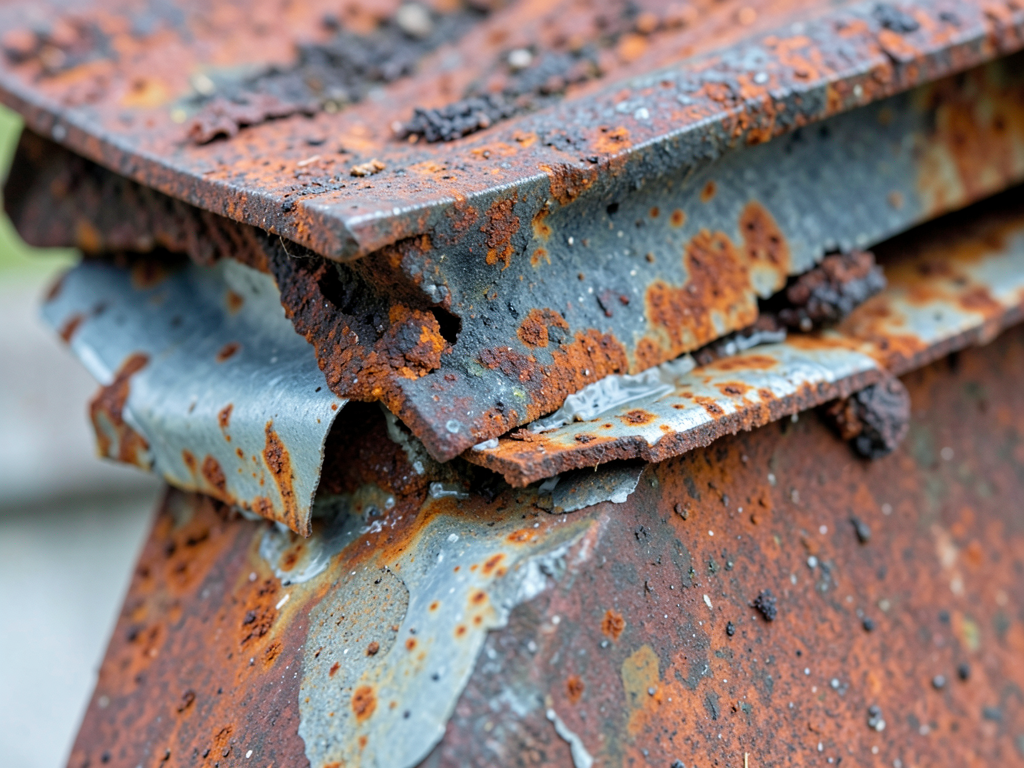
A close-up photo of corroded chimney flashing with visible gaps between the step flashing and counter flashing, showing rust and sealant failure.
How New Orleans Weather Destroys Chimney Seals
New Orleans averages more than 60 inches of rain a year, with most falling in intense bursts during summer thunderstorms. That kind of water volume can exploit even the smallest flashing gap. High humidity keeps the metal in a near-constant state of dampness, which speeds up oxidation of galvanized steel flashing from the inside out. Salt particles carried inland from the Gulf can settle on roof surfaces and eat away at the protective coating. What to Do When Your New Orleans Roof Starts Leaking During a Downpour.
Wind-driven rain during tropical storms can push water horizontally under improperly sealed flashing. If your chimney lacks a cricket a small peaked saddle that diverts water the uphill side can become a collection point for debris and standing water, further degrading the seal. The freeze-thaw cycles we occasionally see in winter cause metal to expand and contract, loosening fasteners and creating micro-fissures that grow over time.
Our New Orleans Chimney Repair Process
We start every flashing repair with a full roof and attic inspection. Using a moisture meter, we check the chimney chase for hidden dampness that could indicate long-term leaks. If the decking around the chimney is soft or shows signs of rot, we replace those sections before installing new flashing. This prevents the common mistake of sealing over compromised wood.. Read more about Hidden Wood Rot in Your Broadmoor Roof Decking (And Why Humidity Is to Blame).
Next, we remove the old flashing carefully to avoid damaging surrounding shingles or the chimney masonry. For brick chimneys, we clean the mortar joints and apply a breathable masonry sealant that allows vapor to escape while blocking liquid water. We then install new step flashing along each course of brick, interweaving it with the roof shingles so water flows over the top rather than under it. The Best Shingles to Withstand New Orleans Heat and Humidity.
Counter flashing is then inserted into a raked mortar joint or cut groove and sealed with a high-flexibility urethane caulk designed to withstand New Orleans’ temperature swings. If your chimney sits on a steep roof or below a higher roof plane, we recommend adding a cricket to prevent water damming. The final step is a flood test with a hose to confirm the repair holds under realistic rainfall.
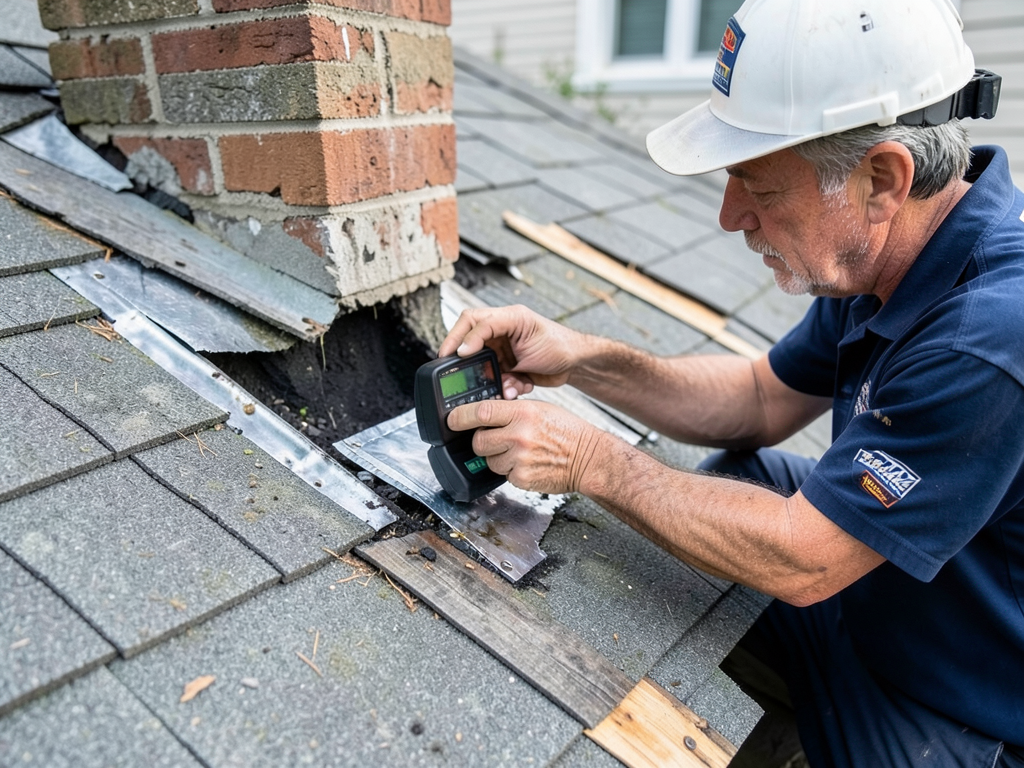
A technician using a moisture meter to check the chimney chase for hidden dampness before beginning flashing repairs, with a damaged roof deck visible in the background.
Materials We Use for NOLA Humidity
Not all flashing materials perform equally in our climate. Galvanized steel is the most economical but typically lasts only five to seven years before corrosion sets in. Aluminum resists rust but can pit in salt-air environments and is softer, making it prone to denting from wind-blown debris. Copper is the premium choice here; it develops a protective patina, lasts 30 to 50 years, and handles both high humidity and salt exposure with minimal degradation.
For sealant, we use a marine-grade polyurethane that remains flexible after curing. Standard silicone can become brittle in our temperature swings, leading to cracks that let water seep back in. When working with historic brick, we match the mortar type to avoid trapping moisture behind the flashing, which can cause spalling in the masonry during freeze-thaw cycles.
| Material | Expected Lifespan in NOLA | Corrosion Resistance | Best Use Case |
|---|---|---|---|
| Galvanized Steel | 5-7 years | Low | Budget repairs on low-risk roofs |
| Aluminum | 10-15 years | Medium | Homes outside immediate salt-air zones |
| Copper | 30-50 years | High | Historic homes and long-term investments |
Historic District Compliance in the Marigny
If your home falls within the Marigny Triangle Historic District, any exterior work including flashing replacement may require approval from the Historic District Landmarks Commission. The HDLC often mandates that replacement materials match the original in appearance, which can mean using copper or painted steel that blends with existing roofing. We handle the permitting process and submit material samples to ensure compliance before starting work. Specialized Roofing Solutions for Properties in the French Quarter.
Older chimneys in the Marigny were often built with soft lime mortar rather than modern Portland cement. Using aggressive sealants or power washing can erode this mortar and compromise the chimney’s structural integrity. Our technicians are trained to identify mortar type and use appropriate cleaning and sealing methods that preserve the historic fabric while still providing a watertight seal.
Step-by-Step: What to Expect During Repair
- Inspection and Diagnosis – We inspect the roof, attic, and chimney interior to locate all leak sources.
- Permit Acquisition – If in a historic district, we submit plans to the HDLC for approval.
- Material Selection – We recommend flashing type based on your roof pitch, chimney age, and budget.
- Deck Repair – Any rotted decking around the chimney is replaced before new flashing is installed.
- Flashing Installation – Step and counter flashing are interwoven with shingles and sealed with marine-grade polyurethane.
- Cricket Addition – If needed, a cricket is built to divert water away from the chimney base.
- Flood Test – We simulate heavy rain to confirm the repair is watertight.
- Final Inspection – We walk you through the completed work and provide maintenance tips.
Frequently Asked Questions
How much does chimney flashing repair cost in New Orleans?
Repair costs typically range from $800 to $2,500 depending on materials, chimney height, and whether deck repair is needed. Copper flashing and cricket installation push costs toward the higher end but offer significantly longer lifespan.
How long does a chimney flashing repair take?
Most repairs are completed in one to two days. Historic district approvals can add one to three weeks to the timeline if permits are required.
Will my homeowner’s insurance cover flashing repair?
Standard policies cover sudden damage from storms but not gradual wear. If the leak resulted from wind or debris impact, you may have coverage. We can provide documentation for your claim.
Can I just seal the existing flashing instead of replacing it?
Temporary sealants rarely hold in New Orleans’ climate and often trap moisture, accelerating underlying damage. Replacement is almost always the more cost-effective long-term solution.
Do you offer warranties on flashing repairs?
Yes. We provide a five-year workmanship warranty on all flashing repairs, with extended options available for copper installations.
Pick up the phone and call (504) 355-3444 before the next storm hits. A quick inspection now can save you thousands in interior repairs later.
Why Acting Fast Matters in the Marigny
The Marigny’s dense historic housing means a leak in one home can quickly affect neighboring properties through shared walls or close roof lines. Water intrusion can also damage irreplaceable plaster details, hardwood floors, and antique millwork common in these homes. The longer a leak persists, the more likely you are to face mold remediation, which adds significant cost and health risks.
Louisiana State Uniform Construction Code mandates that all roofing work, including flashing, meet wind load requirements for our hurricane zone. Cutting corners with substandard materials or improper installation not only voids warranties but can also create liability if wind-driven rain damages adjacent properties. Professional repair ensures your home remains both watertight and code-compliant. Louisiana State University Agricultural Center.
A technician inspecting a historic Marigny chimney from the roof, pointing out damaged flashing to a homeowner, with the French Quarter skyline visible in the background.
Protect Your Marigny Home Today
Chimney flashing failure is not a question of if but when in our climate. The combination of heavy rainfall, high humidity, and historic construction makes the Marigny particularly vulnerable to these leaks. Waiting until you see water dripping inside means the damage is already spreading through your walls and ceiling.
At Heritage Roofing, we’ve spent 15 years diagnosing and repairing chimney leaks across New Orleans’ historic neighborhoods. We understand the unique challenges of preserving your home’s character while ensuring it stays dry through every storm. Our process includes thorough diagnostics, historic district compliance, and the use of materials proven to withstand our specific climate conditions. Roofing Kenner.
Don’t let a small flashing gap turn into a major renovation. Call (504) 355-3444 today to schedule your chimney inspection. We’ll show you exactly what’s happening on your roof and provide a clear, no-pressure plan to fix it right the first time. For more information, visit National Roofing Contractors Association.
You may also find this helpful. Lowering Your Energy Bills in Mid-City With Better Attic Ventilation and Roofing Systems.
{
“@context”: “https://schema.org”,
“@type”: “BlogPosting”,
“headline”: “Why Chimney Flashing Is the Most Likely Cause of Your Leak in the Marigny”,
“description”: “If your Marigny home has a chimney leak, flashing failure is almost always the culprit. Learn how New Orleans humidity and storms destroy chimney seals and what to do.”,
“wordCount”: 1711,
“datePublished”: “2026-03-11T15:04:00.000Z”,
“dateModified”: “2026-03-11T15:04:00.000Z”,
“inLanguage”: “en-US”,
“mainEntityOfPage”: {
“@type”: “WebPage”,
“@id”: “https://heritageroofingneworleans.com”
},
“publisher”: {
“@type”: “LocalBusiness”,
“name”: “Heritage Roofing New Orleans”,
“url”: “https://heritageroofingneworleans.com”
},
“author”: {
“@type”: “Organization”,
“name”: “Heritage Roofing New Orleans”,
“url”: “https://heritageroofingneworleans.com”
},
“image”: {
“@type”: “ImageObject”,
“url”: “https://heritageroofingneworleans.com/wp-content/uploads/2026/03/why-chimney-flashing-is-the-most-likely-cause-of-y-1.png”
}
}
{
“@context”: “https://schema.org”,
“@type”: “RoofingContractor”,
“name”: “Heritage Roofing New Orleans”,
“url”: “https://heritageroofingneworleans.com”,
“address”: {
“@type”: “PostalAddress”,
“addressLocality”: “New Orleans”
},
“areaServed”: {
“@type”: “City”,
“name”: “New Orleans”
}
}
{
“@context”: “https://schema.org”,
“@type”: “FAQPage”,
“mainEntity”: [
{
“@type”: “Question”,
“name”: “How much does chimney flashing repair cost in New Orleans?”,
“acceptedAnswer”: {
“@type”: “Answer”,
“text”: “Repair costs typically range from $800 to $2,500 depending on materials, chimney height, and whether deck repair is needed. Copper flashing and cricket installation push costs toward the higher end but offer significantly longer lifespan.”
}
},
{
“@type”: “Question”,
“name”: “How long does a chimney flashing repair take?”,
“acceptedAnswer”: {
“@type”: “Answer”,
“text”: “Most repairs are completed in one to two days. Historic district approvals can add one to three weeks to the timeline if permits are required.”
}
},
{
“@type”: “Question”,
“name”: “Will my homeowner’s insurance cover flashing repair?”,
“acceptedAnswer”: {
“@type”: “Answer”,
“text”: “Standard policies cover sudden damage from storms but not gradual wear. If the leak resulted from wind or debris impact, you may have coverage. We can provide documentation for your claim.”
}
},
{
“@type”: “Question”,
“name”: “Can I just seal the existing flashing instead of replacing it?”,
“acceptedAnswer”: {
“@type”: “Answer”,
“text”: “Temporary sealants rarely hold in New Orleans’ climate and often trap moisture, accelerating underlying damage. Replacement is almost always the more cost-effective long-term solution.”
}
},
{
“@type”: “Question”,
“name”: “Do you offer warranties on flashing repairs?”,
“acceptedAnswer”: {
“@type”: “Answer”,
“text”: “Yes. We provide a five-year workmanship warranty on all flashing repairs, with extended options available for copper installations.”
}
}
]
}
{
“@context”: “https://schema.org”,
“@type”: “BreadcrumbList”,
“itemListElement”: [
{
“@type”: “ListItem”,
“position”: 1,
“name”: “Home”,
“item”: “https://heritageroofingneworleans.com”
},
{
“@type”: “ListItem”,
“position”: 2,
“name”: “Blog”,
“item”: “https://heritageroofingneworleans.com/blog”
},
{
“@type”: “ListItem”,
“position”: 3,
“name”: “Why Chimney Flashing Is the Most Likely Cause of Your Leak in the Marigny”
}
]
}
{
“@context”: “https://schema.org”,
“@type”: “Service”,
“serviceType”: “Roofing”,
“provider”: {
“@type”: “LocalBusiness”,
“name”: “Heritage Roofing New Orleans”,
“url”: “https://heritageroofingneworleans.com”
},
“areaServed”: {
“@type”: “City”,
“name”: “New Orleans”
},
“description”: “If your Marigny home has a chimney leak, flashing failure is almost always the culprit. Learn how New Orleans humidity and storms destroy chimney seals and what to do.”
}